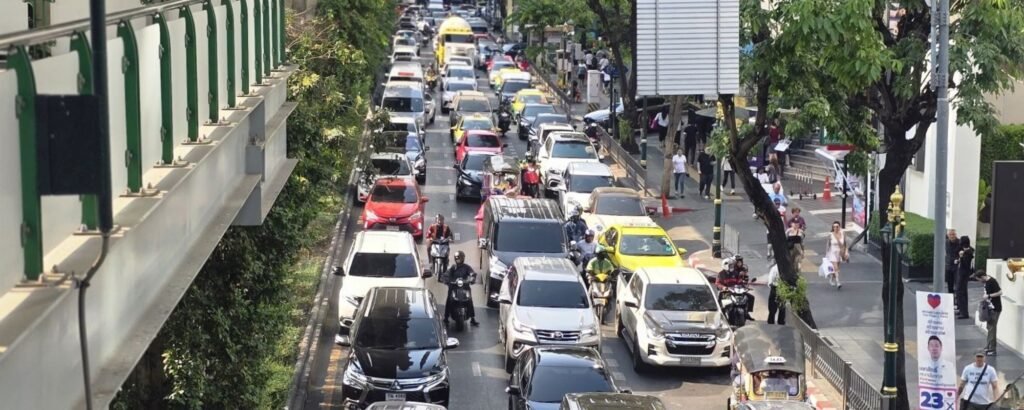
Getting around Bangkok can feel intimidating at first. It’s big, busy and constantly moving. But once you understand how the transport system works, it’s surprisingly efficient, affordable and even enjoyable.
We used a mix of transport while staying in Bangkok, and some options stood out far more than others. Below is a breakdown of what we used, what worked best, and a few tips that made everything easier.
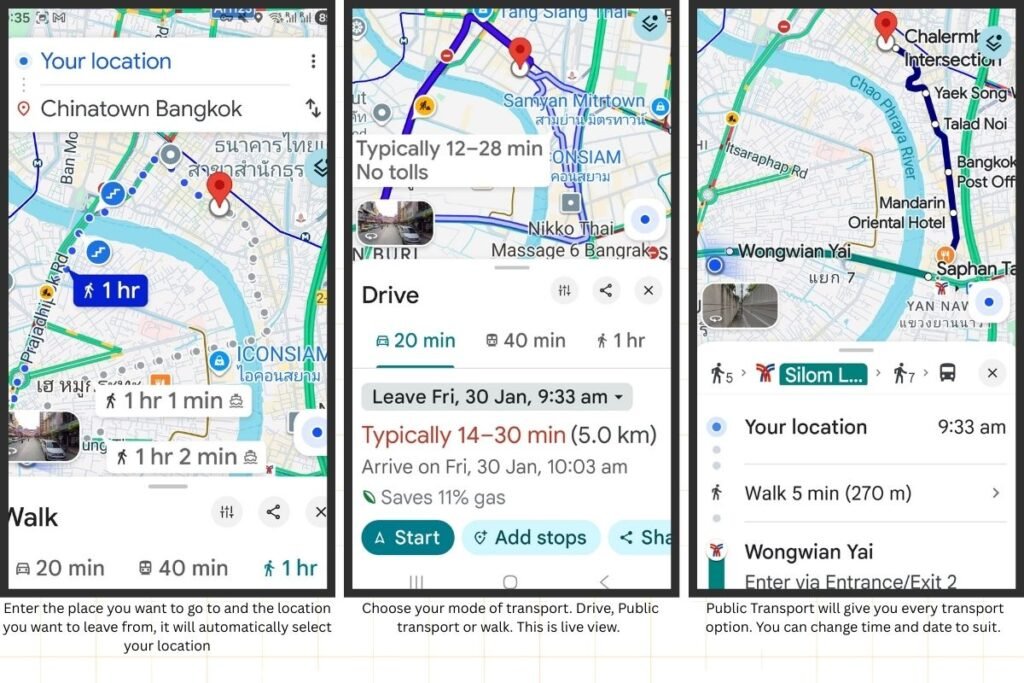
Google Maps became one of our most-used tools in Bangkok, making it easy to navigate the city whether we were using public transport, Grab or walking — see below for how we used it day to day.
Table of Contents
BTS Skytrain – Fast, Efficient and Easy Once It Clicks
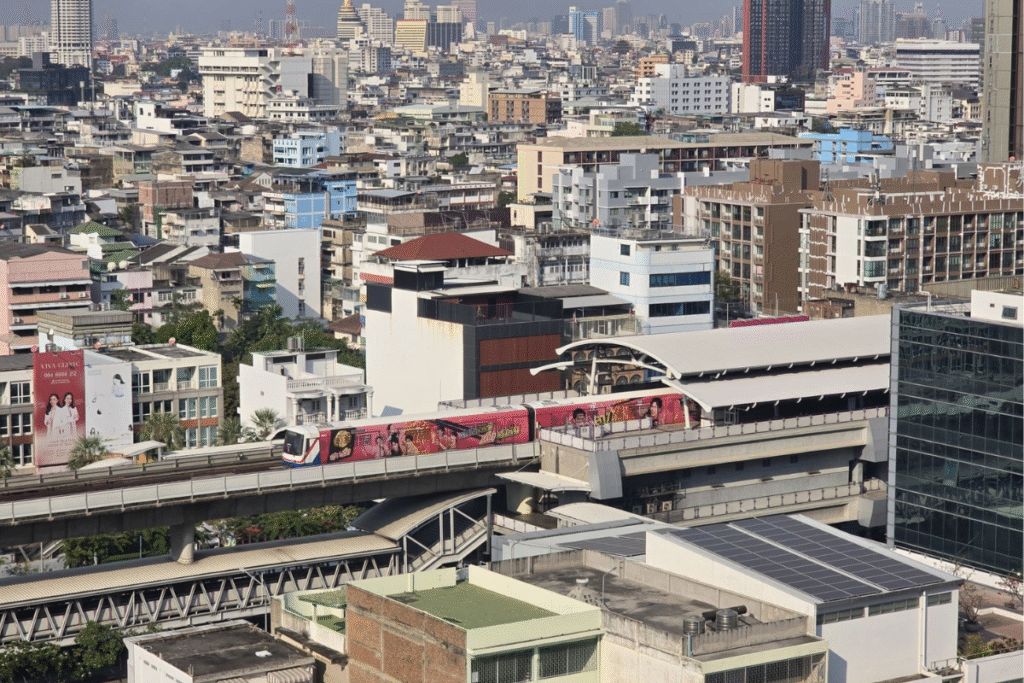
Bangkok’s BTS Skytrain is one of the fastest ways to get around the city. It’s air-conditioned, reliable and avoids traffic completely.
We learned this the hard way one night when a Grab ride to a market took 45 minutes, while the train ride back took 15 minutes.
Why we recommend the BTS:
- Avoids traffic entirely
- Affordable and predictable pricing
- Stations and signs are clearly marked in English
- Trains run frequently
- Ideal during peak hours or intense heat
We often planned our sightseeing around BTS lines because it made getting around so much easier.
How to Pay for the BTS
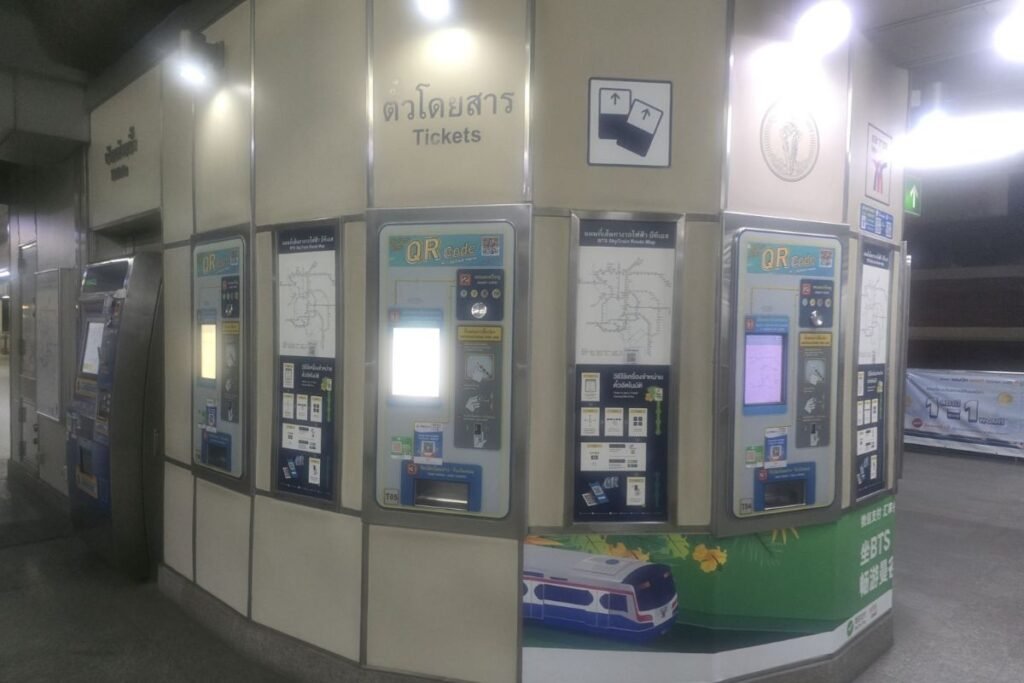
When you’re new, the ticket counter is the easiest option.
If you’re unsure:
- Go to the counter
- Tell staff where you want to go
- They’ll tell you which platform and issue your ticket
Once you’re comfortable, the machines are very easy to use and have an English option.
Ticket machines:
- One accepts notes & coins
- One accepts just coins
- Both are straightforward once you’ve done it once
The Most Important BTS Tip (This Makes Everything Click)
When finding the right train, don’t look for your station name.
Instead:
- Look at the line colour
- Find the name of the station at the end of the line
- Follow the signs showing that end station name
For example, we stayed in Sathorn, and our station was Saphan Taksin. However, you will not see “Saphan Taksin” on the signs.
The end of the line in our direction was Bang Wa — that’s what you look for and that’s what appears on the signage above you.
At major interchange stations like Siam, this is crucial. You may see the same destination name more than once, so:
- Check the white arrow
- Make sure it’s pointing towards the station at the end of your line.
Once this clicks, the BTS system becomes incredibly easy to navigate.
Seats depend on the time of day. Like all public transport in Bangkok, peak hours are crowded, and standing is normal.
MRT Subway – Just as Easy as the BTS
The MRT works almost exactly the same way as the BTS.
- Mostly underground
- Same logic with end-of-line directions
- Clear English signage
- Easy transfers between MRT and BTS
If you understand one, you’ll understand the other.
BRT – Bus Rapid Transit
The BRT refers to Bus Rapid Transit routes.
These are dedicated bus corridors designed to move faster than regular buses by avoiding some traffic congestion. They’re less commonly used by visitors, but they form part of Bangkok’s wider public transport network.
River Boats – One of Our Biggest Surprises
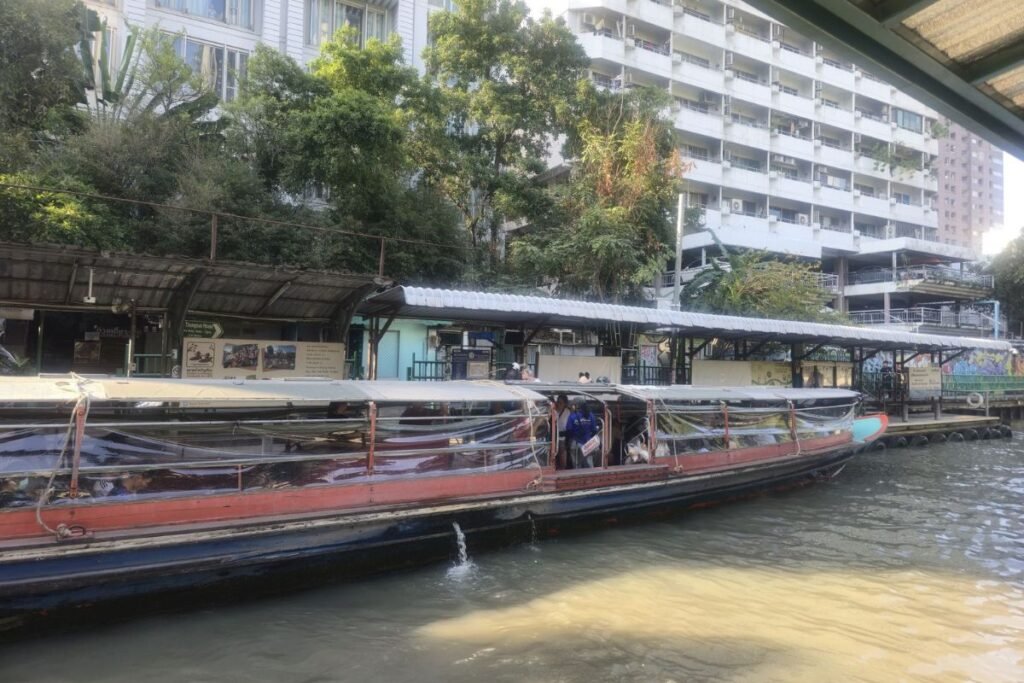
One transport option that really surprised us was the river boats.
They’re fast, cut right through the middle of the city, and are extremely cheap.
- Most rides cost 22 baht or less
- We paid 13 baht each for a short trip
- Frequent services
- Very well organised
They’re also genuinely fun to use and offer a completely different view of Bangkok.
Buses – Cheap, Local and Everywhere
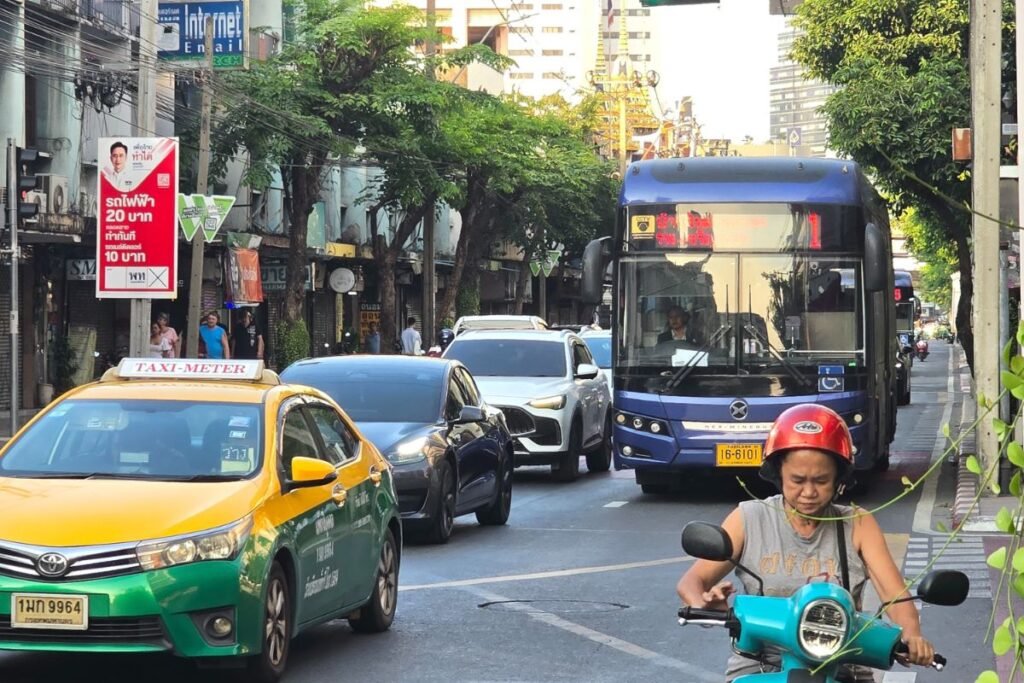
We used buses often, and they’re one of the cheapest ways to get around Bangkok.
- Older buses without air-conditioning are the cheapest and full of locals
- Air-conditioned buses cost slightly more
For example:
- Wongwian Yai to Siam on an older bus: 15 baht
- Same route on an air-conditioned bus: 20 baht
You’re not guaranteed a seat, but that’s true across most public transport in Bangkok.
Local Trains – A Great Day Trip Option
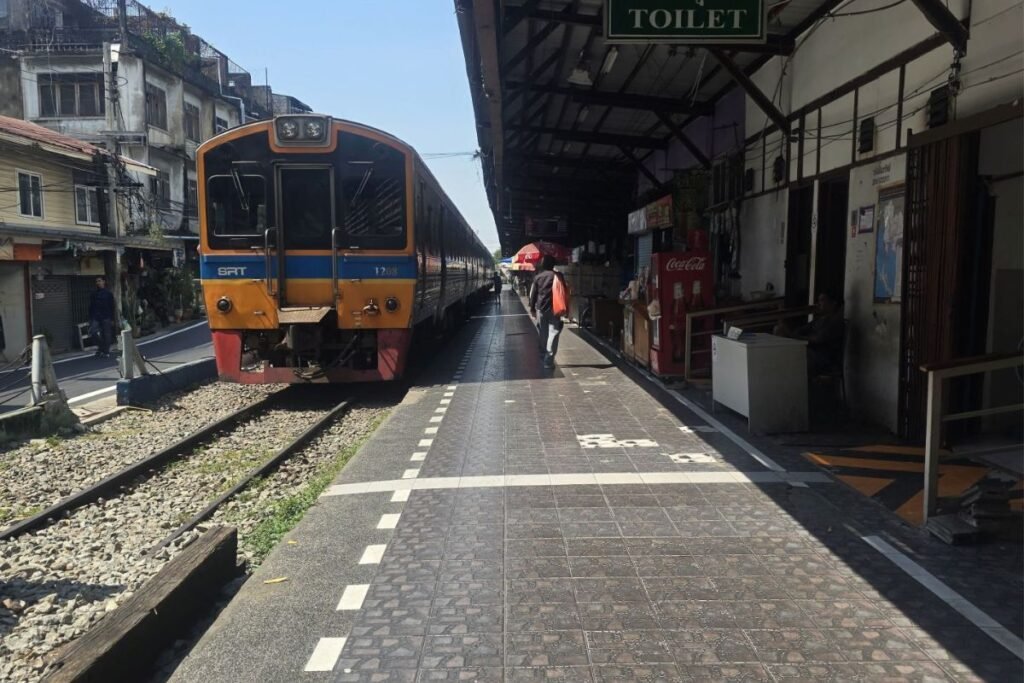
One of our favourite experiences was taking the local train from Wongwian Yai to Mahachai.
- Takes 1 hour
- Costs 10 baht
- Very local and relaxed
- Open window seat with fan
From Mahachai:
- Take a short boat crossing across the river (around 3 baht)
- Transfer to another local train that runs directly through the Maeklong Railway Market
This train passes straight through the market, with vendors calmly pulling their stalls back as it goes by.
It’s incredibly well organised and makes for an easy, memorable day trip without needing a tour.
Grab and Taxis
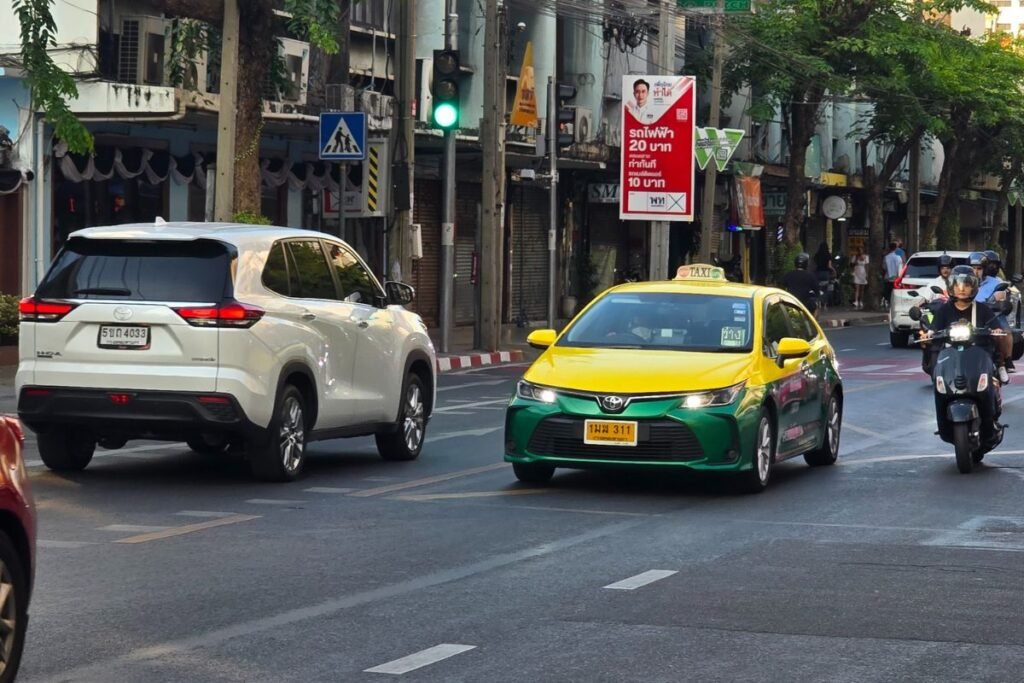
Grab is widely available and easy to use:
- Pre-priced
- No cash required
- Very convenient
The downside is traffic — depending on time and location, trips can take much longer than expected.
Taxis are part of the Bangkok experience, but we found them best used for short rides rather than cross-city travel.
Trains to the Airport
The Airport Rail Link from Phaya Thai to Suvarnabhumi Airport is fast and very affordable.
- Costs around 40–45 baht per person
- Runs directly underneath the airport
- Best boarded at Phaya Thai for a chance at a seat
For full details, see our separate post on Getting to the Airport Without Stress in Bangkok.
Tuk-Tuks in Bangkok – Fun, Chaotic and Not Always Cheap
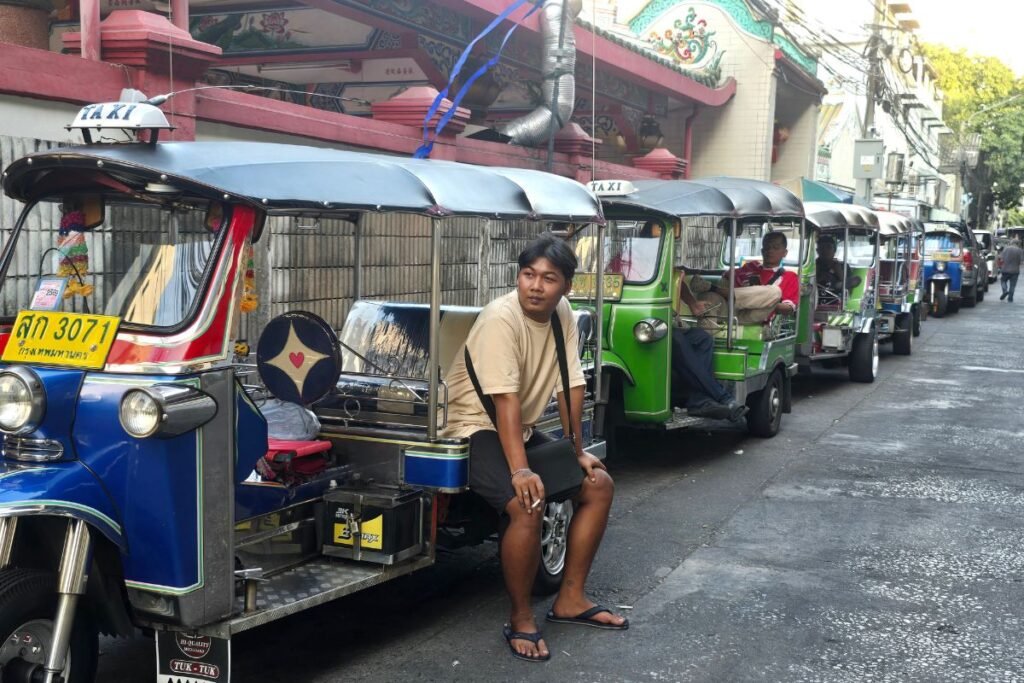
Tuk-tuks are one of those classic Bangkok experiences. Loud, open-air and a little bit wild, they look like an essential part of any visit — and in many ways, they are. But they’re also one of the easiest ways for travellers to get caught out if you don’t know how they work.
We used tuk-tuks a few times, and while we loved the experience, they’re definitely not the cheapest or most straightforward way to get around.
The Big Tuk-Tuk Warning
If a tuk-tuk driver approaches you offering:
- “100 baht for a one-hour city tour”
- A laminated map showing temples, markets and stops
- Or insists they’ll “show you everything”
Walk away.
These offers are never what they sound like.
You won’t get a relaxed city tour. Instead, you’ll almost always be taken straight to:
- Expensive boat rides
- Gem shops or tailor stores
- Tourist-heavy stops designed to earn the driver commission
The pressure can be uncomfortable, and it’s not the experience most people are hoping for.
How Tuk-Tuks Actually Work Best
Tuk-tuks are best used for short trips from A to B, not sightseeing tours.
Our tips:
- Always negotiate the price before getting in
- Be clear about exactly where you’re going
- If the price doesn’t feel right, politely decline and move on
- Don’t assume they’re cheaper than Grab or taxis — often they’re not
Once agreed, stick to that price.
The Experience (Why People Still Love Them)
Despite the warnings, tuk-tuks are still a lot of fun.
- The ride is fast and thrilling
- You’re right in the middle of the action
- It’s noisy, windy and sometimes a little scary
- You’ll laugh, brace yourself and probably hold on tight
They’re not about comfort or efficiency — they’re about the experience.
Navigating Bangkok with Google Maps
Google Maps is an excellent way to navigate your way around Bangkok, whether you’re catching a taxi or Grab, using public transport, or walking between places. It shows multiple route options, clearly breaks down travel time and costs, and often combines BTS, MRT, river boats and walking into one easy-to-follow journey.
We used Google Maps religiously during our daily travels, and it removed so much guesswork — especially in a city as big and fast-moving as Bangkok.
Below is a simple step-by-step guide showing how we used Google Maps to get around confidently.
Final Thoughts
If you want the fastest, least stressful way to move around Bangkok, the BTS and MRT are hard to beat.
River boats are an underrated gem.
Buses are cheap and effective if you’re not in a rush.
Grab is convenient but traffic-dependent.
Once you understand how the system works, Bangkok becomes far easier — and far less overwhelming — than it first appears.
Sometimes, the city feels chaotic. But its transport system? Surprisingly brilliant.
🌍 Travel Planning Resources
These are the tools we personally use and trust when planning our travels from finding a place to stay to booking activities, transport and insurance. Let your “Tohu” guide you “Trust the Journey” and follow what feels right for you.
- ✈️Flights – Compare great deals with Trip.com then Kiwi.com for flexible, affordable options.
- 🚐 Campervans – Compare rental deals with Motorhome Republic across Aotearoa and beyond.
- 🛏️ Stays – Compare hotels on Trip.com and TripAdvisor or Booking.com.
- 🚐 Rental Cars – Compare prices and book through Airport Rentals by Motorhome Republic for trusted brands and easy airport pickup.
- 🎟️ Activities – Browse tours and experiences on Viator, Get Your Guide, or TripAdvisor
- 🚆12Go Asia – Compare and book trains, buses, and ferries across Asia in one place with 12Go.
- 🛡️ Travel Insurance – Get flexible short-term coverage with Insubuy for your next holiday.
- 💳 Travel Money – Send, spend and manage money internationally with Wise, with easy currency conversion and a handy option for travellers.
- 🔒 Protect Your Privacy with a VPN – We recommend Surfshark VPN for secure and private browsing while travelling. It’s fast, affordable and works worldwide, perfect for public Wi-Fi at airports, cafes and hotels.
- 📱 Travel eSIM – Stay connected with Airalo
- 💼 Lounge Access – Treat yourself with Priority Pass for UK or US
- 🎶 Events & Concerts – Book tickets worldwide through Ticketmaster.
🧭 Note: Some booking links can be a bit shy when you’re using a VPN. If one doesn’t open, try pausing your VPN or switching to a different server location or secure Wi-Fi network to get things flowing again.
“Once you stop fighting the city and learn how it moves, travel becomes effortless.”