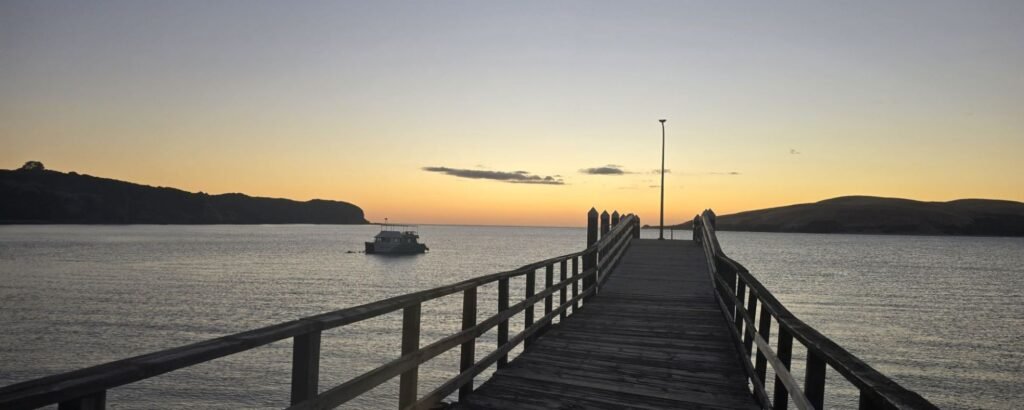
The Hokianga Harbour feels different from anywhere else in Aotearoa – New Zealand.
The roads become slower, the towns feel quieter and the harbour itself shapes almost every part of life here. Fishing boats move with the tides, locals gather along wharves at sunset, and the small settlements scattered around the harbour still feel deeply connected to community and coastline.
For us, the Hokianga was not about rushing between attractions.
It was about taking the slower roads, crossing on ferries, stopping for homemade pies, sitting quietly watching the water and discovering places that still feel genuinely local.
This part of Te Tai Tokerau carries a calmness that is hard to describe until you spend time here yourself.
Understanding the Hokianga Harbour
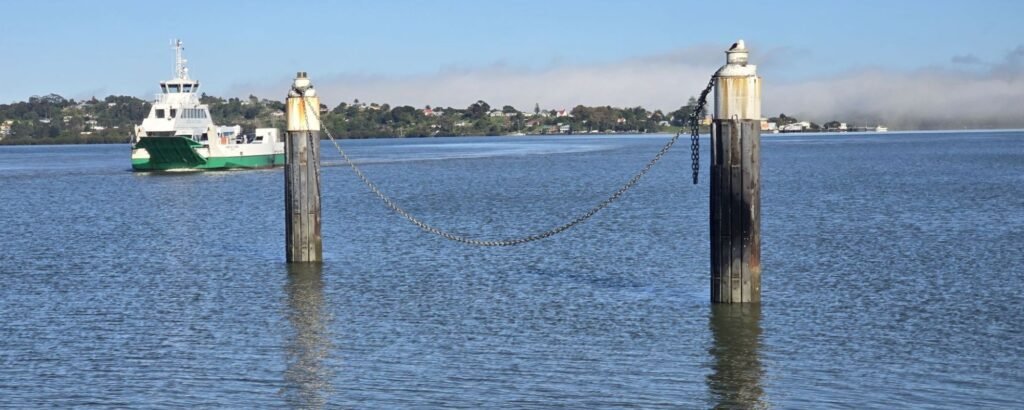
The Hokianga Harbour is one of the oldest areas of Māori settlement in Aotearoa and carries deep cultural significance throughout the north.
According to tradition, the great Polynesian navigator Kupe first arrived here after discovering Aotearoa. Many stories, wāhi tapu (sacred place) and ancestral connections throughout the harbour still tie closely to those early journeys.
The harbour itself stretches deep inland, creating sheltered waters surrounded by small settlements, forested hills, farmland and dramatic west coast landscapes.
Unlike larger tourist centres, the Hokianga still feels wonderfully unpolished in the best possible way.
Life here moves slower.
People stop to talk.
And the coastline still feels connected to everyday living rather than tourism alone.
Kohukohu
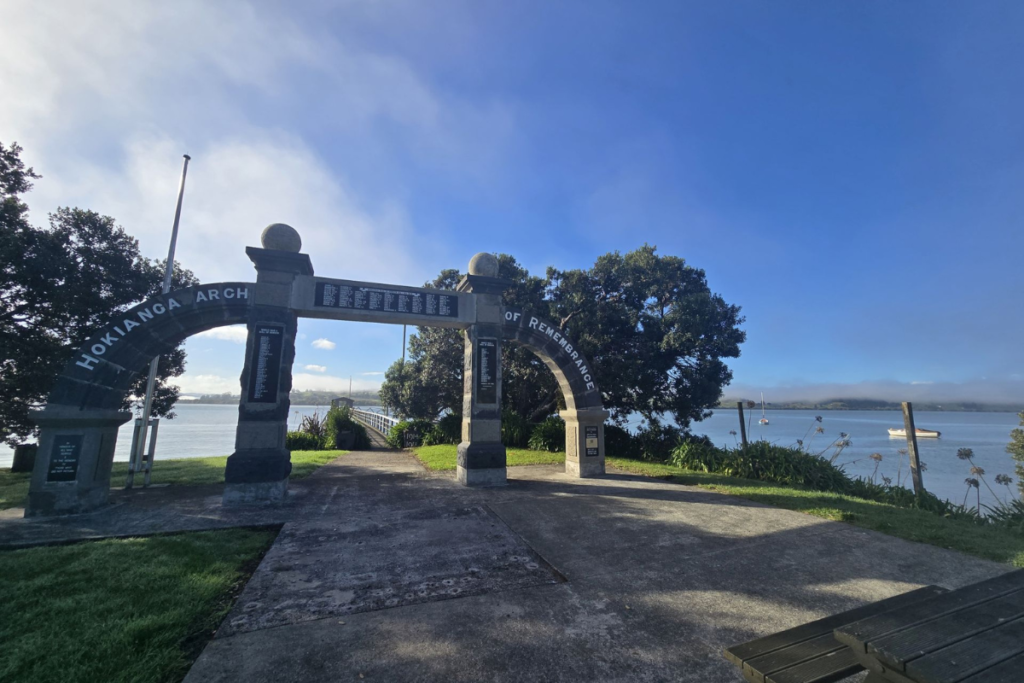
Kohukohu quietly sits along the northern side of the Hokianga Harbour and acts as the ferry link across to Rawene.
Most travellers only pass through while catching the ferry, but the township itself is worth slowing down for. Small cafes, weathered buildings, local shops, and peaceful harbour views give the town a timeless feel that captures the essence of small-town Aotearoa.
There are several beautiful ways to reach Kohukohu. The route from Kaitaia crosses the winding Mangamukas through native bush and rolling hills, while the western approach from Ahipara moves through dense forest and farmland.
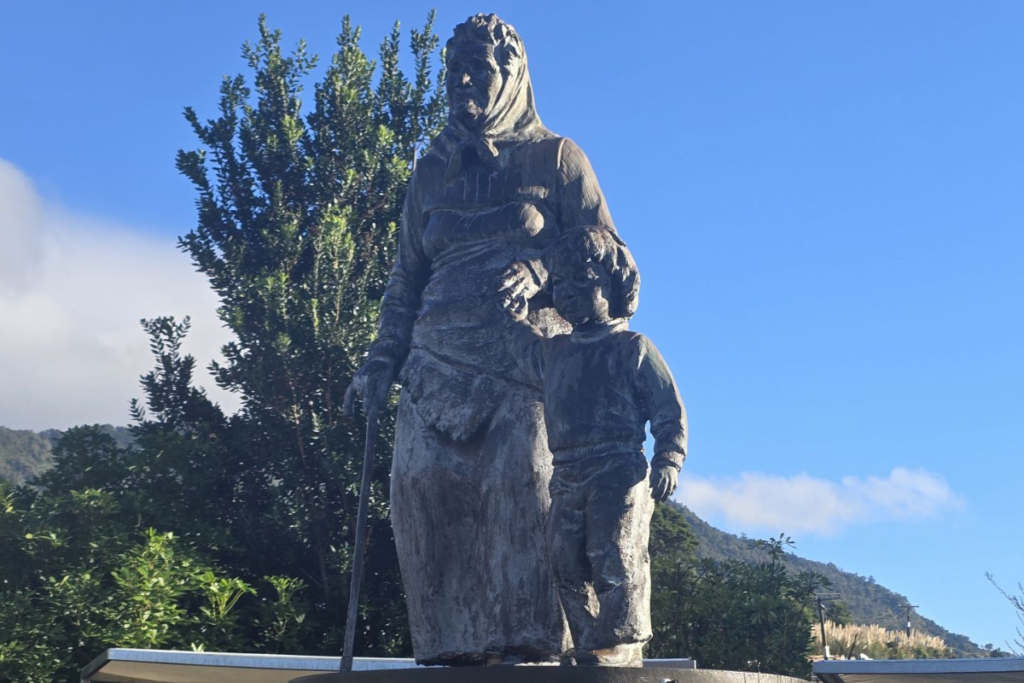
We arrived through Punguru after stopping to pay our respects to Dame Whina Cooper, one of Aotearoa’s most respected Māori leaders who became widely known for leading the 1975 Māori Land March advocating for Māori land rights.
The early morning fog drifting across the hills made the entire drive feel incredibly peaceful.
The ferry crossing itself is affordable, scenic, and far more enjoyable than driving the longer inland route through Kaikohe.
Rawene
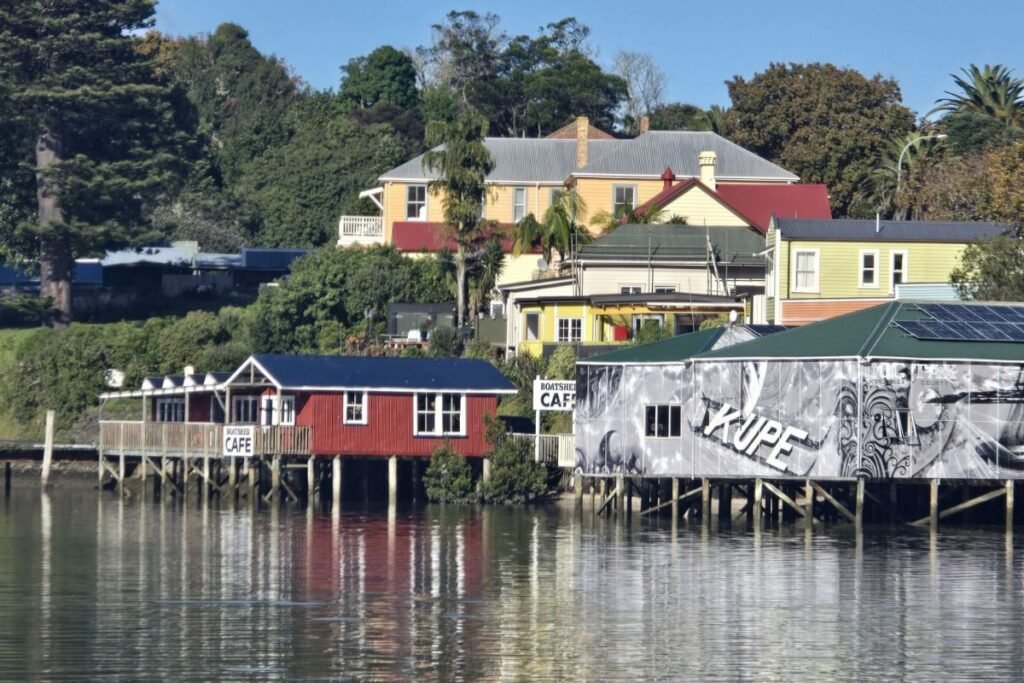
Rawene ended up becoming one of our favourite towns around the harbour.
After crossing on the ferry from Kohukohu, the town immediately felt welcoming and easy to explore on foot. The harbourfront, small shops, cafes, and community spaces all sit within walking distance of each other.
One of the busiest places in town was the Boatshed Cafe where locals and travellers gathered throughout the morning. Their muffins absolutely lived up to the reputation. Later we grabbed homemade pies from Wardy’s near the entrance to town which made the perfect lunch.
One thing we loved most about Rawene was the strong sense of local creativity and community pride.
We even ended up getting haircuts from the local barber inside the community centre before buying a beautiful shirt from Ngāpuhi Creatives beside the Four Square.
Supporting local businesses and Māori artists feels important in places like this where so much culture and identity are woven naturally into everyday life.
Opononi & Ōmāpere
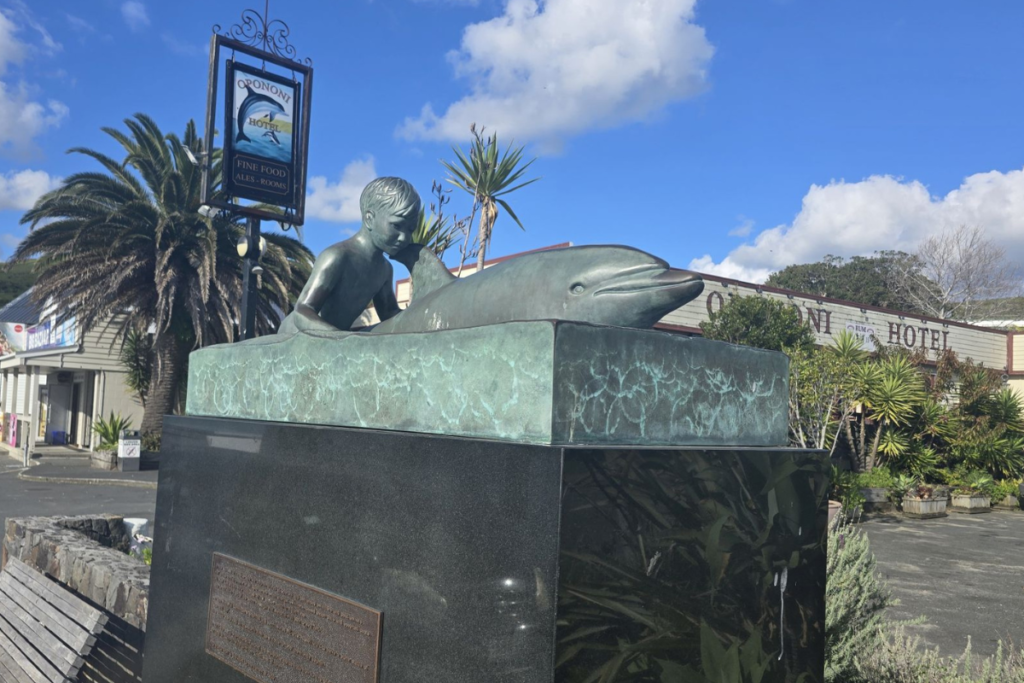
Opononi quietly surprises you the moment the road opens up to reveal the harbour.
The township feels relaxed from the second you arrive. Fishermen line the wharf around high tide while people drift between the waterfront, cafes, fish and chip shops, and harbourfront motels.
The Opononi Hotel remains a popular gathering place while Opononi Takeaways was constantly busy during our stay serving fresh fish and chips and ice creams overlooking the water.
One story deeply tied to Opononi is Opo the dolphin, the famous bottlenose dolphin who spent the summers of 1955 and 1956 swimming and playing alongside local children in the harbour. Opo quickly became loved throughout the country and remains an important part of the town’s identity today.
Accommodation stretches between Opononi and nearby Ōmāpere with campgrounds, motels, and beachside stays available throughout the area.
One of our favourite experiences here was simply sitting quietly near the harbour at sunset watching the light shift across the water.
Arai Te Uru Nature Reserve
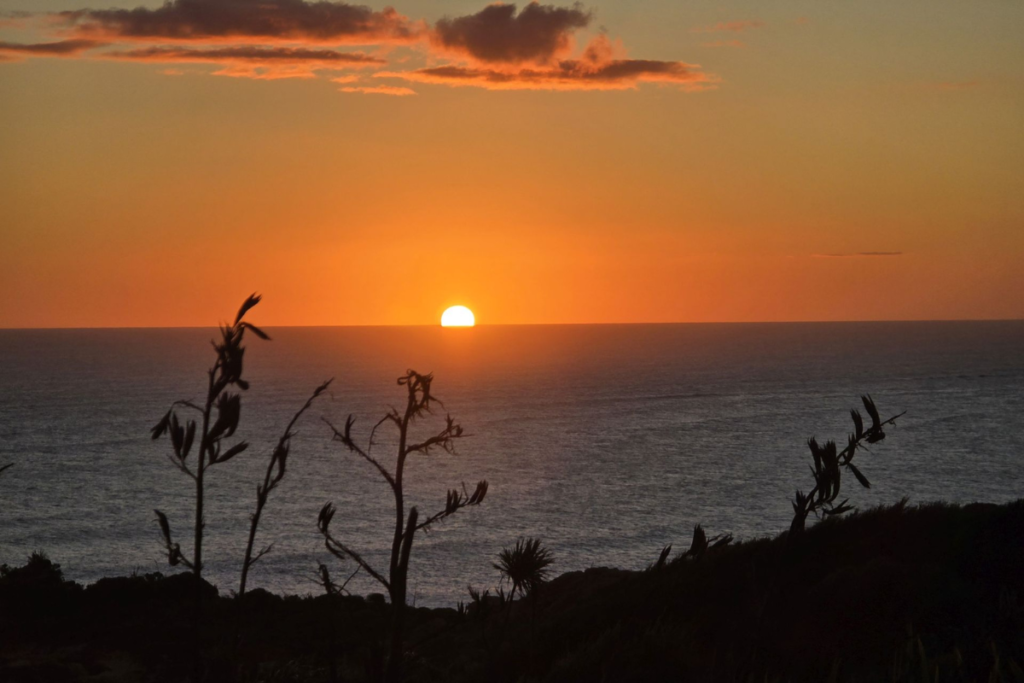
Arai Te Uru Nature Reserve quickly became our favourite sunset location around the Hokianga.
Located between Opononi and Ōmāpere, the reserve sits high above the harbour entrance with panoramic views across dunes, harbour waters, and the Tasman Sea.
As sunset approaches, the entire coastline begins glowing gold.
The reserve has several easy walking tracks, picnic areas, a large public carpark, and public toilets, making it an easy place to stop for a few hours.
We noticed plenty of locals arriving later in the day as well which always feels like a sign you have found somewhere genuinely special.
If you are staying in the area, make time for sunset here.
Koutu Boulders
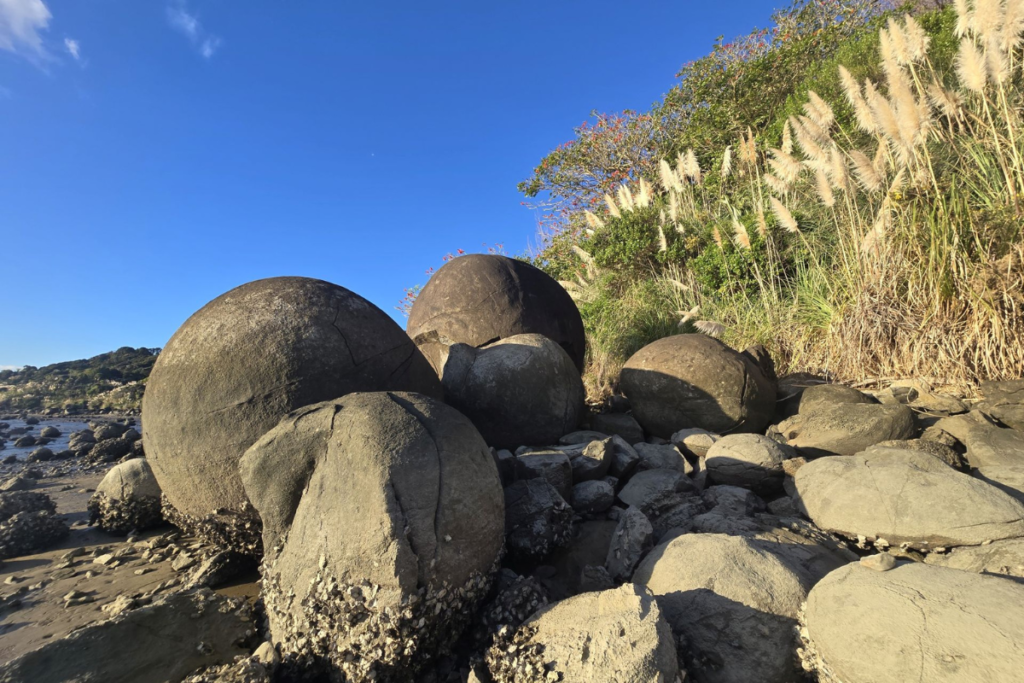
Only a short drive from Opononi, the Koutu Boulders became one of the biggest surprises of our Hokianga trip.
Scattered along the shoreline are giant naturally formed spherical boulders, some reaching well over two metres high. Many visitors only walk to the first cluster, but if you continue toward the peninsula you’ll discover the larger formations standing dramatically along the beach.
The best time to visit is around low tide. We arrived roughly an hour beforehand which gave us enough time to explore slowly without rushing back before the tide returned.
The drive in becomes gravel for several kilometres but remains an easy scenic drive overall. From the carpark, a simple walking path leads down to the beach.
We also noticed oysters growing thickly along the rocks and opened a few fresh from the shoreline which tasted incredibly sweet.
Nearby, Koutu Mangeroa Camp offers simple iwi-run camping overlooking the harbour for travellers wanting a quiet overnight stay with beautiful views.
What Makes the Hokianga So Special?
The Hokianga Harbour is not a place filled with big attractions or crowded tourist hotspots.
Its beauty comes from the atmosphere.
- The ferry crossings.
- The small harbour towns.
- The roadside conversations.
- The fish and chips overlooking the water.
- The sunsets across the dunes.
- The feeling that life still moves a little slower here.
This part of Te Tai Tokerau rewards travellers who take their time.
If you rush through, you may only see small settlements beside the harbour.
But if you stay a little longer, walk the beaches, speak with locals and follow the slower roads, the Hokianga begins to feel deeply memorable.
🌿 Want a clear, easy plan for exploring this region?
Our Town & Regional Guides bring everything together in one place:
- Where to stay
- What to do
- Local tips
- How to move through the area without overthinking it
👉 Take the guesswork out of planning and explore the full guide here
Hokianga whakapau karakia.
Hokianga, the place where prayers are completed.