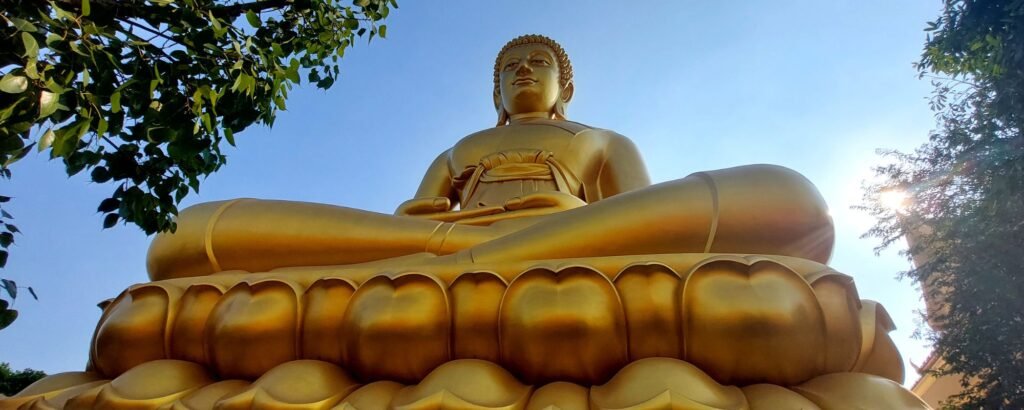
Stepping into Bangkok is like diving headfirst into a city that never sleeps — a lively mix of golden temples, buzzing markets, fragrant street food and a rhythm that feels both chaotic and captivating. On our journey through Thailand’s capital, we discovered a place where modern skyscrapers rise beside ancient shrines and every corner brings a new adventure. This guide shares our personal experiences, tips and insights to help you make the most of your time in this unforgettable city.
What Makes Bangkok So Special?
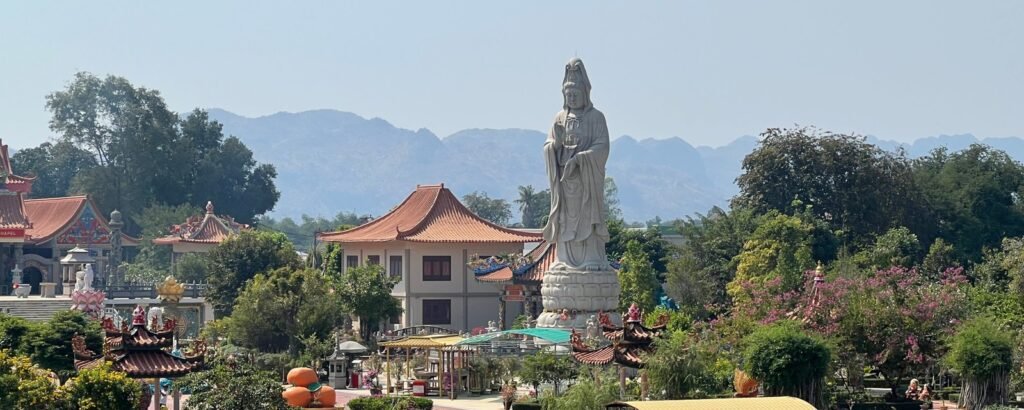
Bangkok is a city of contrasts – golden temples sit beside gleaming skyscrapers; street food stalls compete with rooftop bars and the chaos of tuk-tuks blends seamlessly with serene riverside life. It’s a place that can both overwhelm and enchant at the same time.
For us, Bangkok wasn’t just another destination. It marked the beginning of our long-term travel journey, where personal experiences shaped the way we explored the city. This blog isn’t just about what to see and do – it’s about what it felt like to truly live here: navigating daily life, discovering hidden food spots and sometimes learning the hard way about scams. For two country girls who usually shy away from big cities, we found ourselves completely embracing everything Bangkok had to offer — even making a promise to return every year if we can.
Table of Contents
✈️ Arrival and First Impressions
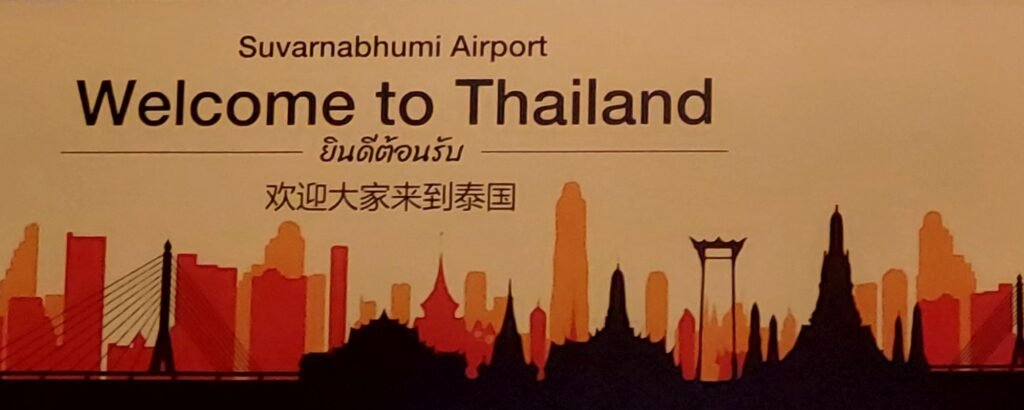
Our journey began in Auckland Airport, where Travel Anxiety had me double-checking passports at least a dozen times. I’ve written more about how I manage this in my Travel Anxiety Blog, which shares some of the tools and routines that help me feel calmer before flying.
I wasn’t sure why we couldn’t check in online, but I later learned that if you have a simple depart and return ticket, online check-in usually works. However, if your ticket includes multiple countries (like ours did), you must check in at each counter along the way and show proof of departure from every country you’re entering. A good lesson for next time.
A layover in Taipei gave us the chance to stretch out and enjoy a deep red sunset before boarding our EVA Air flight to Bangkok. The colour was striking, though not entirely natural – it’s often caused by air pollution and particles scattering light, something that gives many Asian city skylines their dramatic hues. Beautiful to look at, even if bittersweet in its reason.
👉 Travel Tip – SIM Cards & Connectivity & Money Exchange
At the airport I picked up a local AIS SIM card, which was set up on the spot while still keeping my NZ number active for online verifications — a real lifesaver for banking apps and ride services. If you’d rather go digital, eSIMs from Airalo can be purchased online before you arrive. Toni used an eSIM on her iPhone, while I opted for the AIS SIM on arrival. If you’re staying longer, topping up can sometimes be a little confusing especially in the smaller towns in Thailand, but locals are usually more than happy to help.
👉 Travel Tip – Apps to Download Before You Land:
- Grab – essential for rides and food delivery. Download it at home and load your credit card in advance so you’re ready to go. If you’re not familiar with the Grab booking process, pre-booking your first ride on Viator or GetYourGuide might make arrival less stressful.
- Food Delivery via Grab – perfect for those days when the heat and crowds are too much.
👉 Money Tip: Exchange only a small amount of cash at the airport – enough to get you through your first day. Bangkok has money exchange booths everywhere and they almost always offer better rates than what you’ll get at home. Just remember to bring your passport, as you’ll need it for every transaction.
🏨 Where We Stayed
Arriving late at night, I didn’t want the stress of navigating an Airbnb check-in in the dark (it was challenging enough to find during the day). Instead, we booked a hotel close to the airport that offered airport pickup, free wifi, and breakfast. It was the perfect soft landing. The next morning, a quick Grab ride (about 1 hour and $20 NZD charged straight to my card) took us into the city and on to our first Airbnb. Easy as.
Because we were in Bangkok for six weeks, I wanted us to stay in different neighbourhoods to really experience the city. Each area had a different vibe: Be Warned: Beds are hard.
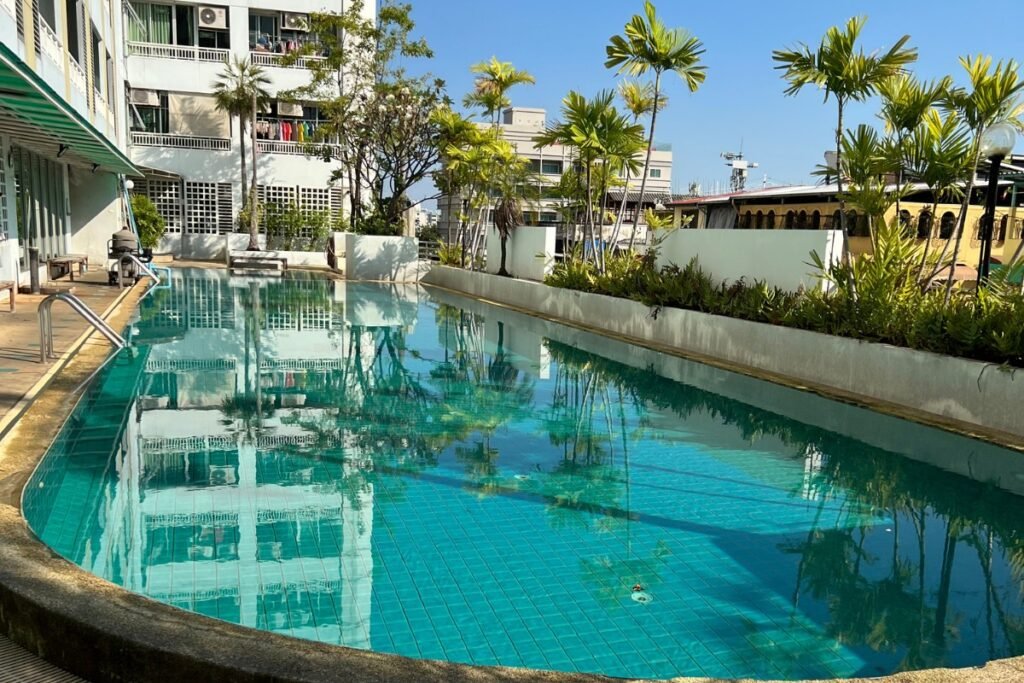
Airbnb in Sathorn – Local Experience
- Ticked all our long-stay boxes: pool, gym, AC, washing machine, reliable wifi.
- Host provided an incredible map of local eateries and activities that became our foodie treasure map.
- The neighbourhood was authentically local, full of street food and markets.
- Please note: While not every Airbnb reaches 4 or 5-star standards and some facilities may be more basic than expected, they can still be excellent value. Our stay in Sathorn wasn’t flash but it had everything we needed — so much so that we’ve already booked to return for another two months in 2026.
Airbnb in Klong Toei – A Step Up
- Modern, spacious apartment with a gym and rooftop pool.
- Upscale surroundings with big malls and hotels but also hidden street-food gems if you knew where to look.
- Meals ranged from disappointing food courts to some of the best pork hocks, BBQ chicken and oyster omelettes we tried in Thailand.
Khao San Road – Lively but Touristy
- Easy access to temples and popular attractions.
- Great bars for watching the sunset over the river – most needed bookings but if you arrive early, you can sometimes get a seat. Its truly worth it.
Bang Sue – Everyday Local Life
- Close to Chatuchak Market.
- A quieter, more residential feel with easy access to the BTS train network.
Out of everywhere we stayed, Sathorn stole our hearts. It had the best mix of local food, easy access to the city and a genuine neighbourhood feel – close enough to everything we needed but far enough away to enjoy the real local side of Bangkok living.
👉 Accommodation Tip: Most Airbnbs in Bangkok come with air conditioning, a pool, wifi, a kitchen, and a washing machine, which makes them ideal for long-term stays and budget-conscious travellers. Hotels, on the other hand, usually include aircon, wifi, and a pool, but you’ll pay extra for laundry, meals and other add-ons. Perfect if you want to be pampered, but Airbnb definitely gave us better value for an extended trip. Trip.com is highly recommended for Hotel bookings.
🚖 Getting Around Bangkok
We relied heavily on Grab, and honestly, it was one of the best decisions we made. In fact, if your destination requires two or three transport changes on the BTS, Metro or bus, Grab usually works out as the better option — more direct, less stressful and often not much more expensive.
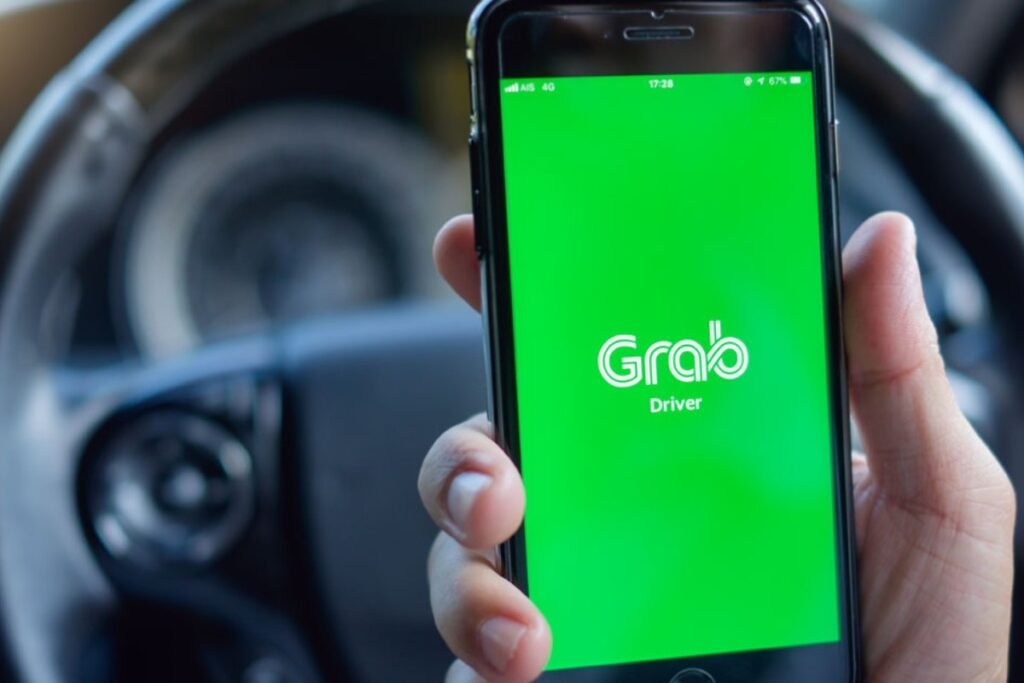
Why We Loved Grab
- Options from budget rides to premium cars.
- A “For Women By Women” feature that added an extra sense of safety.
- Cashless payments with tolls clearly shown up front – no haggling, no surprises.
- Some taxis double as Grab drivers
BTS Skytrain and Metro
We still used the BTS Skytrain and Metro for short trips and they were both straightforward and affordable options. At peak times they can get extremely packed, but overall the systems are clean, efficient and easy once you get the hang of them. The counter staff were always helpful – if you’re struggling with the maps or ticket machines, just ask and they’ll point you in the right direction.
👉 A few tips if you’re using the BTS and Metro:
- Tickets & Cards: You can buy single-journey tokens from machines or get a rechargeable Rabbit Card for convenience if you’ll be staying longer.
- Fares: Prices usually range between 16–59 baht depending on distance, making it very budget-friendly.
- Navigation: Stations and trains are clearly marked in both Thai and English and announcements are made in English too.
- Peak Times: Avoid rush hours (7–9 AM and 5–7 PM) if you can – the trains are often packed shoulder-to-shoulder.
- Connections: The BTS and MRT (Metro) systems connect at key stations, so you can transfer easily between lines when exploring the city.
For quick journeys, especially during the cooler parts of the day, the BTS and Metro were a reliable way to get around and avoid the city’s infamous traffic jams.
Bangkok’s Buses
We also caught buses often, and there are three main types:
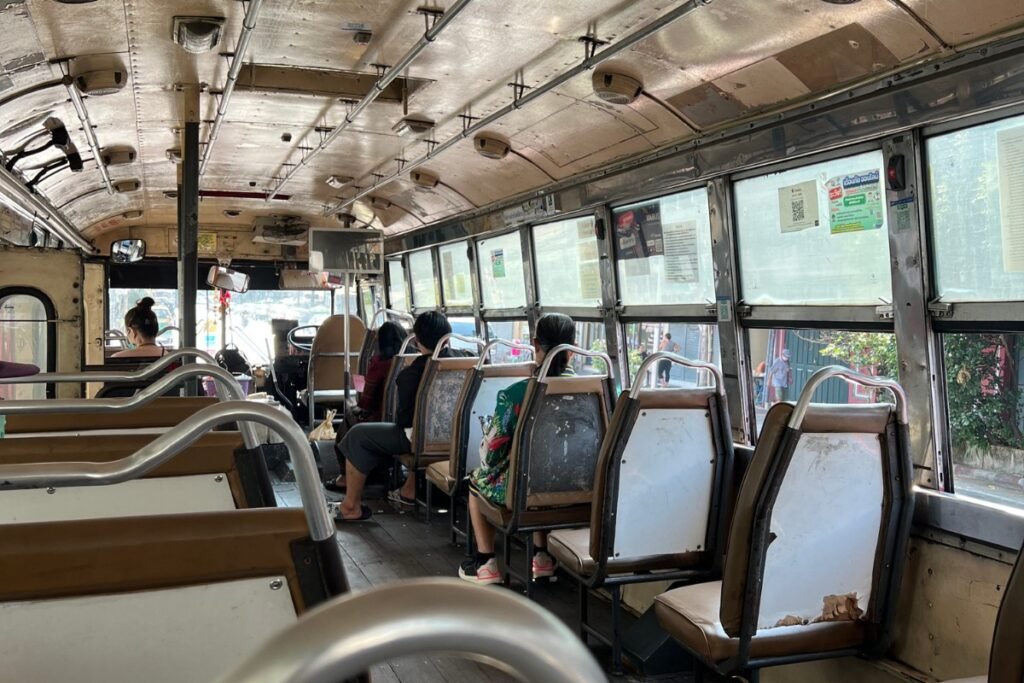
- Electric & Air-Con Buses – the most modern and comfortable.
- Standard Air-Con Buses – slightly older but still cool.
- Open-Air Buses (no windows) – hot and breezy, but perfectly fine
All three take you to the same place, with only a small difference in price — usually just a few baht more for air conditioning. How we chose usually came down to whichever bus arrived first, especially since standing outside in the heat wasn’t much fun.
👉 Tip: Google Maps has all the bus timetables. Just enter your destination, select “Directions,” and then choose either train or bus — it’s very accurate. I kept the app open the whole trip so I knew when to hop off.
👉 Food Delivery Tip: Grab isn’t just for rides. It’s also Bangkok’s go-to food delivery app, used constantly by locals. While we preferred eating out, it’s a lifesaver when the heat gets overwhelming or you just don’t feel like heading out.
👉 Budget Tip: If there are two or more of you, Grab often works out cheaper than everyone paying for individual BTS tickets – plus you get door-to-door comfort.
🍲 Food Adventures
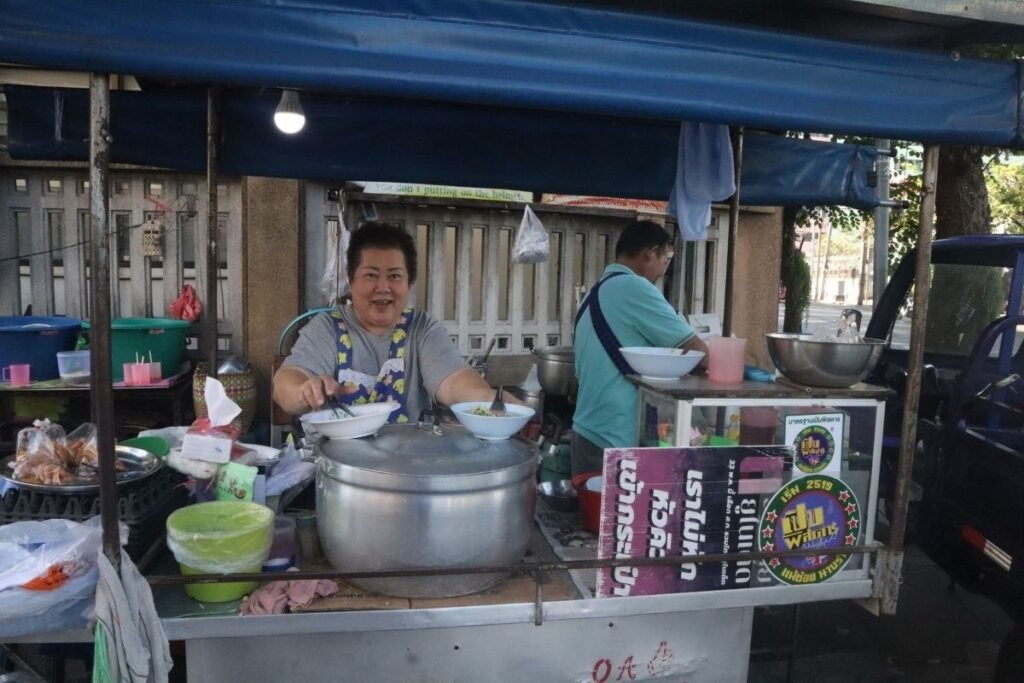
Bangkok truly won us over through its food. From the very first night we arrived, it was clear that eating here would become a central part of our journey. We started at an upscale food court, where the variety was overwhelming and the prices surprisingly reasonable. But it was the recommendations from our Airbnb host’s map that really led us to the meals we still talk about today.
Breakfast quickly became about congee – a local favourite we found for just 50 baht per bowl. Simple, filling, and comforting, it set the tone for many mornings. To keep within our $20 NZD daily food budget, we paired this with yoghurt and fresh fruit from supermarkets. Be warned: Western food is expensive in the supermarkets. Over our first 10 days, we worked through our host’s list of eateries and certain favourites emerged: Thai Hot Pot, Chicken Curry, and Banana Roti (which quickly became a guilty pleasure).
But food in Bangkok isn’t just about finding the cheapest meal or the trendiest dish. Most people tend to stick to what they know, enjoying familiar dishes from their origins. We pushed ourselves outside that comfort zone, trying new flavours and combinations at every opportunity. We both love chilli, so the spicy dishes never phased us – in fact, the hotter, the better.
One thing we learned was that not all food markets lived up to the hype. Sometimes the meals felt rushed, more about turnover than taste, leaving us a bit disappointed. But step just 20 feet outside the market, and you’d often find a small family-owned restaurant or food cart serving dishes made with love and care – usually at a fraction of the price. Those meals, cooked with pride and heart, were always the most memorable.
👉 Lesson learned: The best food in Bangkok isn’t always where the crowds of tourists are. Wander a little further, follow the locals and you’ll find dishes that taste like they’ve been made just for you.
🎟️ Tours in Bangkok
Our quest to experience the heart of Bangkok led us to research a variety of tours. After sifting through countless reviews, many felt too formulaic — just another number on a bus, with the experience dependent on the luck of drawing a good guide. Wanting something more personal, we hired a private car and driver through Bangkokvantravel.com
Our wish list included four destinations: Maeklong Train Market, Damnoen Saduak Floating Market, the Bridge over the River Kwai and Erawan Falls. To our delight, the private option was actually more cost-effective than booking two standard tours, and it gave us the freedom to spend as much or as little time as we wanted at each stop.
Our driver arrived promptly at 7 AM directly to our Airbnb, which was such a relief. It meant we didn’t have to navigate our way across Bangkok to some tour office at the crack of dawn — a small but important detail that made the day much smoother. His English was limited, but between hand gestures and smiles, we managed just fine.
Maeklong Train Market
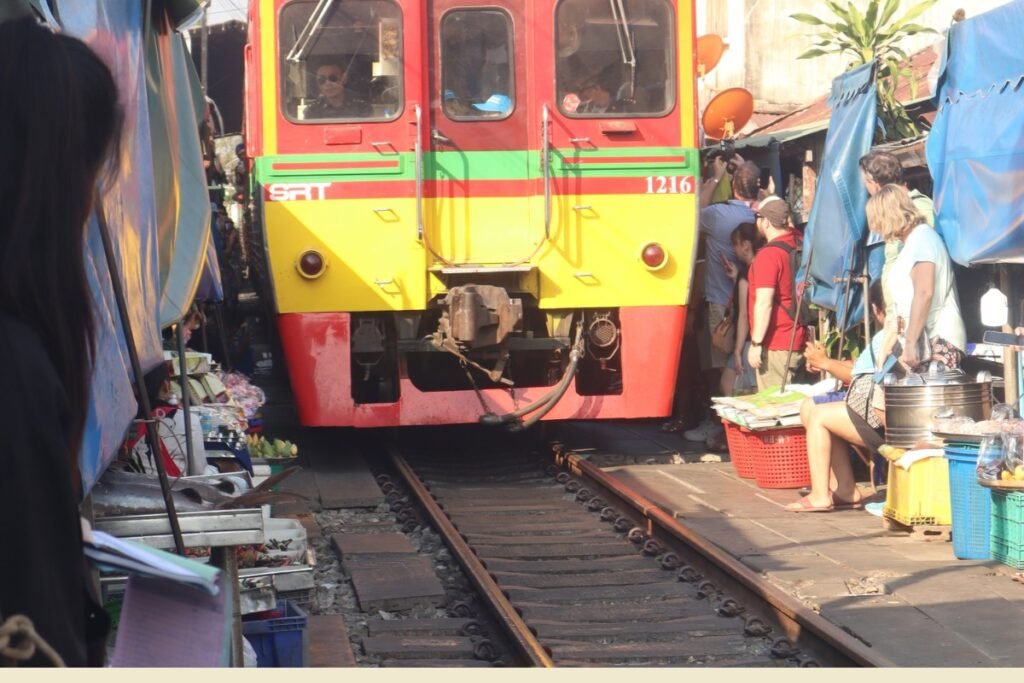
- This market was an experience. Watching the vendors swiftly shift their goods off the train tracks and then just as quickly move them back again — was a spectacle in itself. We were lucky enough to find a less crowded spot at the end of the tracks for a second viewing, capturing some incredible close-up shots.
- 👉 Tip: Be warned — it gets overwhelmingly packed, and trying to capture that perfect photo isn’t always easy. Sometimes it’s better to put the camera down and just enjoy the moment.
Damnoen Saduak Floating Market
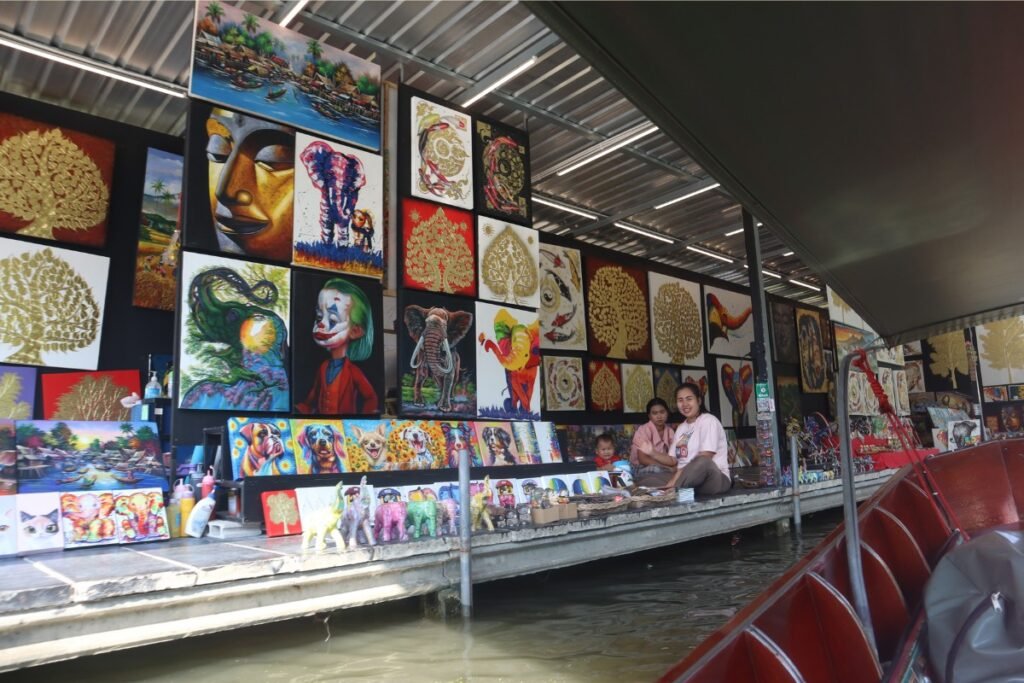
- We have to be honest — we didn’t enjoy this one very much. The floating market experience felt more like a setup: you pay 3000baht to sit in a longboat and get stopped at every shop the driver is connected to. After a while it became uncomfortable, as we were constantly hassled to buy things we didn’t want. Prices were noticeably higher than at Maeklong and the pressure to spend took away from what could have been a more enjoyable experience. That said, it was still fascinating to see — equal parts awe and slight discomfort. Vendors paddled up eagerly with souvenirs and snacks, while we stuck to our plan of focusing on culture and food rather than shopping. For us, it became an interesting, if not entirely authentic, slice of Thai commerce rather than a highlight.
- 👉 Tip: If you do want to experience Damnoen Saduak, consider visiting the road-accessible parts of the market instead of booking the longboat ride. You’ll avoid the constant pressure to shop and still get a feel for the atmosphere.
Bridge over the River Kwai
- This was the most sombre stop of the day. Standing on the iron bridge in the scorching heat, we reflected on the thousands of soldiers including Australians and New Zealanders — who suffered as prisoners of war here in 1942. Visiting the nearby museum gave us a deeper understanding of the hardships endured, making it a difficult but important stop on our journey.
Erawan Falls
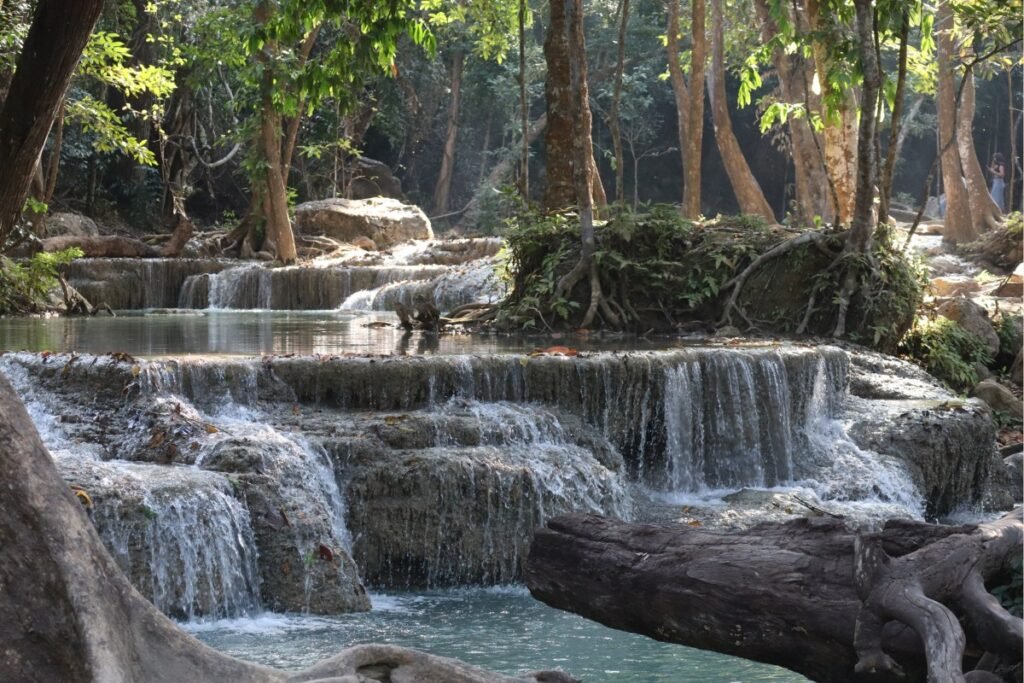
- Our final destination was the breathtaking Erawan Falls. Arriving later in the day, after the crowds but before closing time, made the visit feel even more special. The small entry fee was well worth it — the first couple of tiers were perfect for swimming and the cool water was a welcome relief from the heat. The playful fish nibbling at our legs added a quirky (and slightly startling!) touch to the swim.
The drive back to Bangkok was long (3.5hrs) but quiet and reflective. We watched a deep red sunset from the car window as our driver navigated the chaos of Bangkok’s traffic. After 12 hours, we looked back on a day that took us from bustling markets to tranquil waterfalls and agreed that this private tour was worth every cent.
🚫 Learning the Hard Way: Scams
I thought I’d done enough YouTube research to avoid the classic scams but this day proved me wrong. One day, we were caught off guard by a tuk-tuk driver who jumped out in front of us — full of enthusiasm and with a friendly, grandfatherly charm offering what sounded like an unbelievably cheap 1-hour tour for just 50 baht. Too good to be true? Absolutely. Within 5 minutes, he detoured us to a longboat service, claiming it was a “special deal.” Our quick city tour ended at the longboat company, where the price started at 1500 baht each and, after some haggling, dropped to 800 baht — with the promise of finishing at Chinatown, our original destination.
The canal tour turned out to be underwhelming and felt like a waste of money. When we finally reached Chinatown, a seemingly friendly man approached us, claiming to be an English teacher visiting family. He warned us that Chinatown Market was closed on Sundays (Chinatown never closes) and steered us toward a restaurant called Jo Jo’s. He even arranged another tuk-tuk and tried to convince us to take yet another “special” tour.
Thankfully, we trusted our instincts, skipped the restaurant, and headed to the ferry terminal instead. Later, we discovered Jo Jo’s was part of a well-known scam, notorious for overpriced food and terrible reviews.
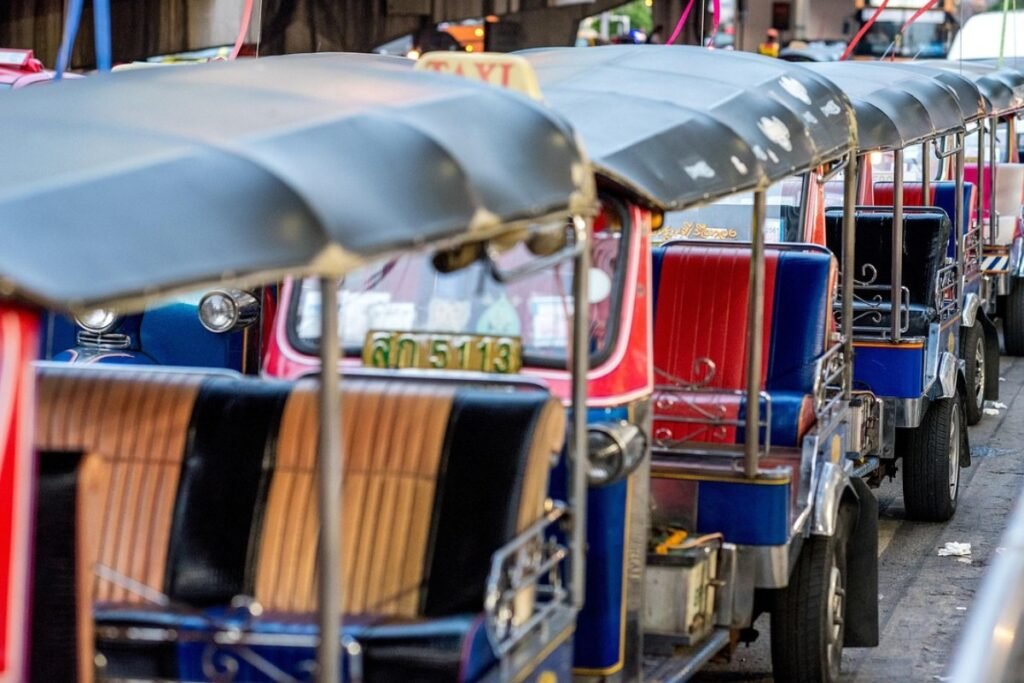
👉 Our rule now: Avoid tuk-tuk tours altogether and stick to Grab or trusted bookings through platforms like Viator or GetYourGuide. OR be very firm when they try to divert.
💆 Staying Healthy While Travelling
At our St(age) in life, maintaining good health is a top priority, particularly with the scale of our travels. We’ve always been open to exploring alternative health practices from chiropractic care and osteopathy to massage and acupuncture and Thailand gave us the perfect opportunity to continue this approach.
After some research, we found a local clinic Lekang Clinic in Nana, offering acupuncture and Chinese medicinal treatments, which helped ease some persistent aches and pains we’d carried into the trip.
Travel isn’t just about sightseeing for us – it’s also about well-being. In Bangkok we:
- Built daily routines with swimming, long walks, and gym sessions.
- Indulged in Thai massages that were both healing and rejuvenating.
- Focused on nourishing food, hydration, and restful sleep.
The combination of self-care, good food and the rejuvenating Thai sunshine kept us feeling fantastic — strong, balanced and ready for the next leg of our journey.
🌏 Final Thoughts
Bangkok was a whirlwind – at times overwhelming but always rewarding. For us, it wasn’t about ticking off every landmark but about living in the city: eating where locals eat, navigating the heat, learning through mistakes and slowing down to enjoy the everyday rhythm.
If you’re planning a trip, my advice is this: balance the must-see attractions with time to explore your neighbourhood, try unfamiliar foods and let Bangkok surprise you. That’s when the real magic happens.
🌍 Travel Planning Resources
These are the tools we personally use and trust when planning our travels from finding a place to stay to booking activities, transport and insurance. Let your Tohu guide you — Trust the Journey and follow what feels right for you.
- ✈️Flights – Compare great deals with Trip.com then Kiwi.com for flexible, affordable options.
- 🚐 Campervans – Compare rental deals with Motorhome Republic across Aotearoa and beyond.
- 🛏️ Stays – Compare hotels on Trip.com and TripAdvisor or Booking.com.
- 🚐 Rental Cars – Compare prices and book through Airport Rentals by Motorhome Republic for trusted brands and easy airport pickup.
- 🎟️ Activities – Browse tours and experiences on Viator, Get Your Guide, or TripAdvisor
- 🚆12Go Asia – Compare and book trains, buses, and ferries across Asia in one place with 12Go.
- 🛡️ Travel Insurance – Get flexible short-term coverage with Insubuy for your next holiday.
- 🔒 Protect Your Privacy with a VPN – We recommend Surfshark VPN for secure and private browsing while travelling. It’s fast, affordable and works worldwide — perfect for public Wi-Fi at airports, cafes and hotels.
- 📱 Travel eSIM – Stay connected with Airalo
- 💼 Lounge Access – Treat yourself with Priority Pass – for UK or US
- 🎶 Events & Concerts – Book tickets worldwide through Ticketmaster.
🧭 Note: Some booking links can be a bit shy when you’re using a VPN. If one doesn’t open, try pausing your VPN or switching to a different server location or secure Wi-Fi network to get things flowing again.
The world is a book and those who do not travel read only one page