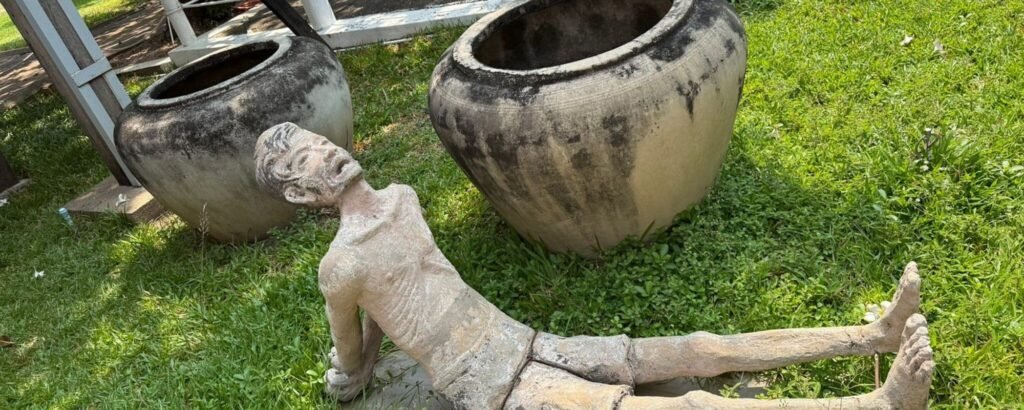
There are places we visit when travelling that we know will stay with us long after we leave. Not because they are beautiful or exciting, but because they ask us to stop, listen and remember.
In Phnom Penh, two such places are the Tuol Sleng Genocide Museum and Choeung Ek Genocidal Center. Both preserve the stories of people who suffered and died during the Khmer Rouge regime, one of the darkest periods in Cambodia’s history.
This isn’t an easy story to tell, and it shouldn’t be. But we believe understanding this part of Cambodia’s past matters, particularly when travelling through a country where the consequences of what happened are still within living memory.
Understanding Cambodia’s Past
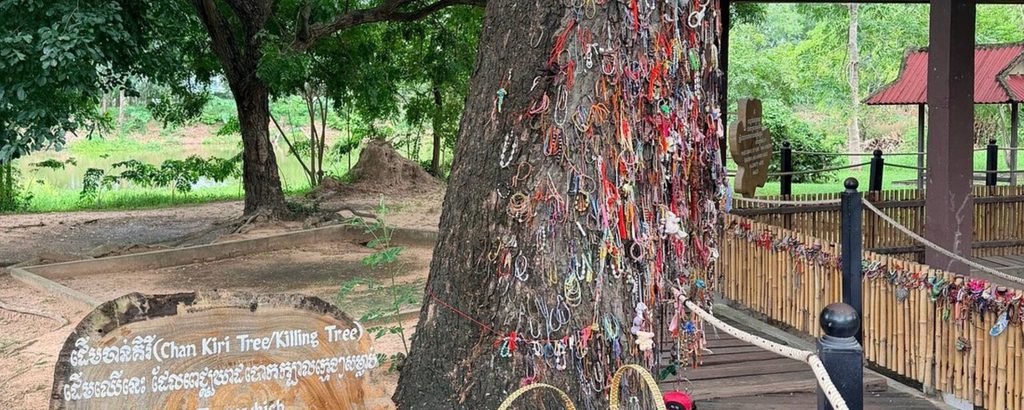
Between 1975 and 1979, the Khmer Rouge attempted to radically reshape Cambodian society.The Khmer Rouge emptied cities, separated families and forced people into labour under brutal conditions. They imprisoned, tortured and executed those they considered enemies of the regime, while starvation, disease and exhaustion claimed many more lives.
The scale of the loss is difficult to comprehend.
Behind every number was a person. A parent. A child. A grandparent. A brother or sister. Someone who had plans for their life and people who loved them.
That is something numbers alone can never properly convey.
Today, places such as Tuol Sleng and Choeung Ek preserve part of that history. They aren’t simply places where something terrible once happened. They are memorials that honour those who lost their lives and preserve their stories for future generations.
Contents
A History Within Our Lifetime
One of the things that made this history difficult to comprehend was realising just how recent it is.
I was a teenager living in Singapore when the aftermath of the Khmer Rouge period was still unfolding in this part of Southeast Asia. At the time, we heard about Cambodia through the news and conversations around us, without truly understanding the scale of what its people had endured.
Many years later, standing in Cambodia brought a very different perspective.
The events we were learning about hadn’t happened hundreds of years ago. They had taken place within our lifetime, and there were Cambodian families still living with the loss and consequences of those years.
That thought stayed with us as we visited Tuol Sleng and Choeung Ek.
This was not distant history.
For many Cambodians, it was their family history.
Tuol Sleng Genocide Museum
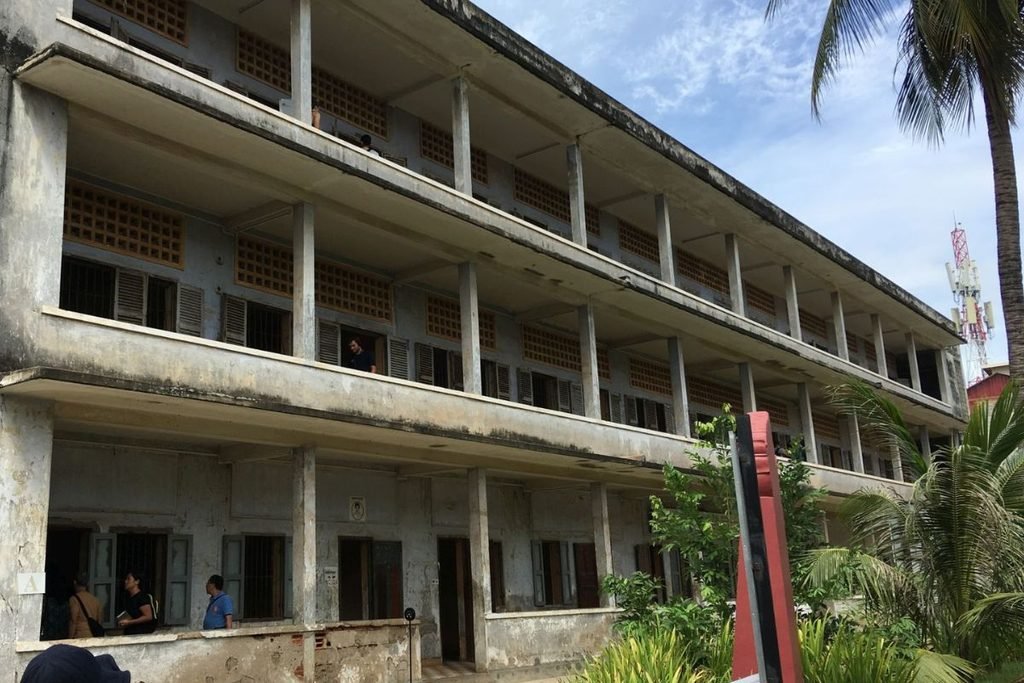
From the outside, Tuol Sleng doesn’t look like a place where such terrible things could have happened.
It was once a secondary school. There are classroom blocks, balconies and an open courtyard, the sort of place where students and teachers should have filled the buildings with everyday school life.
In 1976, the Khmer Rouge regime turned the school into Security Prison 21, known as S-21.
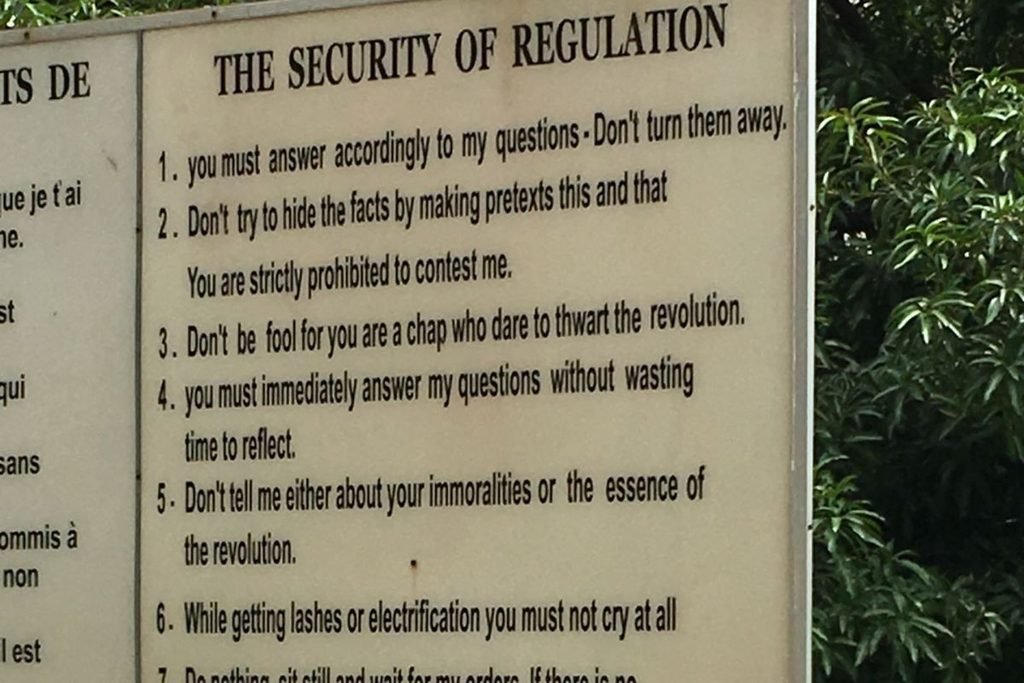
Classrooms became cells and interrogation rooms. The Khmer Rouge covered windows and balconies with barbed wire. They brought people here to photograph, question and torture them, imprisoning men, women and children within these buildings.
Very few survived.
Walking Through S-21
There is something particularly confronting about walking through the rooms because the museum has deliberately kept so much of them stark. You aren’t walking through a modern museum with polished displays. You’re walking into the actual buildings where the Khmer Rouge imprisoned people.
Some rooms are almost empty, while others contain photographs, documents, cells and objects that tell you exactly what these spaces became. And then there are the faces.
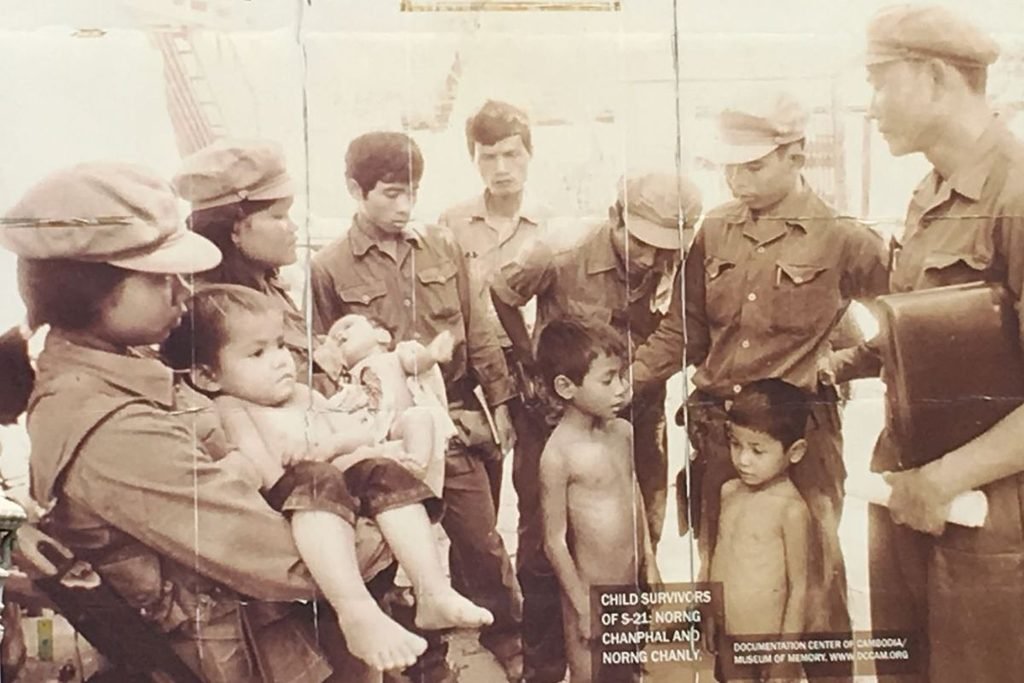
Photograph after photograph shows the people the Khmer Rouge brought through S-21.The Khmer Rouge kept meticulous records of many prisoners, including photographs taken when they arrived. Looking at those images changes everything. They stop being statistics.
You find yourself looking into the face of one person, then another, and another. Some look frightened, some confused, while others stare directly into the camera. And among them are children.
There isn’t really anything you can say that makes that easier to comprehend.
Take Your Time Here
We moved through Tuol Sleng quietly.
There was no desire to rush, and certainly no feeling that we needed to see everything quickly so we could move on to the next place on the itinerary.
Sometimes we stopped simply because we needed a moment before walking into the next room.
If you visit, give yourself permission to do the same.
You don’t have to read every word or look at every photograph. Some of the material is extremely confronting, and everyone will respond differently.
- Allow Plenty of Time: Don’t squeeze this visit between other activities.
- Keep Your Voice Low: Remember where you are and what happened here.
- Follow Photography Restrictions: Respect any signs asking visitors not to photograph certain areas or displays.
- Don’t Feel You Need to Photograph Everything: Some things are better experienced quietly and remembered.
- Take a Break: If you need to step outside into the courtyard for a while, do it.
How the Story Has Been Preserved
Something that stayed with us was the way the Cambodian people have chosen to preserve and present Tuol Sleng.
Considering the horror of what happened here, we felt Cambodia had preserved the site with enormous care. Nothing felt sensational or intended simply to shock visitors. The buildings, photographs, personal accounts and remaining evidence allow the truth of what happened here to speak for itself.
The entire site felt honest, dignified and deeply respectful, honouring the people who lost their lives here.
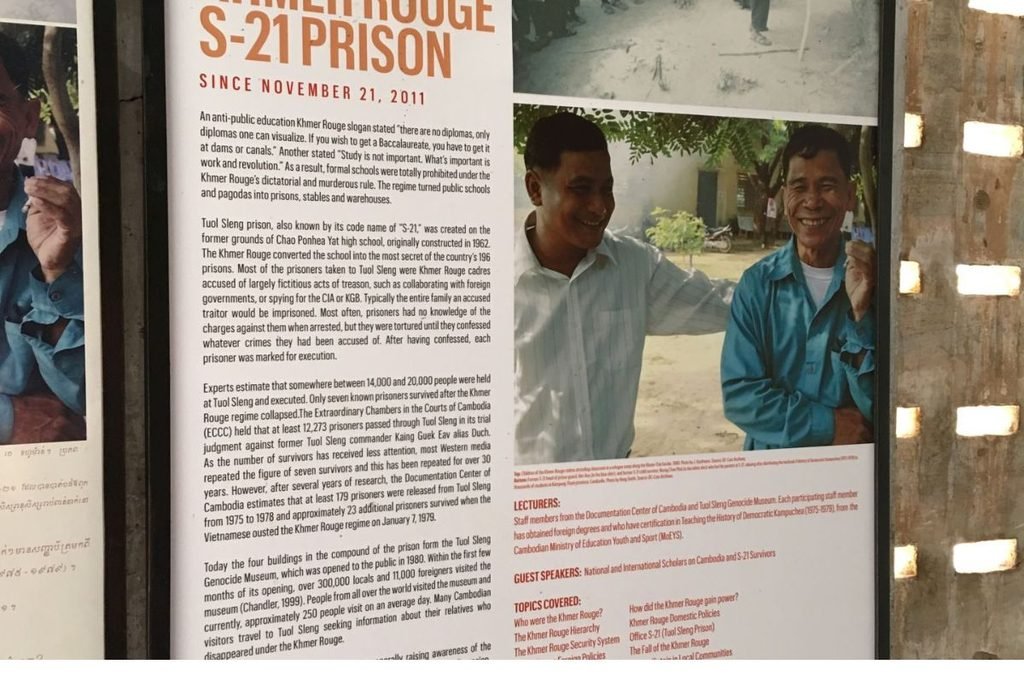
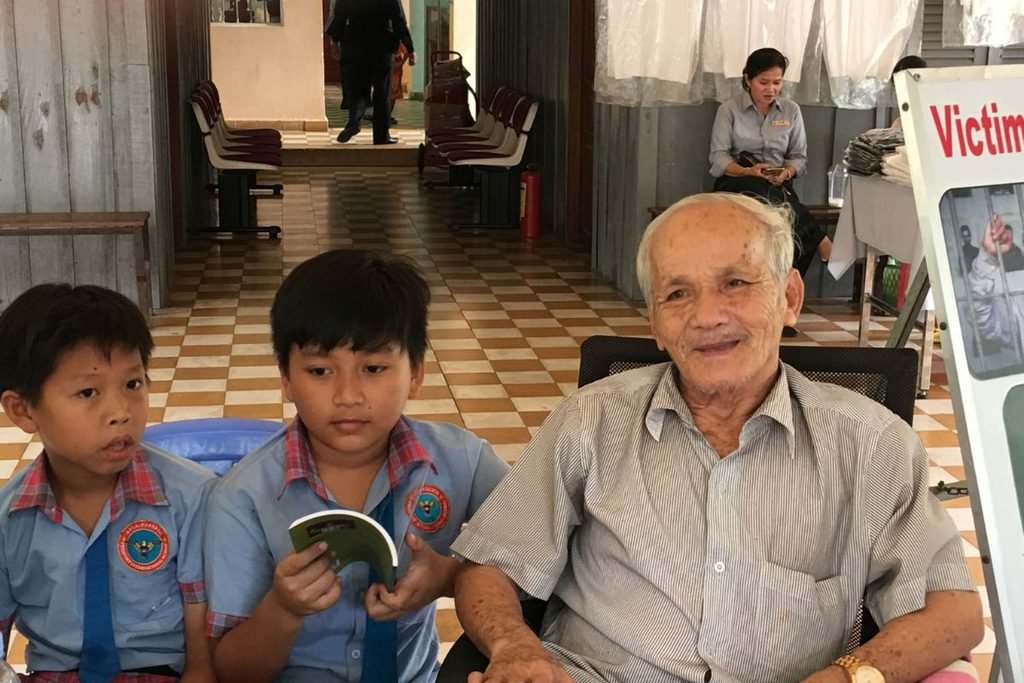
During our visit, there were also survivors of S-21 at the museum. Seeing someone sitting in the grounds who had actually lived through the events we had just been learning about was difficult to put into words. Suddenly, the photographs and documents weren’t simply telling us a story from the past.A person who had experienced it was right there in front of us.
We also encountered a former guard from the Khmer Rouge period at the site. His presence brought another, very different dimension to what we were trying to understand.
We didn’t leave Tuol Sleng feeling that we understood everything that happened here. I don’t think a visitor ever could.
But we left with enormous respect for the way Cambodia has preserved this place, allowing the evidence, the survivors and the stories of those who never left to remain part of the country’s historical record.
More Than a Museum
Calling Tuol Sleng a museum almost feels inadequate.
It preserves evidence of what happened, but it also preserves the identities of people who might otherwise have disappeared into a number.
- Their photographs remain.
- Their names remain.
- Their stories remain.
And perhaps that is one of the most important reasons places like Tuol Sleng continue to exist.
Not so we can walk through and say we have seen them.
But so we remember the people who suffered here as people.
Choeung Ek Genocidal Center
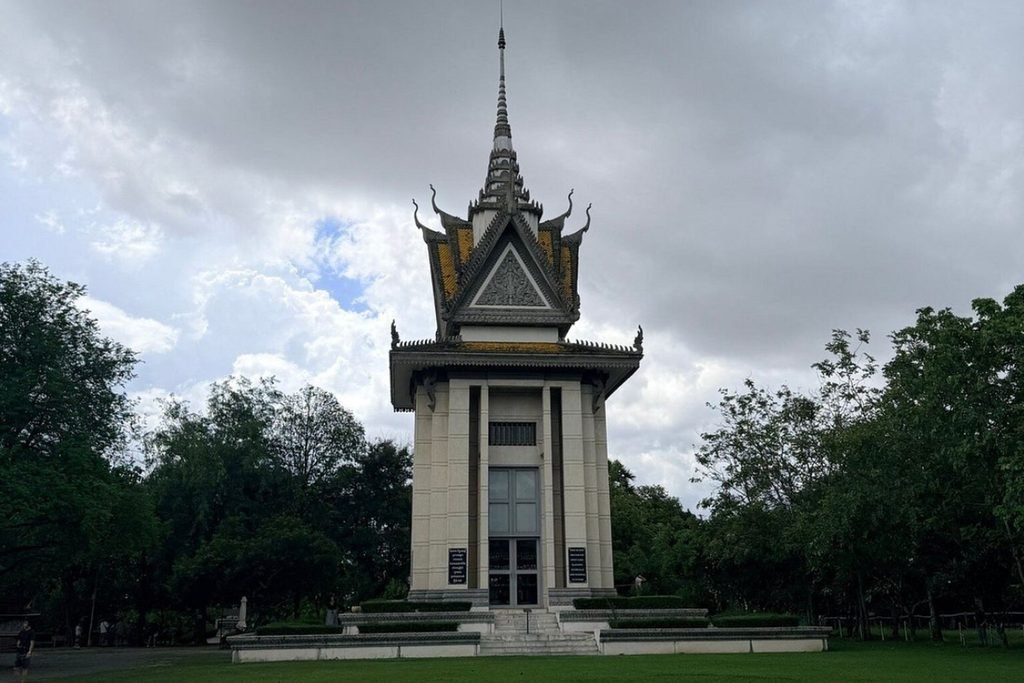
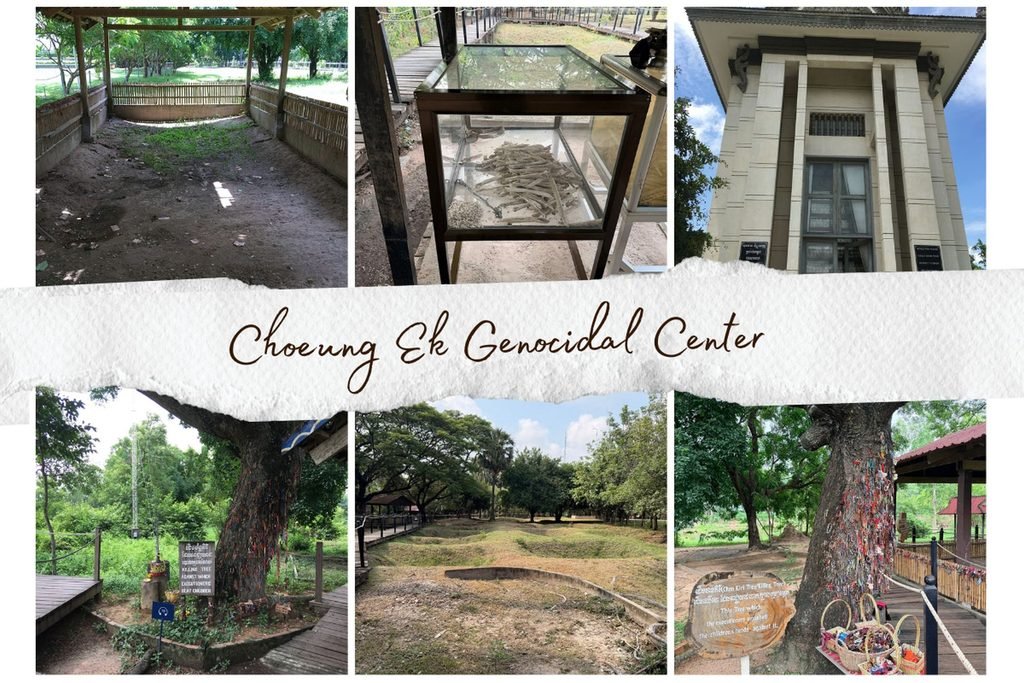
Around 15 kilometres outside Phnom Penh lies Choeung Ek Genocidal Center, the best known of the sites commonly referred to as Cambodia’s Killing Fields.
Before visiting Cambodia, we had heard the term “Killing Fields” many times. What we hadn’t fully understood was that it doesn’t refer to one single place. Researchers have identified sites associated with executions and mass graves across Cambodia.
Choeung Ek is one of them.
And after the enclosed rooms and corridors of Tuol Sleng, arriving here feels very different.
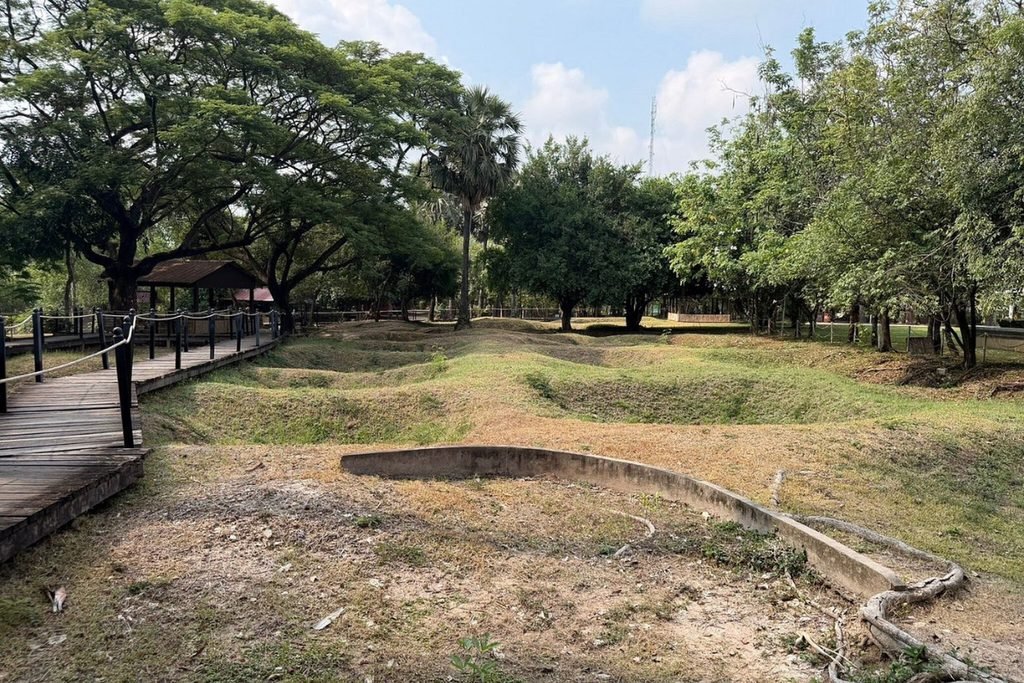
It is open. Green. Quiet.
At first glance, there is almost a peacefulness to it.
Then you begin to understand what happened beneath the ground you’re walking on.
From S-21 to Choeung Ek
The Khmer Rouge eventually transported many S-21 prisoners to Choeung Ek.
Knowing this creates a connection between the two places that is difficult to ignore. You have just stood inside the rooms that once held these prisoners, looked at their photographs and learnt some of their names.
Now you are standing at the place where many of their lives ended.
That is why, for us, visiting Tuol Sleng first was important.
It gave Choeung Ek faces.
Walking Through Choeung Ek
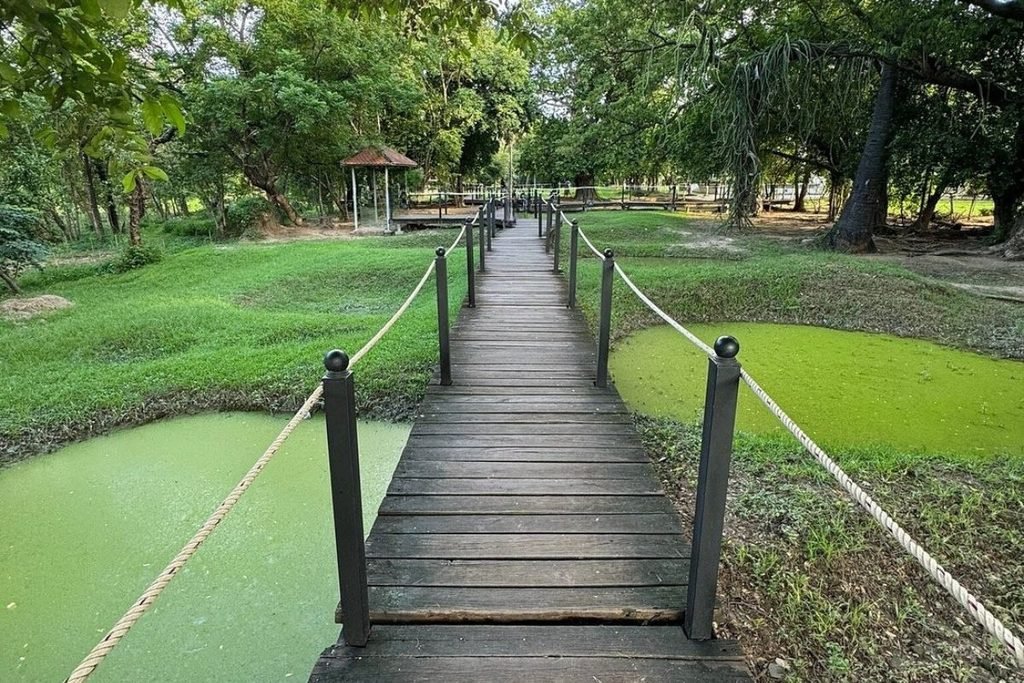
The grounds contain a number of mass-grave sites, now marked and protected. As you walk through, information along the route explains what investigators found in different areas and shares what they learnt about the people brought here.
There are moments when the surroundings seem almost impossibly calm compared with the history you’re hearing.
Birds are calling. Trees move in the breeze. People walk quietly along the paths.
And underneath all of that is the knowledge of what happened here.
There is no need to rush.
In fact, this is somewhere that seems to make you naturally slow down.
The Memorial Stupa
At the centre of Choeung Ek stands a Buddhist memorial stupa, created to honour the victims.
Inside are human remains recovered from the mass graves.
It is confronting.
But once again, we didn’t feel the presentation of this history tried to shock visitors simply for the sake of it. The memorial forces you to acknowledge the scale of what happened while remembering that these remains belonged to individual people.
People with families.
People who had lives before the Khmer Rouge brought them here.
People whose lives and stories deserve our remembrance and respect.
Visiting Respectfully
If you visit Choeung Ek, remember that you are walking through a memorial and burial site, not simply another stop on a Phnom Penh sightseeing tour.
You may see people taking photographs, but that doesn’t mean you need to photograph everything you see. There were moments when putting the camera away felt far more appropriate to us.
- Keep Voices Low: The quiet is part of the experience of being here.
- Stay on the Paths: Follow the signs and respect protected areas.
- Take Your Time: Allow yourself to stop when you need to.
- Be Thoughtful With Photography: Consider what you’re photographing and why.
- Allow Space Afterwards: This isn’t somewhere we’d recommend leaving and immediately rushing into the next activity.
The Butterflies
One of our clearest memories of Choeung Ek is something we hadn’t expected at all.
There were butterflies everywhere.
As we walked through the grounds, they seemed to be all around us, moving quietly amongst the trees and across a place carrying so much sadness.
Our guide told us that the butterflies were their souls.
Whether you share that belief or not, standing there in that moment, it was incredibly moving.
After everything we had seen at Tuol Sleng and everything we were learning at Choeung Ek, those butterflies somehow brought a sense of peace to a place where we hadn’t expected to feel any.
We still talk about them.
Not the numbers.
Not the dates.
The butterflies.
A Place That Stays With You
There are travel experiences you remember because of what you saw.
Choeung Ek is different.
We remember how quiet we became.
The butterflies and the words of our guide have stayed with us. We remember looking around and trying to reconcile the peaceful place in front of us with what we had just learnt.
And we remember leaving with enormous respect for the care Cambodia has taken to preserve these places and keep the memory of those who died here alive.
You don’t leave Choeung Ek with photographs you can’t wait to show someone.
You leave with something much heavier: the responsibility to remember what you have learnt.
Understanding the Khmer Rouge Period
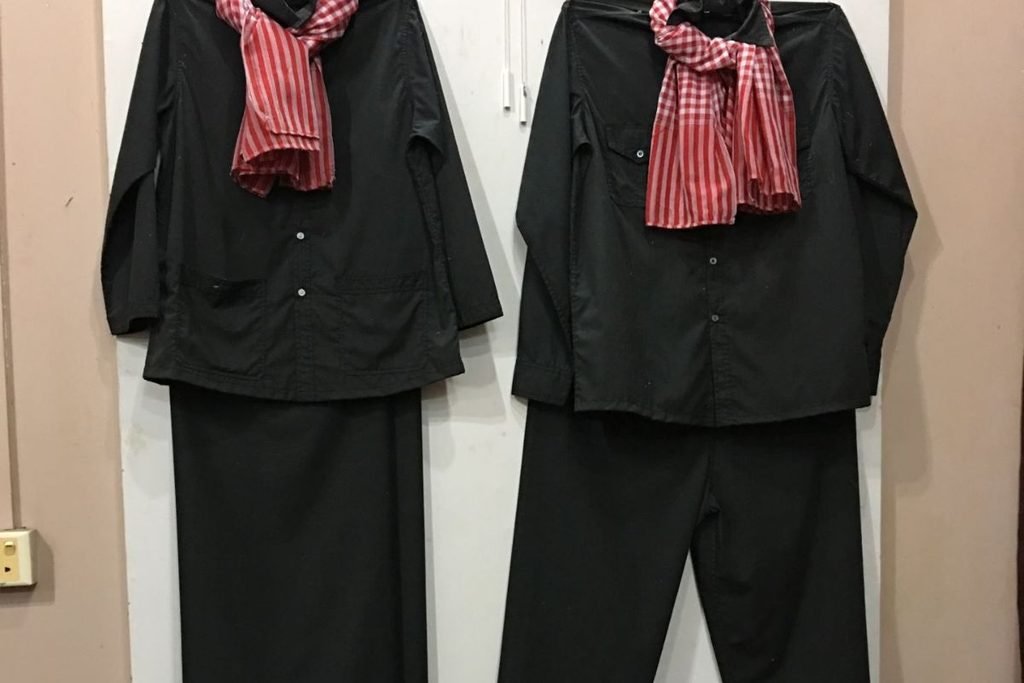
To understand Tuol Sleng and Choeung Ek, it helps to understand a little of what was happening across Cambodia at the time.
On 17 April 1975, Khmer Rouge forces took control of Phnom Penh. Almost immediately, they forced people from the capital into the countryside, expelling at least two million people from Phnom Penh alone. Many believed they would return within days. They didn’t.
Led by Pol Pot and the Communist Party of Kampuchea, the Khmer Rouge wanted to radically transform Cambodia into an agricultural society. They emptied cities, abolished money and many existing institutions, suppressed religion and forced people to work collectively in rural areas.
The regime separated families.
People worked under brutal conditions with inadequate food and medical care.
The Khmer Rouge arrested, imprisoned and killed those they considered enemies of the regime.
Teachers, professionals, government workers and others considered connected to the former society were among those targeted, but the violence eventually reached deep into the Khmer Rouge’s own ranks as suspicion and internal purges grew.
The Khmer Rouge also persecuted ethnic and religious communities. The later Khmer Rouge tribunal found that crimes committed during the regime included crimes against humanity, war crimes and genocide.
Three Years, Eight Months and Twenty Days
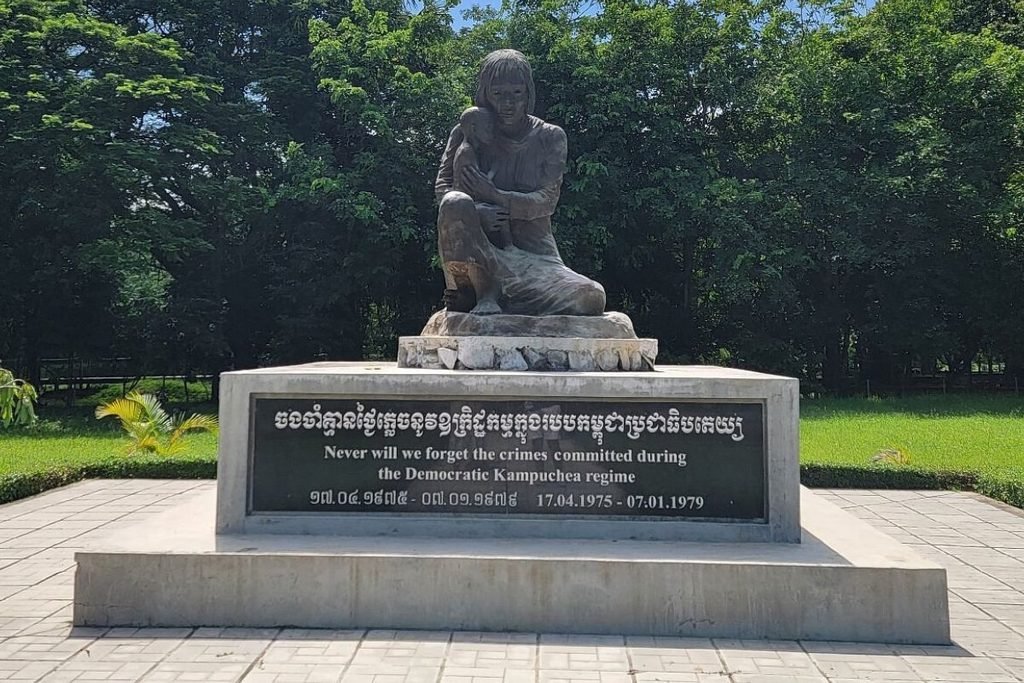
The Khmer Rouge controlled Cambodia from 17 April 1975 until 7 January 1979.
Three years, eight months and twenty days.
Such a short period of time when you see it written down.
Yet estimates suggest between 1.5 and 2 million people died through execution, starvation, disease, forced labour and the conditions imposed by the regime.
It is a number so large that it becomes difficult to comprehend.
Perhaps that is why the photographs at Tuol Sleng affected us so much.
Because instead of trying to understand millions, you find yourself looking at one face.
Then another.
And another.
The End of the Regime Wasn’t the End of the Story
Vietnamese forces entered Cambodia in late 1978 and by 7 January 1979 had taken control of Phnom Penh, bringing the Democratic Kampuchea regime to an end.
But Cambodia couldn’t simply begin again the following morning.
The regime destroyed families, displaced communities and devastated the country’s institutions. Survivors then faced the enormous task of rebuilding their lives while carrying experiences most of us can barely imagine.
Justice would also take decades.
The Extraordinary Chambers in the Courts of Cambodia, established through an agreement between Cambodia and the United Nations, later investigated senior Khmer Rouge leaders and others considered most responsible for crimes committed during the regime.
And this is perhaps the part that is easiest to forget when we talk about history.
1979 wasn’t very long ago.
For many Cambodians, this isn’t a story their families have carried down from some distant past.
There are people alive today who survived it.
Families lost parents, grandparents, brothers, sisters and children.
Others grew up without family members they should have known.
And there are generations who inherited the consequences of something they never experienced themselves.
That is why places such as Tuol Sleng and Choeung Ek matter.
They preserve evidence of what happened.
But more importantly, they preserve the memory of the people it happened to.
Final Thoughts
This was never going to be an easy part of Cambodia to write about.
We have shared what we saw and how it affected us, but we also know that this is not our story. It belongs first to the Cambodian people who lived through these years, to those who survived, and to the families who continue to carry their memories.
What we can do as visitors is listen.
We can walk through these places respectfully, read the names, look at the photographs and take the time to understand what happened rather than simply passing through.
We can also remember that Cambodia is far more than the darkest years of its history.
The Cambodia we experienced gave us warmth, laughter, incredible history, beautiful temples, busy streets, wonderful food and people simply getting on with everyday life. Tuol Sleng and Choeung Ek are part of Cambodia’s story, but they do not define the country or its people.
There is one memory, though, that will always stay with us.
The quiet grounds of Choeung Ek.
The butterflies moving around us.
And the words of our guide telling us they were the souls of those who had died there.
We arrived wanting to understand more about Cambodia’s past.
We left understanding why we must never forget.
“Some journeys show us the beauty of the world.
Others ask us to remember its stories, honour its people, and carry what we have learned with us.”
🌍 Travel Planning Resources
These are the tools we personally use and trust when planning our travels from finding a place to stay to booking activities, transport and insurance. Let your “Tohu” guide you “Trust the Journey” and follow what feels right for you.
- ✈️Flights – Compare great deals with Trip.com then Kiwi.com for flexible, affordable options.
- 🚐 Campervans – Compare rental deals with Motorhome Republic across Aotearoa and beyond.
- 🛏️ Stays – Compare hotels on Trip.com and TripAdvisor or Booking.com.
- 🚐 Rental Cars – Compare prices and book through Airport Rentals by Motorhome Republic for trusted brands and easy airport pickup.
- 🎟️ Activities – Browse tours and experiences on Viator, Get Your Guide, or TripAdvisor
- 🚆12Go Asia – Compare and book trains, buses, and ferries across Asia in one place with 12Go.
- 🛡️ Travel Insurance – Get flexible short-term coverage with Insubuy for your next holiday.
- 💳 Travel Money – Send, spend and manage money internationally with Wise, with easy currency conversion and a handy option for travellers.
- 🔒 Protect Your Privacy with a VPN – We recommend Surfshark VPN for secure and private browsing while travelling. It’s fast, affordable and works worldwide, perfect for public Wi-Fi at airports, cafes and hotels.
- 📱 Travel eSIM – Stay connected with Airalo
- 💼 Lounge Access – Treat yourself with Priority Pass for UK or US
- 🎶 Events & Concerts – Book tickets worldwide through Ticketmaster.
🧭 Note: Some booking links can be a bit shy when you’re using a VPN. If one doesn’t open, try pausing your VPN or switching to a different server location or secure Wi-Fi network to get things flowing again.