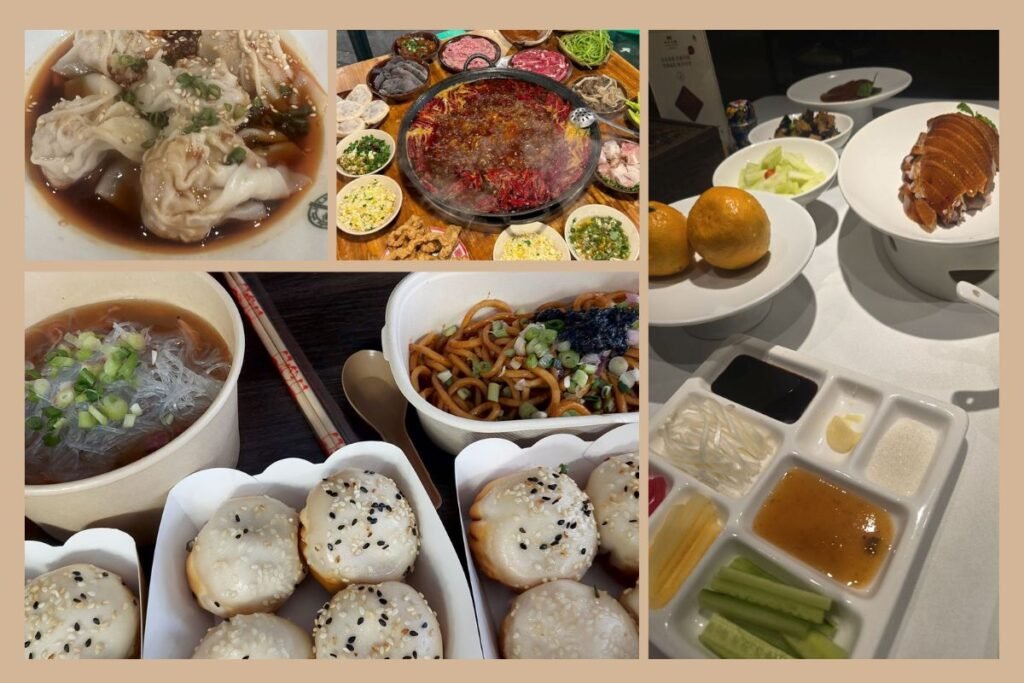
Chinese food is one of the most celebrated cuisines in the world, and before arriving we fully expected the food to be incredible. What surprised us most, however, was how different it was from the “Chinese food” many of us grow up with at home.
Throughout our travels across China, we never once came across a restaurant serving the familiar Western-style dishes like sweet and sour pork, egg fu yung, satay beef or beef in black bean sauce. We are not sure why, but they simply were not part of the food culture we experienced. Instead, every meal felt deeply regional, built around fresh vegetables, local produce, handmade noodles and traditional cooking methods that reflected where we were.
That contrast made eating in China even more interesting. Rather than chasing familiar flavours, we found ourselves discovering entirely new dishes, textures and combinations that were often simpler, fresher and far more connected to place than anything we expected.
This guide shares our personal food experiences across different regions of China, focusing on local flavours, specialties and the dishes that stood out most to us.
Table of Contents
Zhangjiajie Region: Simple Food and Beautiful Tea
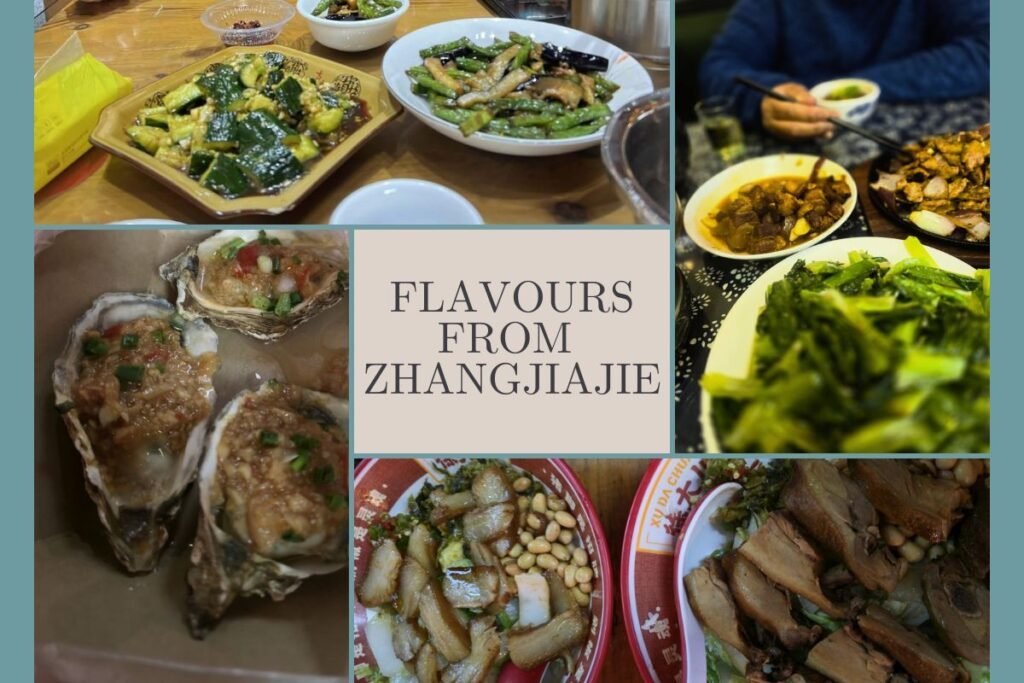
Food in the Zhangjiajie region felt closely connected to the mountains, forests and ethnic heritage of the area. Influenced by Hunan flavours and the traditions of the Tujia people, dishes here were often bold, hearty and built around ingredients grown or gathered locally.
Meals leaned towards strong flavours, with chilli, sour notes and slow-cooked elements appearing regularly, yet nothing felt overly heavy. After long days exploring the national park, the food felt grounding and nourishing.
Local Dishes We Came Across
One of the most well-known local dishes is Three-Stage Hot Pot (San Xia Guo). Instead of a single protein, this dish combines multiple ingredients cooked together in a richly flavoured broth. It is very much a shared meal, often enjoyed around the table, and reflects the social side of eating in this region.
Another regional favourite is Tujia-style braised pork, made using pork belly that is first fried, then sliced and slowly steamed with pickled greens. The result is rich, savoury and deeply comforting, with flavours that clearly come from long-standing home cooking traditions.
We also noticed several dishes using ingredients you don’t commonly see elsewhere, including blood tofu, where tofu is combined with pig’s blood and gently smoked with spices. It sounds unusual, but it is treated as a normal snack or side dish and reflects the region’s resourceful cooking style.
Soups were also common, particularly those made with stone ear mushrooms, a wild mushroom found in the surrounding forests. These were often cooked with chicken to create a fragrant, restorative broth.
For something lighter, we came across Artemisia sticky rice cakes, made with wild herbs and glutinous rice flour. Depending on how they are prepared, they can be soft and chewy or lightly crisp on the outside.
Tea Culture in Zhangjiajie
Tea deserves its own mention here, as it was genuinely one of the highlights of the region.
Zhangjiajie is known for its locally grown teas, particularly Maoyanmei tea, which is made from wild plants growing in the area’s ancient forests. This tea is deeply connected to Tujia culture and is often praised for its health benefits. You will see this tea everywhere, instantly recognisable by its soft, silvery, almost feathery appearance. Locals spoke about it with pride, and after trying it ourselves, it was easy to see why. Smooth, earthy and calming, it felt closely tied to the land. Our hotel gifted us a beautiful tin to take with us, which we were incredibly grateful for.
Sitting with a cup of local tea after a long day of walking felt just as memorable as the meals.
Chongqing: Where the Food Is as Famous as the City
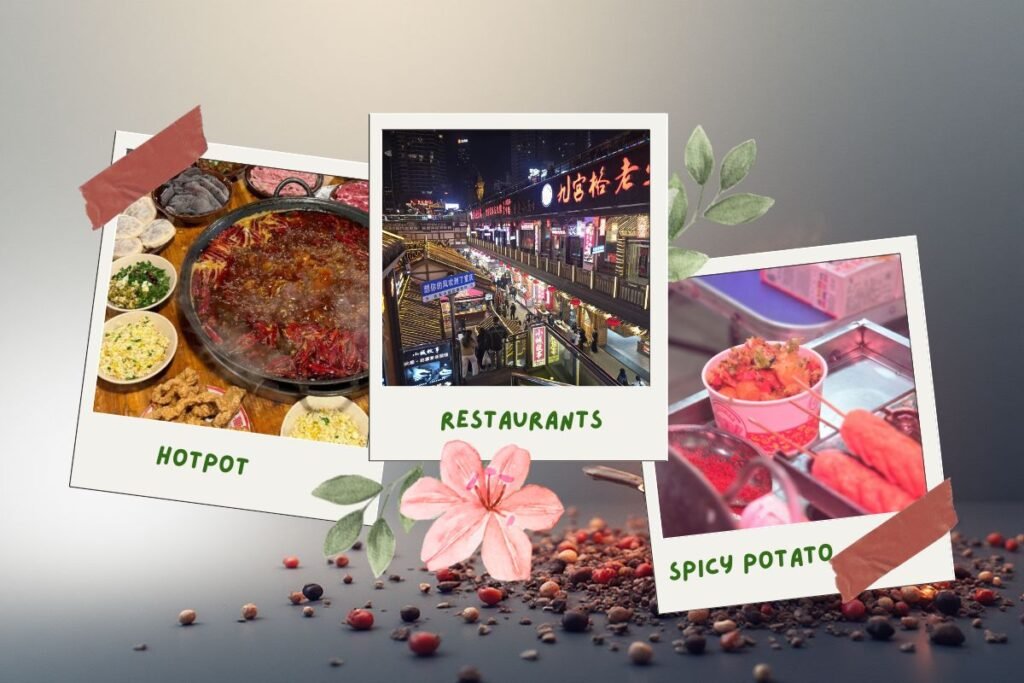
Every time we mentioned to locals that we were heading to Chongqing, the reaction was always the same. No one talked about the skyline or the lights. They just laughed and said, “Ahhh… very spicy lah.” They were not wrong.
Chongqing is known across China for its bold, fiery food, where spice is not just about heat but about flavour, depth and balance. This is the land of málà, a combination of chilli heat and the distinctive numbing tingle of Sichuan peppercorns that lingers long after the meal.
Hotpot Culture and Shared Tables
Hotpot is more than a meal in Chongqing — it is a way of eating together. The broth is dark, rich and loaded with chillies and spices, and you cook everything at the table, from meats and tofu to vegetables and noodles.
Some places offer a split pot with a milder side, but even then, spice is unavoidable. The flavours are intense, addictive and completely unforgettable. Our hotpot experience was next level, and yes, very spicy.
Street Food We Could Not Ignore
Chongqing’s street food scene is everywhere and impossible to ignore.
One dish we kept seeing was spiced potatoes. At first we thought the same thing everyone probably does — potatoes? I didn’t come all this way to eat potatoes. But then we watched them being prepared, covered in spices and sauces, and curiosity got the better of us.
The result was so flavour-packed that we went back for more later that evening.
Other standouts included:
- Spicy wontons, served in a deep red chilli oil, rich and incredibly satisfying
- Chongqing noodles (Xiao Mian), springy and fragrant, with just the right hit of heat
- Grilled skewers, smoky, spicy and perfect for grazing as you wander
One Night Was Not Enough
Unfortunately, we were only in Chongqing for one night, and between hotpot and street food, our stomachs were completely full. We had planned to track down a particular dessert shop we’d heard about, but by the time we looked at the clock it was already 11 pm and most places were closed.
Oh well. Next time.
Xi’an: Silk Road Flavours, Hearty Dishes and Endless Street Snacks

Xi’an has one of the most distinctive food scenes in China, shaped by its long history as the eastern gateway of the Silk Road. Before arriving, we had already done a lot of research on what dishes we wanted to try, and thankfully, Xi’an delivered.
The hardest part was not finding the food — it was choosing where to eat. As usual, we trusted our go-to method: follow the locals. If a place was busy with locals, we knew we were in the right spot.
That strategy worked perfectly.
Right next to our Airbnb, we found a small local restaurant packed with people and ordered two dishes we had been looking forward to: Biang Biang noodles and Yangrou Paomo. Both were absolutely delicious and exactly what we had hoped for. We washed it all down with a comforting cup of Eight Treasure Tea, which felt like the perfect end to the meal.
Classic Dishes We Loved in Xi’an
Xi’an food is known for being hearty, comforting and full of depth, often using wheat-based noodles and breads rather than rice.
Some of the standout dishes we tried included:
- Biang Biang Noodles – wide, hand-pulled noodles with bold seasoning and a satisfying chew
- Yangrou Paomo – a rich lamb soup where you break pieces of flatbread into the broth yourself
- Liangpi (Cold Noodles) – refreshing and flavourful, especially welcome after a long day of walking
- Wonton soup – simple, warming and surprisingly delicate
After visiting the Terracotta Warriors, we continued our food exploration with more local snacks. We tried the corn often sold at stalls, which had a thick, slightly unusual texture that we weren’t quite sold on. Sausages, on the other hand, were everywhere. We stuck to the traditional-looking local sausages rather than packaged ones and enjoyed those far more.
Street Food Adventures
Xi’an is also where we really went all in on street food. Some of the snacks we couldn’t resist included:
- Roujiamo,known as a chinese hamburger, made with spiced beef rather than pork. The queues were long and the flavours good, though we felt it could have been taken up a notch with a chilli oil or sauce.
- Persimmon pancakes, We also tried persimmon cake (Shi Zi Bing) — golden, soft and gently sweet, with a subtle floral note that made it surprisingly memorable.
- Osmanthus cake (桂花糕), a traditional Xi’an dessert made from layered purple and yellow rice and scented with osmanthus flowers. Soft, mildly sweet and floral, it felt more like a comfort snack than a sugary dessert.
- Candied fruit (Tanghulu), every flavour was good, if you like toffee apples you will like these.
The sheer variety made wandering and snacking half the fun. Every street seemed to offer something new to try.
A City Built Around Food
What stood out most in Xi’an was how deeply food is woven into daily life. Meals here feel tied to history, trade and tradition, yet they are still incredibly accessible and affordable.
Between the hearty noodle dishes, rich soups and endless street snacks, Xi’an became one of our favourite cities in China for food.
Beijing: Our Ultimate Food Highlight
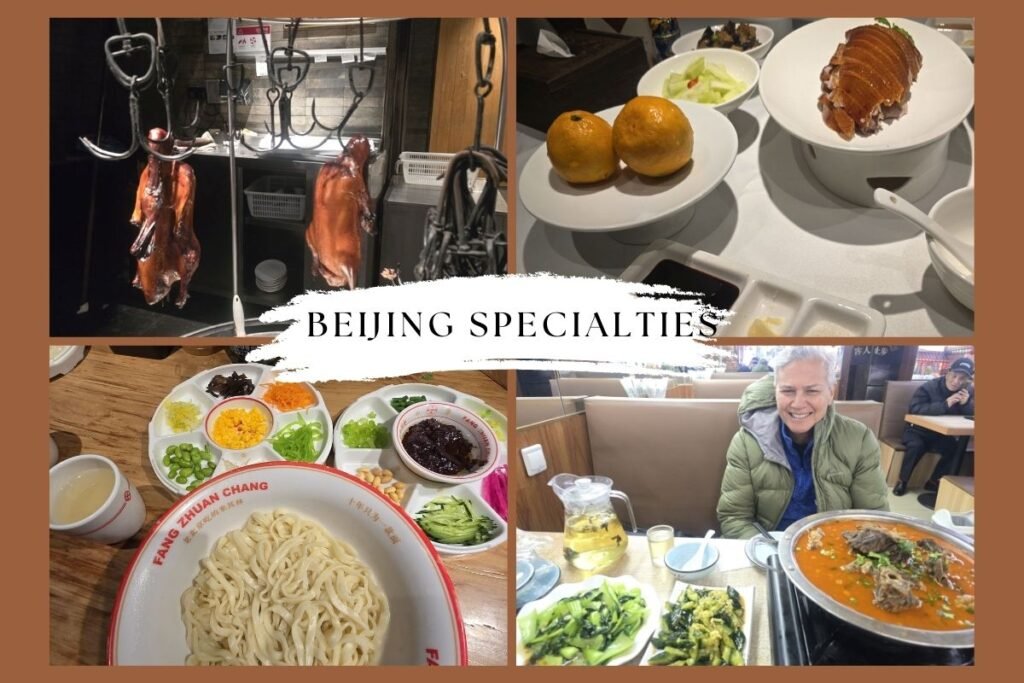
If we had to choose one city to return to purely for the food, Beijing would be it. From our very first meal to our last, there was nothing we didn’t love. Every dish felt considered, comforting and deeply satisfying.
But one experience stood far above the rest.
Peking Duck – An Experience, Not Just a Meal
Our ultimate food moment in China was without question Peking Duck. From the moment it arrived at the table, we were smiling, quietly gasping and looking at each other in disbelief. Crispy skin, perfectly cooked meat and beautifully balanced accompaniments — it was flawless.
We truly believe the restaurant choice mattered here. Everything about the experience felt refined, and we couldn’t fault a single dish that came out of the kitchen. It wasn’t just dinner — it was an experience we still talk about.
Simple Dishes Done Perfectly
One of the things Beijing does exceptionally well is simple food cooked properly.
A standout lunch for us was Zhajiangmian noodles at No. 69. Nothing fancy, just deeply comforting noodles with rich sauce and perfect balance. Sometimes the simplest dishes are the hardest to get right, and this one absolutely nailed it.
The Yogurt We Couldn’t Stop Eating
One of the most unexpectedly addictive treats in Beijing was the local yoghurt.
You will see it everywhere — often just sitting outside shop doors, which initially felt a bit strange. Then we realised it was November, with temperatures often around -2°C, so refrigeration wasn’t exactly necessary.
We bought one out of curiosity and went straight back for more. Later, we discovered a Michelin-starred yoghurt shop in Qianmen, specialising in this exact dessert. Smooth, tangy and incredibly satisfying, it was the perfect way to end a meal or satisfy a craving.
Hot Pots, Stews and Crispy Meats Everywhere
Beyond the highlights, Beijing’s everyday food scene impressed us just as much.
We came across:
- Lamb hot pots
- Slow-stewed meats
- Crispy pork dishes
These weren’t occasional finds — they were everywhere, and almost always delicious. It felt like a city that takes food seriously, even in its most casual meals.
Beijing didn’t just meet our expectations — it completely exceeded them. It’s the kind of city where food alone is reason enough to return.
Our Overall Food Experience in China
Considering we only travelled through a small portion of China, what surprised us most about the food was:
- How fresh everything tasted
- How regional the flavours were
- How much care went into even the simplest dishes
From quiet mountain towns to buzzing cities, food was never just fuel. It was a reflection of place, culture and history, and one of the most memorable parts of our journey. We cannot wait to return and explore more regions, discovering new flavours and local specialties along the way.
Final Tohu Tip
Don’t arrive with expectations — arrive with curiosity.
Chinese food changes dramatically from region to region, and that is what makes eating your way across the country so rewarding.
🔗 More China Travel Guides
Want more China Inspiration?
Explore all our China blogs in one place — from ancient towns and national parks to mega-cities and night markets.
👉 Read all our China Destination Guides & China Travel Essentials Guides Here
🌍 Travel Planning Resources
These are the tools we personally use and trust when planning our travels from finding a place to stay to booking activities, transport and insurance. Let your “Tohu” guide you “Trust the Journey” and follow what feels right for you.
- ✈️Flights – Compare great deals with Trip.com then Kiwi.com for flexible, affordable options.
- 🚐 Campervans – Compare rental deals with Motorhome Republic across Aotearoa and beyond.
- 🛏️ Stays – Compare hotels on Trip.com and TripAdvisor or Booking.com.
- 🚐 Rental Cars – Compare prices and book through Airport Rentals by Motorhome Republic for trusted brands and easy airport pickup.
- 🎟️ Activities – Browse tours and experiences on Viator, Get Your Guide, or TripAdvisor
- 🚆12Go Asia – Compare and book trains, buses, and ferries across Asia in one place with 12Go.
- 🛡️ Travel Insurance – Get flexible short-term coverage with Insubuy for your next holiday.
- 🔒 Protect Your Privacy with a VPN – We recommend Surfshark VPN for secure and private browsing while travelling. It’s fast, affordable and works worldwide, perfect for public Wi-Fi at airports, cafes and hotels.
- 📱 Travel eSIM – Stay connected with Airalo
- 💼 Lounge Access – Treat yourself with Priority Pass for UK or US
- 🎶 Events & Concerts – Book tickets worldwide through Ticketmaster.
🧭 Note: Some booking links can be a bit shy when you’re using a VPN. If one doesn’t open, try pausing your VPN or switching to a different server location or secure Wi-Fi network to get things flowing again.
“Food tells the story of a place long before words do.”