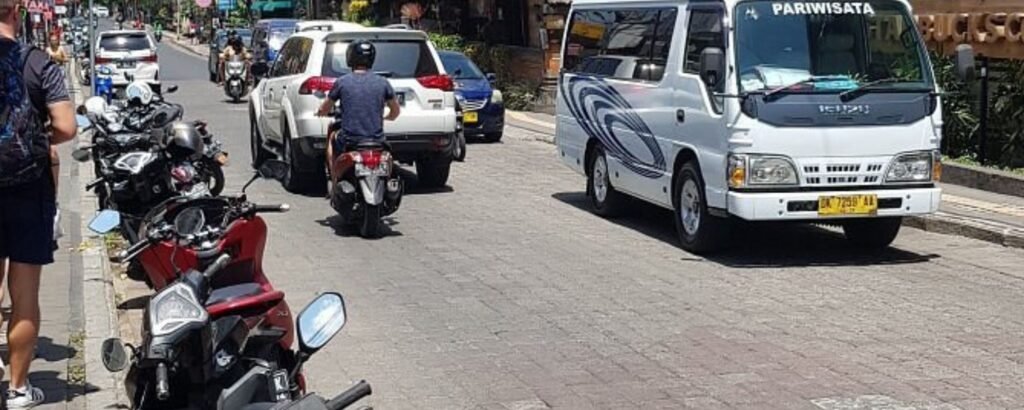
Getting around Bali can take a little getting used to.
The island doesn’t look particularly large on a map, but distance doesn’t always tell you how long a journey will take. Traffic can be heavy, roads can be narrow and scooters seem to appear from absolutely everywhere.
During our time in Bali, we used a mixture of walking, taxis, private drivers and boats, and we quickly learnt that the best way to get around really depends on where you’re going and how far you’re travelling.
We also made one decision fairly early on.
We weren’t riding scooters.
We’d happily ridden them in Thailand, but Bali traffic felt like a completely different kind of crazy.
In this guide, we’ll look at the different ways to get around Bali, what worked for us and a few things we wish we’d known before we arrived.
Table of Contents
Walking Around Bali
We actually did a lot of walking within the areas where we stayed.
It’s one of our favourite ways to explore. You notice little warungs, shops and places you would probably drive straight past, and wandering the back streets gave us a much better feel for the areas we were staying in.
But walking in Bali comes with a bit of a warning.
The Footpaths Can Be a Mess
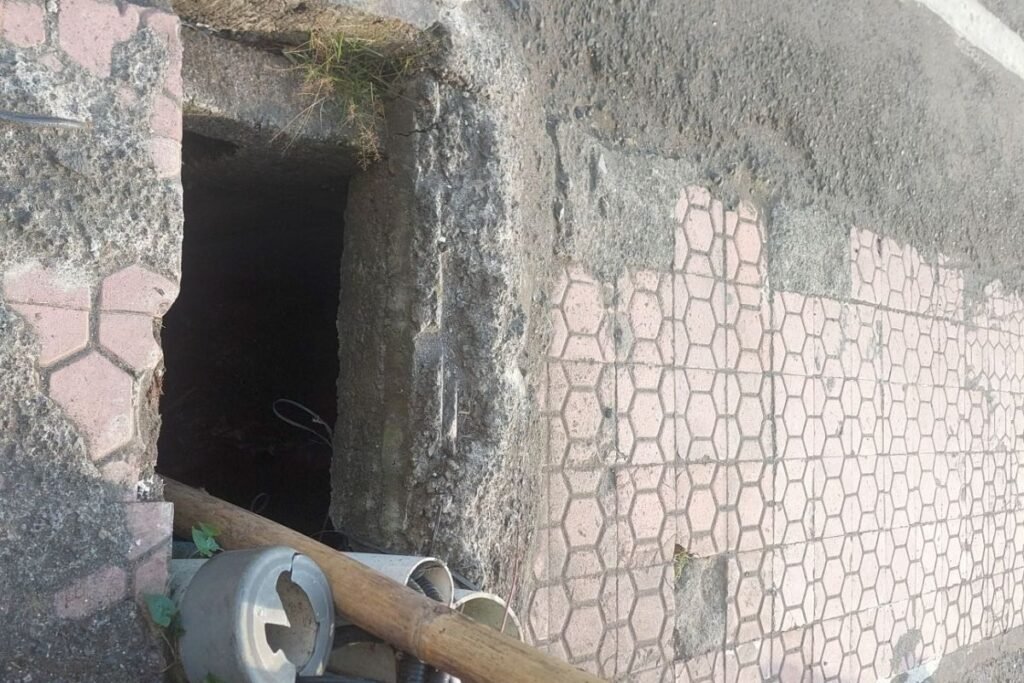
Don’t expect the kind of continuous footpaths you might be used to at home.
We found they could be:
- Broken or badly uneven
- Full of holes and unexpected changes in height
- Blocked by parked scooters and motorbikes
- Narrow or obstructed
- Missing altogether
There were plenty of times when a motorbike was parked across the footpath and we had no choice but to step out onto the road to get around it.
And stepping onto a Bali road when scooters are coming from every direction certainly keeps you awake.
Good to Know
- Watch the ground as much as the scenery. Uneven paving and holes can appear without much warning.
- Wear decent footwear. This isn’t somewhere we’d want to walk long distances in shoes that aren’t comfortable or secure.
- Be particularly careful after dark. Poor lighting can make uneven footpaths much harder to see.
- Don’t assume somewhere is easily walkable just because it’s close on the map. The road and footpath conditions can make a big difference.
- Take extra care when stepping onto the road to get around parked scooters or other obstructions.
Would We Still Walk?
Absolutely.
Despite the footpaths, walking led us to some of our favourite little discoveries, particularly the local warungs and back streets we probably wouldn’t have found otherwise.
We’d just go into it knowing that walking around Bali requires a little more attention than a casual stroll down the footpath at home.
Getting Around Bali by Bicycle
We love cycling, but we wouldn’t recommend hiring a bicycle as your everyday way of getting around Bali.
Between the heavy traffic, scooters, narrow roads and rather questionable footpaths, cycling independently in the busier tourist areas wouldn’t be our first choice.
Where we would recommend getting on a bike is as part of an organised cycling tour.
We did a countryside bike tour while staying in Ubud and absolutely loved it. It took us away from the busy streets and through rice fields, villages and quieter rural areas, where cycling was a much more enjoyable way to experience Bali.
Our Advice
- Choose an organised bike tour rather than hiring a bicycle for general transport.
- Check the route and difficulty before booking. Some tours are much easier than others.
- Ask how much is downhill or flat if you’re not a regular cyclist.
- Take plenty of water. Even an easy ride feels harder in Bali’s heat and humidity.
- Use taxis, Grab or a driver for everyday transport and save the bicycle for somewhere you can actually enjoy riding it.
For us, cycling in Bali was a fantastic experience, just not the way we’d choose to get from A to B every day.
Hiring a Scooter or Motorbike in Bali
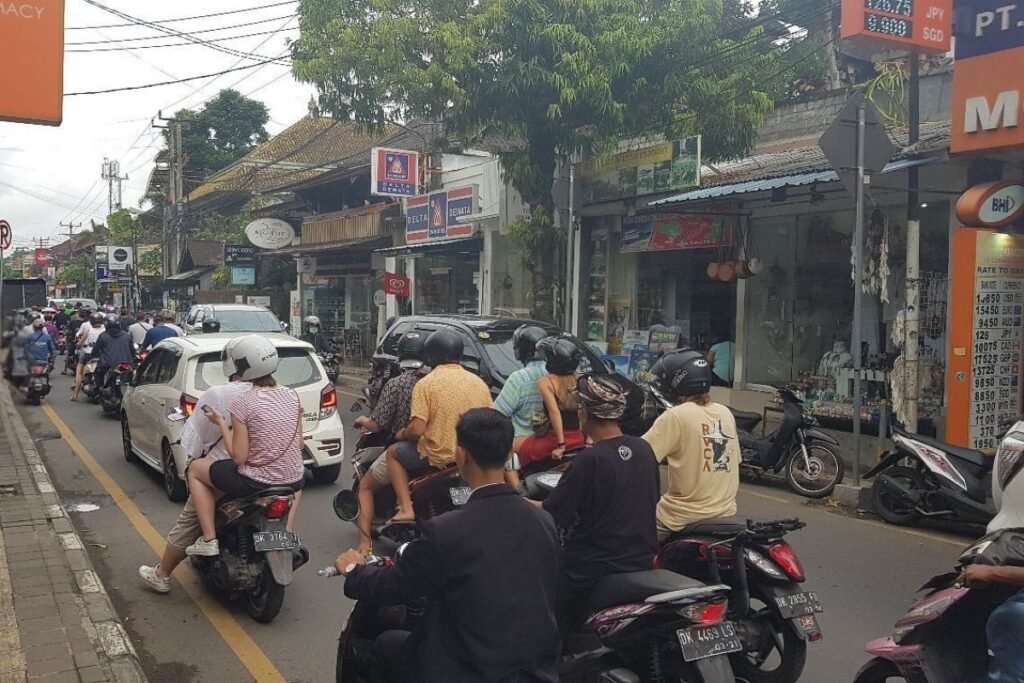
Scooters are everywhere in Bali and, for many travellers, hiring one seems like the easiest and cheapest way to get around.
We’d ridden scooters in Thailand without any problems, so hiring one in Bali wasn’t something we were automatically against.
Then we saw the traffic.
Bali felt like a completely different kind of crazy, and we decided it wasn’t for us.
Scooters weave between cars, traffic can be extremely busy and road conditions aren’t always what you might be used to at home. We also witnessed tourists taking risks that left us shaking our heads, along with accidents involving visitors.
For some reason, it can seem as though common sense goes on holiday at the same time they do.
Being on holiday doesn’t suddenly make you an experienced motorbike rider.
Helmets Are Compulsory
If you do decide to hire a scooter, wear a proper helmet every single time you ride.
Indonesian law requires both the rider and passenger to wear an approved SNI-standard helmet.
And don’t assume that because you’re a tourist the rules don’t apply to you. Police do carry out traffic checks, and you can be stopped and fined for breaking the rules.
More importantly, wear the helmet because you want to protect your head, not simply because you don’t want a fine.
Before You Hire a Scooter
- Make sure you’re legally licensed to ride one. Check the licence and international driving permit requirements before leaving home.
- Check your travel insurance. Riding without the correct licence, helmet or within the conditions of your policy could affect your cover.
- Inspect the scooter before leaving and photograph any existing damage.
- Wear the helmet, even if you’re only travelling a short distance.
- Don’t drink and ride.
- Don’t learn to ride a scooter in Bali traffic. If you have little or no experience on a motorbike, this really isn’t the place we’d choose to practise.
- Ride to your own ability. Don’t copy what other riders around you are doing simply because they appear to be getting away with it.
Why We Chose Not To
For us, this wasn’t about being frightened of scooters.
We’d already ridden them in Thailand.
It was simply a case of looking at the traffic, watching how people were riding and deciding that the convenience wasn’t worth the risk for us.
There are plenty of other ways to get around Bali.
Sometimes the smartest travel decision is simply knowing when to say, nope, not for us.
Taxis, Grab and Gojek
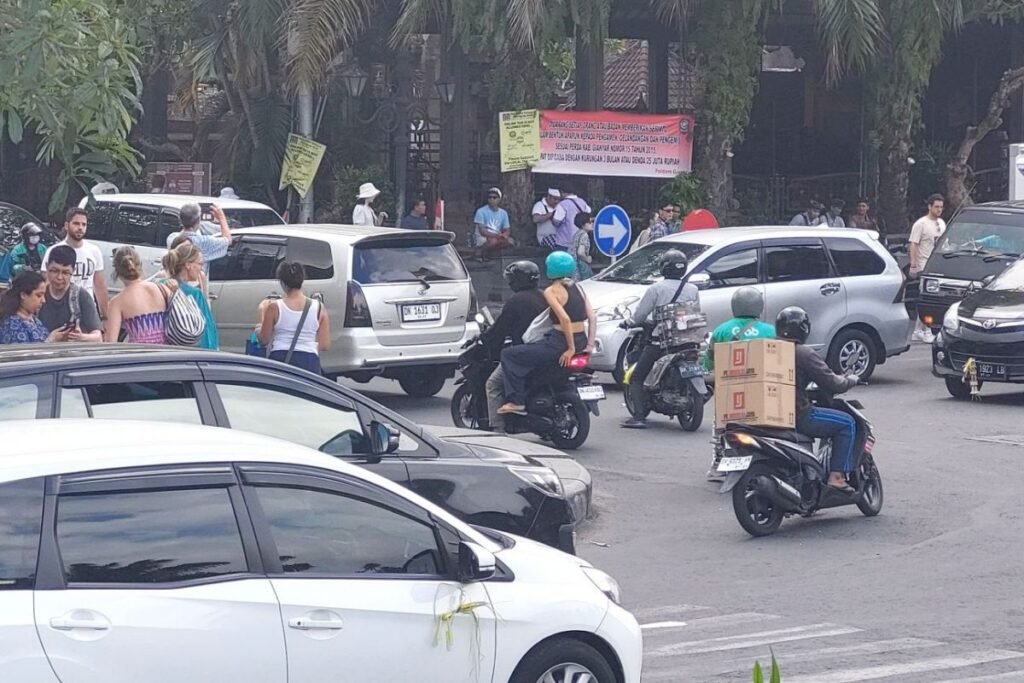
We used this option quite a lot in Bali, particularly for shorter trips when we simply wanted to get from one place to another without organising anything in advance.
Many hotels, villas and guesthouses have their own driver or someone they regularly recommend, and we used those drivers as well.
The only problem was that they weren’t always available when we wanted them.
If the driver was already out with another guest or busy for the next few hours, it was often much easier to book a ride ourselves and get going.
Grab and Gojek
Grab and Gojek are popular ride-booking apps in Bali and can be really handy for shorter journeys.
You can arrange a car through the app, see the fare before accepting the ride and follow your driver’s arrival on your phone.
For us, it was particularly useful when we:
- Wanted to go out for dinner and it was too far or hot to walk
- Needed a quick ride back to our accommodation
- Didn’t want to organise transport in advance
- Found our accommodation’s regular driver was already busy
Good to Know
- Download the apps before you need them. It’s much easier to have everything set up and ready to go.
- Check your pickup point carefully. Busy streets and large accommodation complexes can make finding each other a little interesting.
- Allow extra time in heavy traffic. A driver may be nearby on the map but still take a while to reach you.
- Ask your accommodation about their driver too. We found having both options worked really well.
- For a full sightseeing day, we’d choose a private driver instead. Ride-booking apps were more useful to us for getting from A to B.
What Worked for Us
We didn’t stick to just one transport option.
If our accommodation had a recommended driver available, great, we’d use them.
If they were busy and we wanted to head somewhere straight away, we’d book a ride instead.
Having both options meant we were never really stuck waiting around for transport, and for everyday trips around Bali, it was one of the easiest ways we found to get around.
Hiring a Private Driver in Bali

For longer sightseeing days, hiring a private driver was one of our favourite ways to get around Bali.
Most of the drivers we used came through recommendations from our accommodation or from friends who had already travelled to Bali. If you know someone who’s recently been, it’s definitely worth asking if they had a driver they’d recommend.
More Than Just a Driver
One of the things we really appreciated was that our drivers often became part of the experience rather than simply the person taking us from A to B.
The Balinese people we met were some of the kindest souls, and our drivers were no exception.
They were friendly, patient and full of local knowledge. They could suggest places to visit, help us work out a sensible route for the day and sometimes take us to little places we probably never would have discovered on our own.
For many of these drivers, tourism is their livelihood, and we found they would often go out of their way to make sure we had a great day.
Why We’d Choose a Private Driver
- You can plan several stops in one day without organising separate rides between each one.
- They know Bali’s roads and traffic, which can save a lot of stress.
- Local knowledge is invaluable. Ask where they’d eat, what they’d see or whether there’s somewhere worth stopping along the way.
- Your day can be flexible. If you love somewhere, you may be able to stay longer rather than watching the clock for your next taxi.
- You can leave belongings in the car between stops rather than carrying everything all day.
- It supports a local person’s livelihood, particularly when you’re booking directly with an independent driver.
Our Tip
If you find a driver you really like, keep their contact details.
You may end up using them again during your trip, and you can also pass their details on to friends or whānau heading to Bali later.
And talk to them.
Don’t spend the whole journey looking at your phone or treating them like they’re simply there to drive the car.
Ask questions, have a conversation and listen to their recommendations.
Some of the best travel advice we received in Bali came from the people who actually live there.
Hiring a Car in Bali
You can hire a car and drive yourself around Bali, but it wouldn’t be our first choice.
With heavy traffic, scooters weaving between vehicles, narrow roads and unfamiliar driving conditions, we’d much rather leave the driving to someone who knows the roads.
By the time you factor in the convenience of having a local driver, we don’t think we’d gain much by hiring a car ourselves.
Our Choice
For us, it would be simple:
Hire a private driver for longer sightseeing days and use taxis or Grab for shorter trips.
You get to enjoy the scenery, someone else deals with the traffic, and you have the added bonus of travelling with a local who often knows far more about Bali than Google Maps ever will.
Fast Boats and Ferries
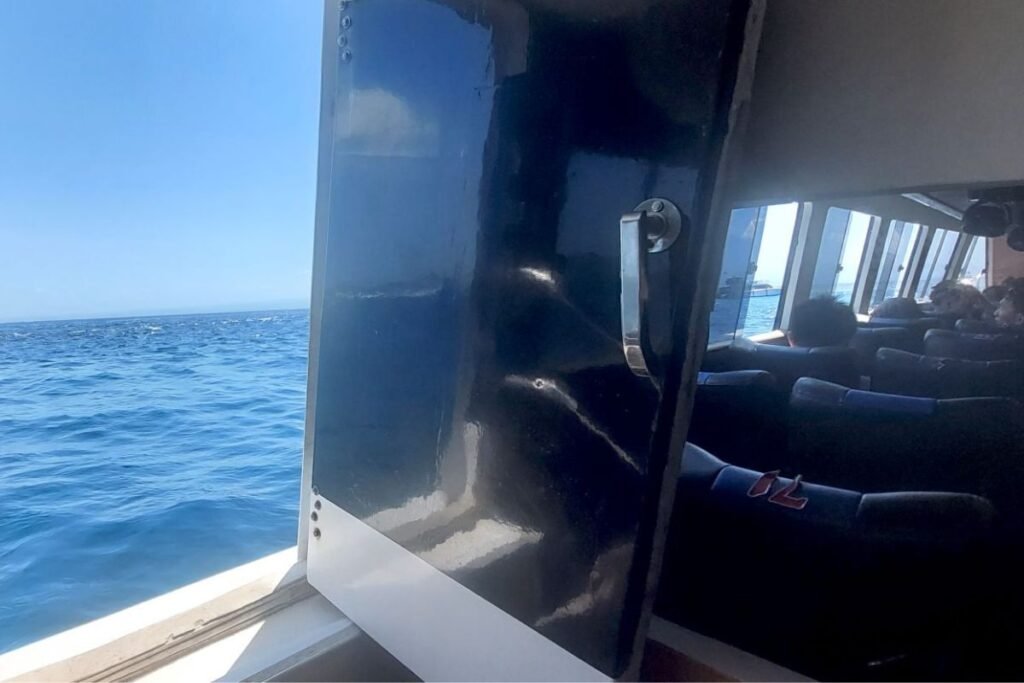
If you’re heading from Bali to places such as Nusa Penida, Nusa Lembongan or the Gili Islands, fast boats and ferries are one of the easiest ways to get there.
Just don’t expect luxury travel.
Some boats have areas where you can sit outside, but many passengers will spend the journey inside the cabin, where things can get hot and cramped.
If the sea gets rough, the doors may be closed and the only airflow can come from a few small fans.
And let’s just say those fans don’t always work.
Despite that, we enjoyed our boat trip. It’s relatively fast, easy and gets you where you need to go.
If You Get Seasick, Come Prepared
Conditions can get bumpy, so if you’re prone to seasickness, bring whatever motion-sickness medication you normally use and take it at the appropriate time before travelling.
Don’t wait until you’re already feeling miserable halfway across the water.
Sanur Port – Organised Chaos
We travelled from Sanur, which has a large port with boats heading out to the islands.
Our best description?
Organised chaos.
There are passengers, luggage, drivers and different boat companies all trying to get where they need to go, but somehow it works.
If you’re arriving with a driver, ask them where you need to check in. They may know exactly which office or counter your particular boat company uses, which saves you wandering around trying to work it out yourself.
We’d also recommend booking your boat online in advance. These services can get extremely busy, and simply turning up could mean a long wait for an available departure.
Our Biggest Tip: Pack Light
If we could give you one piece of advice for travelling to the islands, this would be it.
Your luggage isn’t going on a luxury cruise.
It’s a bag, and it’s going wherever it fits.
Bags are loaded and unloaded quickly and may be stacked, carried or moved around with plenty of other luggage. We wouldn’t take anything delicate that needs to be treated like royalty.
Space inside the boat can also be tight. If you have a smaller bag with you, you may still end up holding it on your lap or squeezing it underneath your feet.
We were fortunate that our accommodation on mainland Bali kindly stored our large suitcases for us while we went to Nusa Penida.
So instead of taking everything, we packed the essentials into small backpacks and left the suitcases behind.
We were very glad we did.
Think About What Happens When You Get Off the Boat
Getting to the island is only half the story.
Once you arrive, don’t assume there’ll be a beautiful smooth footpath waiting for you to wheel your suitcase along.
We watched plenty of hot and bothered travellers dragging large suitcases across rough ground trying to make their way from the boat towards the waiting taxis and drivers.
If your mainland accommodation will store your main luggage while you’re away, it’s definitely worth asking.
Take what you need and leave the rest behind.
Island Entry Fees and Getting to Your Accommodation
Another thing we hadn’t expected was that there may be a local entry or arrival fee when you reach an island, so check this before you travel and have some cash available just in case.
When we arrived, we were also able to organise transport to our accommodation.
By that stage, we were hot, we’d dealt with the boat and luggage, and quite frankly we couldn’t be bothered bartering over a taxi fare.
We had a fair idea of what the trip should cost, the price seemed reasonable and we were happy to get in the car and go.
Sometimes convenience wins.
Our Ferry Tips
- Book ahead, particularly during busy periods.
- Pack as lightly as possible for an island stay.
- Ask your mainland accommodation if they’ll store your larger luggage.
- Keep valuables, medication and important documents with you, rather than in your main bag.
- Bring seasickness medication if you’re prone to motion sickness.
- Expect the cabin to be hot and cramped.
- Ask your driver where you need to check in when you arrive at the port.
- Carry some cash for possible arrival fees and onward transport.
- Have an idea of what your transfer should cost before you arrive.
The boats might not be the most luxurious part of your Bali holiday, but for us they were fast, relatively easy and part of the adventure.
So, What’s the Best Way to Get Around Bali?
For us, there wasn’t one best way to get around Bali.
We simply used different transport depending on what we were doing that day.
- Walking: Great for exploring locally, as long as you’re prepared for some rather questionable footpaths.
- Bicycle: We’d save this for an organised countryside bike tour rather than everyday transport.
- Scooter: Convenient and popular, but not something we felt comfortable riding in Bali traffic.
- Grab, Gojek and taxis: Our choice for quick, shorter trips when we wanted to get somewhere without organising transport in advance.
- Private driver: Easily our favourite option for longer sightseeing days and exploring further afield.
- Self-drive car: Possible, but we’d personally choose a private driver instead.
- Fast boats and ferries: The easiest way to reach the islands. Not particularly glamorous, but they get the job done.
Our Final Tip
Don’t overcomplicate getting around Bali.
Walk when it makes sense, book a ride when you need one and hire a private driver when you’re heading out for a full day of exploring.
Most importantly, don’t judge travel times by the distance you see on a map. Bali traffic has its own ideas about how long your journey should take.
Give yourself plenty of time, don’t try to squeeze too much into one day and remember that getting from one place to another is sometimes part of the Bali experience.
We found getting around much easier once we stopped worrying about having one transport plan for the entire trip and simply used whatever made the most sense that day.
“At the end of the day, your feet should be dirty, your hair messy, and your eyes sparkling.”
🌍 Travel Planning Resources
These are the tools we personally use and trust when planning our travels from finding a place to stay to booking activities, transport and insurance. Let your “Tohu” guide you “Trust the Journey” and follow what feels right for you.
- ✈️Flights – Compare great deals with Trip.com then Kiwi.com for flexible, affordable options.
- 🚐 Campervans – Compare rental deals with Motorhome Republic across Aotearoa and beyond.
- 🛏️ Stays – Compare hotels on Trip.com and TripAdvisor or Booking.com.
- 🚐 Rental Cars – Compare prices and book through Airport Rentals by Motorhome Republic for trusted brands and easy airport pickup.
- 🎟️ Activities – Browse tours and experiences on Viator, Get Your Guide, or TripAdvisor
- 🚆12Go Asia – Compare and book trains, buses, and ferries across Asia in one place with 12Go.
- 🛡️ Travel Insurance – Get flexible short-term coverage with Insubuy for your next holiday.
- 💳 Travel Money – Send, spend and manage money internationally with Wise, with easy currency conversion and a handy option for travellers.
- 🔒 Protect Your Privacy with a VPN – We recommend Surfshark VPN for secure and private browsing while travelling. It’s fast, affordable and works worldwide, perfect for public Wi-Fi at airports, cafes and hotels.
- 📱 Travel eSIM – Stay connected with Airalo
- 💼 Lounge Access – Treat yourself with Priority Pass for UK or US
- 🎶 Events & Concerts – Book tickets worldwide through Ticketmaster.
🧭 Note: Some booking links can be a bit shy when you’re using a VPN. If one doesn’t open, try pausing your VPN or switching to a different server location or secure Wi-Fi network to get things flowing again.