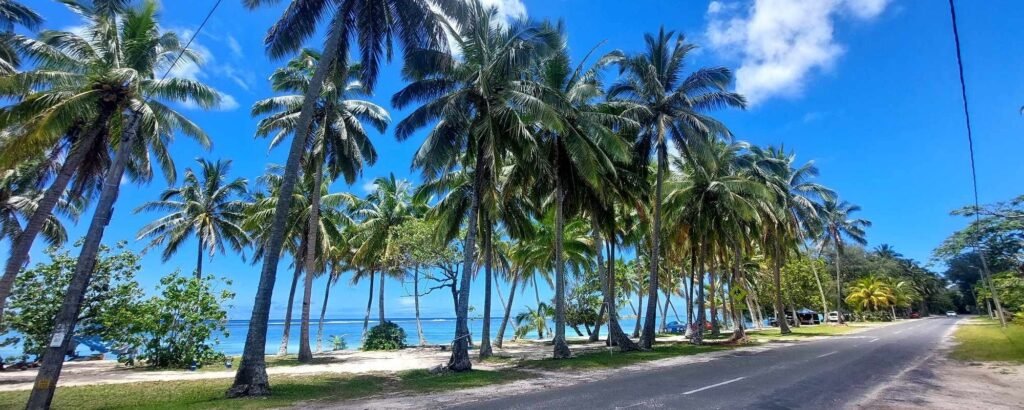
Getting around Rarotonga is pretty simple. There’s one main road circling the island, and sooner or later you’ll probably end up back where you started.
We’ve tried getting around by car, bicycle and bus, while our cousins hired scooters. Each has its advantages, and after trying several options, we don’t think there’s one that’s necessarily best for everyone.
It really depends on how long you’re staying, how many people you’re travelling with and how much freedom you want.
And one thing we learnt along the way? Don’t underestimate the heat when you’re on a bike.
Hiring a Car – Our Pick for Freedom
For us, having a car was probably the easiest way to explore Rarotonga properly.
You can stop wherever you like, throw your beach gear in the back and head inland as well as around the coast.
One thing we’d definitely do differently next time:
Pre-book your rental car.
We tried to organise ours after we arrived and couldn’t get one straight away. In the end, we booked through our hotel but still had to wait three days.
As it turned out, that wasn’t entirely a bad thing because it gave us the perfect excuse to try the bikes and bus first.
A car worked particularly well when we were travelling as a group. At the time, we found hiring one car worked out cheaper than buying an all-day bus pass for everyone.
And once we had the car, we’d already worked out quite a few places we wanted to go.
Our tip: If you know you’ll want a car, book before you arrive, especially during busy periods.
Here are a few companies you can book through
- Polynesian Rentals – Scooter Hire — locally owned and one of the bigger operators, with several locations around Rarotonga. They hire 125cc automatic scooters.
- Island Car & Bike Hire — has locations in Arorangi, Avarua and Muri and offers automatic and semi-automatic 125cc scooters as well as motorbikes.
- Adventure Cook Islands – Scooter Hire — based at Aroa Beach and hires scooters, but there’s an important difference: they currently require riders to already hold a full overseas motorcycle licence and say they hire to experienced riders only.
Getting Around by Bicycle – Hot, But We Loved It
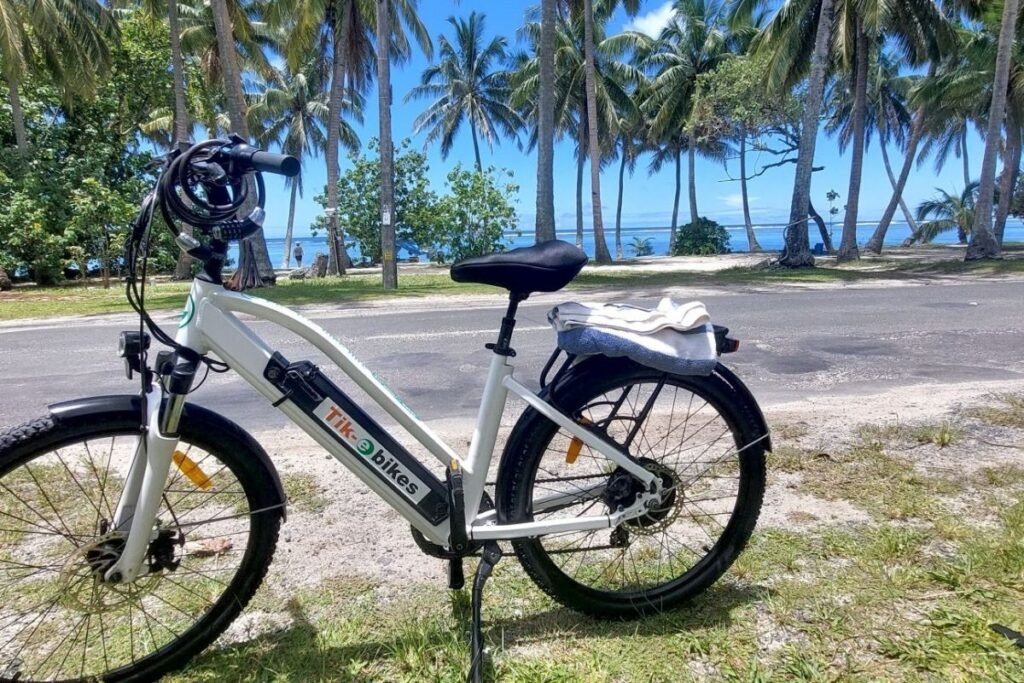
Hiring bikes turned out to be one of our favourite ways to explore the island.
It was hot. Very hot.
But that gave us an excellent excuse to stop at as many beaches as possible for a swim and cool down.
The bikes also helped us discover places we probably would have driven straight past in a car. By the time we eventually picked up our rental car, we already had a good idea of which beaches and little spots we wanted to return to.
Just be prepared for the roads. Rarotonga’s roads can be bumpy, so keep an eye on the surface rather than spending the entire ride staring at the lagoon.
Taking the Bus – Simple and Affordable
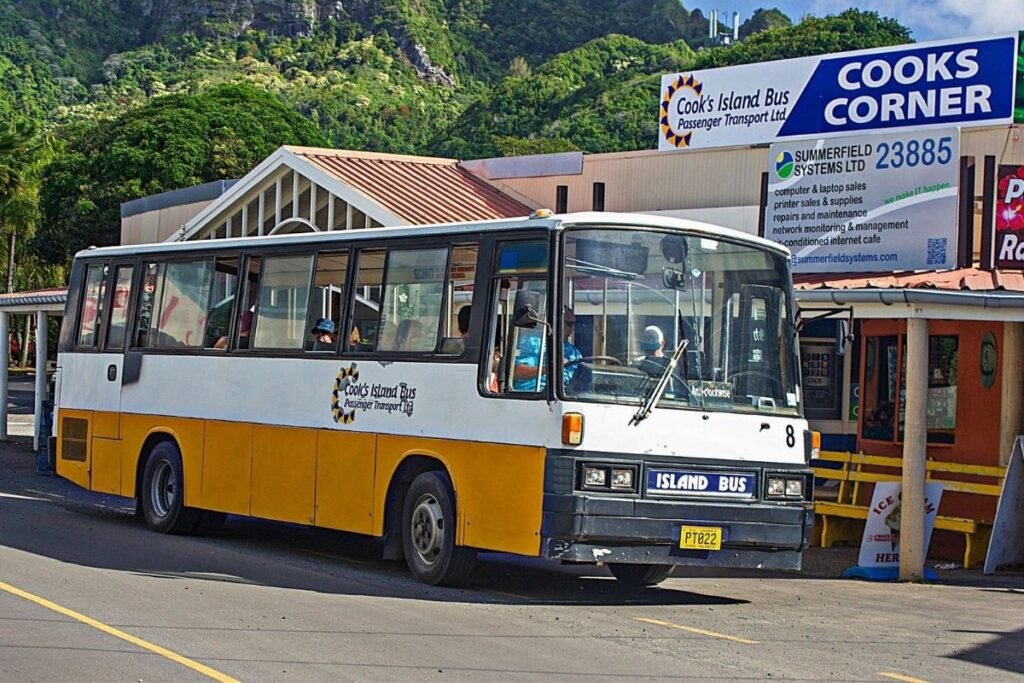
The bus is an easy way to get around Rarotonga if you don’t want to drive, with services travelling around the island’s main road.
When we first used the bus, we paid $5 per person to travel around the island, but fares and ticket options can change, so it’s worth checking the current prices before you go.
Current options include:
- Adult single ride – $5
- Adult Round Trip without hopping off the bus – $8
- All-day hop-on, hop-off pass – $20
- 10-ride adult pass – $35
- Child single ride – $3
- 10-ride child pass – $25
When we were travelling with a group, the $20 per person all-day pass quickly added up. We worked out that it was actually cheaper for us to hire a car and travel together, while also giving us the freedom to stop wherever we wanted.
For a couple or solo traveller, however, the bus can be a great option.
Check the latest Rarotonga bus fares and timetable. Rarotonga Bus Service | Cook Islands Bus Timetable, Fares & Routes
What About Hiring a Scooter?
Scooters are hugely popular on Rarotonga. We considered hiring scooters too, but when we saw the queue and realised we could be looking at around a three-hour wait to sort out the scooter licence, we decided we’d rather spend those hours somewhere else. 😂 Our cousins did go ahead with it and ended up spending around half a day waiting, sitting the test and getting their licences sorted. Once that was done though, they absolutely loved them.
In hindsight, having a scooter would have been pretty handy, but we were perfectly happy exploring by bike and car instead.
There’s an important licence rule to understand.
- Already licensed for motorcycles at home? You don’t need to sit the motorcycle test, although current Cook Islands tourism information says you’ll need to obtain the visitor licence.
- Only licensed to drive a car? That doesn’t automatically allow you to ride a scooter. You’ll need to go through the Cook Islands visitor motorcycle licensing process, which includes testing.
- Helmet: Compulsory when riding on Rarotonga.
Don’t Forget the Inland Roads
It’s easy to think getting around Rarotonga is all about that main coastal road, but there’s also an older inland road running through parts of the island.
This is where you can get away from some of the busier tourist areas and see homes, plantations and little places you might otherwise miss.
We also found the road heading inland towards the Needle Track car park easy enough to access.
So don’t automatically spend your entire trip doing circles of the coast. Some of Rarotonga’s hidden gems are inland.
So, Which Would We Choose?
- Car: Best for freedom, groups and carrying all your beach gear
- Scooter: Great for couples or solo travellers who are properly licensed or happy to organise the visitor licence
- Bicycle: Brilliant for exploring slowly, but be prepared for the heat
- Bus: Easy and affordable if you don’t want to drive
For us, using a mixture was actually part of the fun.
The bikes helped us discover places, the bus gave us an easy trip around the island, and once we had the car, we knew exactly where we wanted to go back to.
And perhaps that’s our best advice: you don’t necessarily have to choose just one.
“Getting around is easy. Choosing where to stop is the hard part.”
🌍 Travel Planning Resources
These are the tools we personally use and trust when planning our travels from finding a place to stay to booking activities, transport and insurance. Let your “Tohu” guide you “Trust the Journey” and follow what feels right for you.
- ✈️Flights – Compare great deals with Trip.com then Kiwi.com for flexible, affordable options.
- 🚐 Campervans – Compare rental deals with Motorhome Republic across Aotearoa and beyond.
- 🛏️ Stays – Compare hotels on Trip.com and TripAdvisor or Booking.com.
- 🚐 Rental Cars – Compare prices and book through Airport Rentals by Motorhome Republic for trusted brands and easy airport pickup.
- 🎟️ Activities – Browse tours and experiences on Viator, Get Your Guide, or TripAdvisor
- 🚆12Go Asia – Compare and book trains, buses, and ferries across Asia in one place with 12Go.
- 🛡️ Travel Insurance – Get flexible short-term coverage with Insubuy for your next holiday.
- 💳 Travel Money – Send, spend and manage money internationally with Wise, with easy currency conversion and a handy option for travellers.
- 🔒 Protect Your Privacy with a VPN – We recommend Surfshark VPN for secure and private browsing while travelling. It’s fast, affordable and works worldwide, perfect for public Wi-Fi at airports, cafes and hotels.
- 📱 Travel eSIM – Stay connected with Airalo
- 💼 Lounge Access – Treat yourself with Priority Pass for UK or US
- 🎶 Events & Concerts – Book tickets worldwide through Ticketmaster.
🧭 Note: Some booking links can be a bit shy when you’re using a VPN. If one doesn’t open, try pausing your VPN or switching to a different server location or secure Wi-Fi network to get things flowing again.