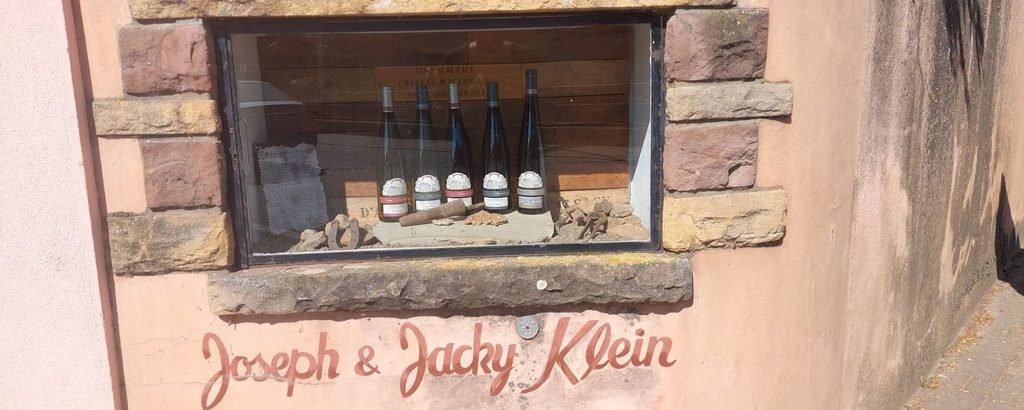
Located in northeastern France, close to the German border, Colmar and the Alsace region are known for their colourful half-timbered houses, historic towns, vineyards and picturesque countryside.
Colmar is one of the region’s best-known destinations, with its medieval streets, canals and traditional architecture attracting visitors throughout the year. Beyond the town, the Alsace Wine Route connects smaller villages, vineyards and local wineries, offering plenty of opportunities to explore.
With Germany just across the border, Alsace is also an excellent region for combining French sightseeing with a day trip into a neighbouring country.
Is Colmar and the Alsace Region Worth Visiting?
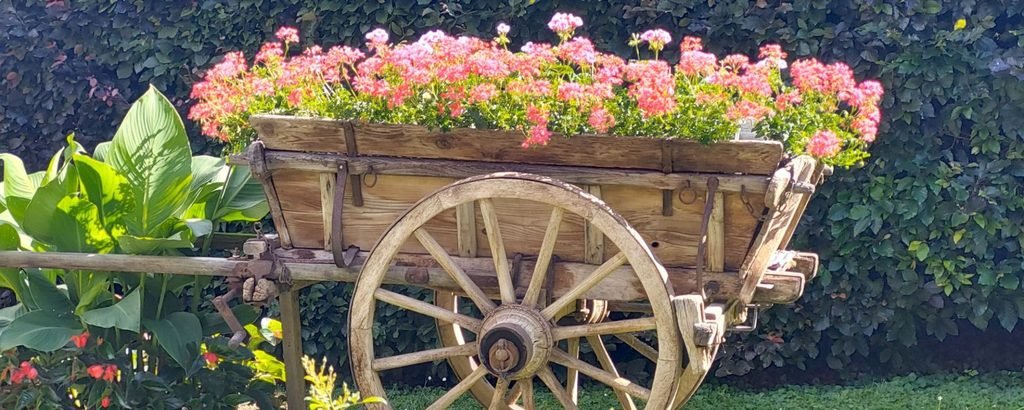
Absolutely! Colmar’s beautifully preserved old town, scenic canals and lively markets make it a wonderful destination for anyone who enjoys history, architecture and exploring on foot.
The surrounding region offers even more, particularly for travellers interested in:
- Historic Towns and Villages: Colourful buildings, cobbled streets and traditional French architecture.
- Vineyards and Local Wineries: Opportunities to discover Alsace’s established wine-producing region.
- Regional Food and Markets: Boulangeries, local produce, cheeses and traditional Alsatian specialities.
- Scenic Countryside: Vineyard-covered hills, walking trails and quieter rural communities.
- Cross-Border Day Trips: Easy access to nearby German destinations, including Freiburg im Breisgau.
Whether you’re visiting Colmar for a day or spending several nights exploring the wider region, Alsace offers an enjoyable combination of sightseeing, food and countryside experiences.
Our Experience Exploring Colmar and the Alsace Region
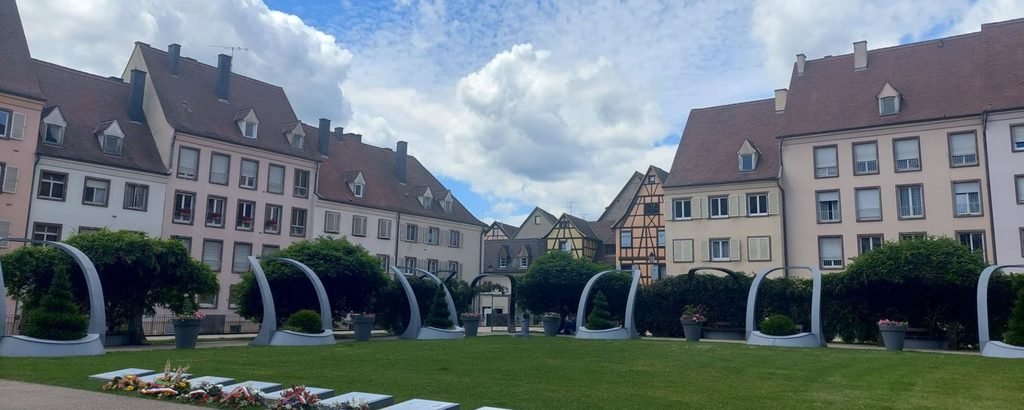
We based ourselves in Soultzmatt for four nights during our French road trip in July 2024, giving us time to discover a part of France we hadn’t previously explored.
What we particularly enjoyed was the contrast between Colmar’s historic centre and the slower pace of the surrounding countryside. Each day offered something different, from wandering through unfamiliar streets to discovering places we hadn’t originally planned to visit.
Although Alsace has strong historical and cultural connections with Germany, we still found it distinctly French, especially in its smaller communities. It was a relaxed and enjoyable part of our journey, with some unexpected experiences that made our stay all the more memorable.
Table of Contents
- Is Colmar and the Alsace Region Worth Visiting?
- Our Experience Exploring Colmar and the Alsace Region
- Exploring Colmar’s Historic Old Town
- Exploring Soultzmatt and the Alsace Wine Region
- Visiting the Villages of Alsace
- A Day Trip to Freiburg im Breisgau, Germany
- Where to Stay in Colmar and the Alsace Region
- Getting Around the Alsace Region
- Best Time to Visit Colmar and the Alsace Region
- Practical Tips for Visiting Colmar and the Alsace Region
- Final Thoughts on Colmar and the Alsace Region
Exploring Colmar’s Historic Old Town
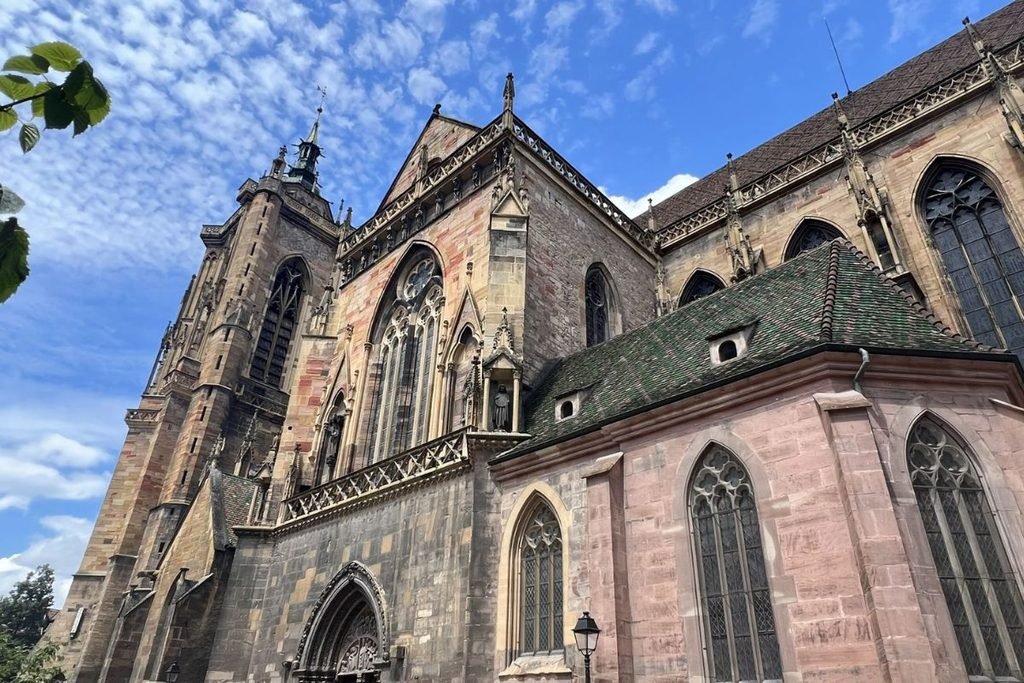
Colmar’s Old Town is one of the main attractions of the Alsace region, known for its colourful half-timbered buildings, cobbled streets and picturesque canals.
The historic centre is best explored on foot, with pedestrian-friendly streets connecting beautiful squares, traditional shops, markets and centuries-old architecture.
Although Colmar spreads across a fairly large area, many of its most popular attractions are concentrated within the historic town centre.
Discovering the Streets and Architecture of Colmar
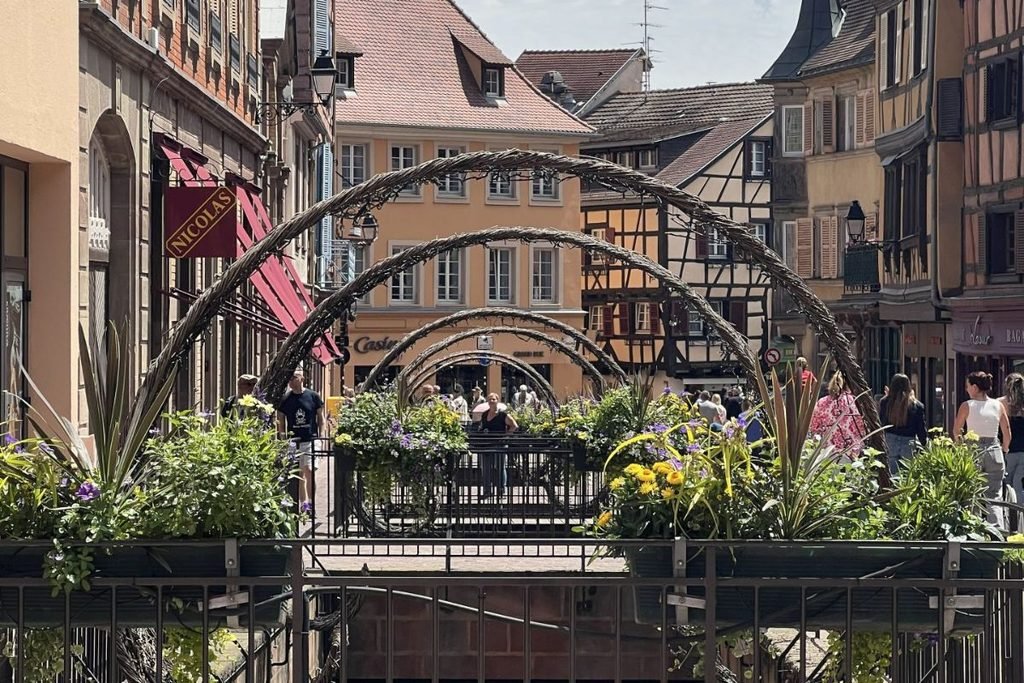
Walking through Colmar reveals a wonderful collection of medieval and Renaissance buildings, many featuring colourful facades, wooden beams and decorative window boxes.
Some of the main sights to look out for include:
- Rue des Marchands: One of Colmar’s best-known historic streets, lined with traditional buildings and shops.
- Maison Pfister: A distinctive Renaissance house featuring painted decorations, wooden galleries and an ornate corner turret.
- Place de l’Ancienne Douane: A picturesque square surrounded by historic architecture and outdoor dining areas.
- Koïfhus (Old Customs House): A historic building that once played an important role in Colmar’s trading activities.
- Saint-Martin’s Collegiate Church: An impressive Gothic church in the heart of the old town.
The combination of architectural styles, colourful buildings and narrow streets makes Colmar an excellent destination for photography and leisurely sightseeing.
Exploring Little Venice in Colmar
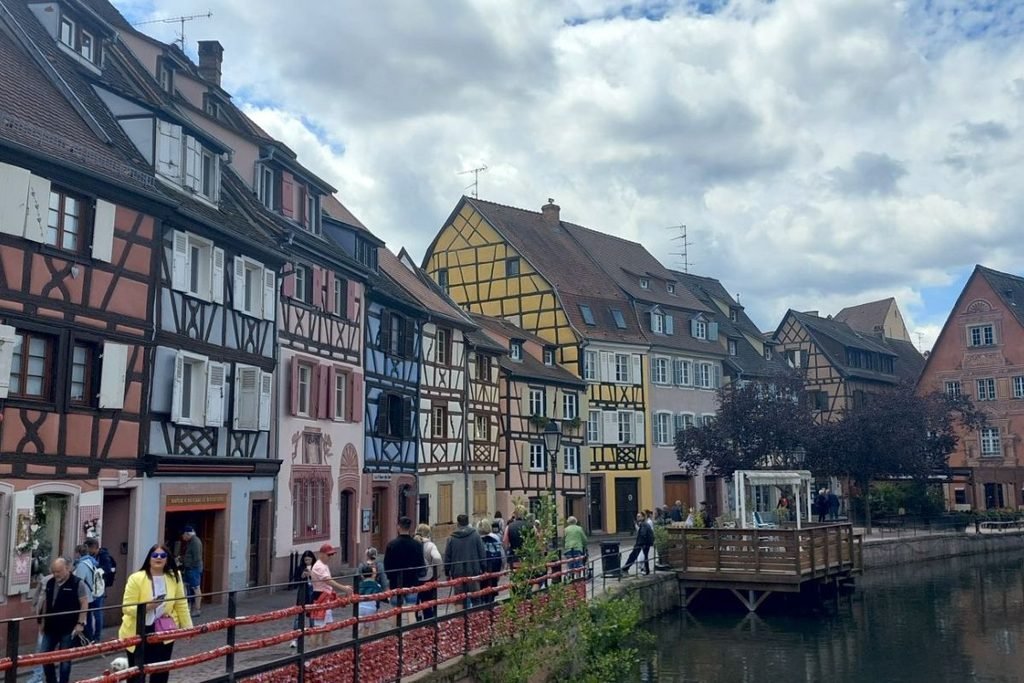
One of Colmar’s most photographed areas is La Petite Venise (Little Venice), a charming neighbourhood where traditional Alsatian houses line the Lauch River.
The waterways, small bridges and colourful buildings create some of the town’s most recognisable views.
Highlights include:
- Quai de la Poissonnerie: A picturesque waterfront lined with colourful historic houses.
- Pont Saint-Pierre: A popular bridge offering views along the river.
- Little Venice Canals: Scenic waterways surrounded by traditional buildings and flower-filled streets.
- Boat Tours: Small guided boat trips offering another perspective of the neighbourhood.
Exploring Little Venice on foot is an easy way to enjoy the area, with plenty of opportunities to stop for photographs.
Visiting Colmar’s Markets and Local Shops
Colmar is also a wonderful place to discover regional produce, local cheeses, wines and freshly baked bread.
The historic Marché Couvert (Covered Market) is one of the town’s best-known food markets, offering a selection of local products and specialities.
Popular things to look for include:
- Alsatian Cheeses: Including Munster, one of the region’s traditional cheeses.
- Local Wines: Particularly Riesling, Gewürztraminer and Pinot Gris.
- Fresh Bread and Pastries: Available from boulangeries throughout the town.
- Regional Produce: Seasonal fruit, vegetables, meats and other local specialities.
Markets and independent food shops are a great way to sample Alsatian flavours without needing a restaurant meal.
Our Experience Exploring Colmar
Our visit to Colmar began with something rather practical: getting our hair cut!
We found a friendly hairdresser who spoke a little English, making the experience much easier. After our haircuts, we walked into the historic centre to explore.
What stood out was how beautiful and scenic Colmar was, particularly around the canals and colourful old buildings. The layout felt a little unusual, with the town spreading out in different directions, but once we reached the main historic area, there was plenty to discover.
We wandered through the streets, explored the canal area and visited the local markets, where we picked up cheese, bread and wine.
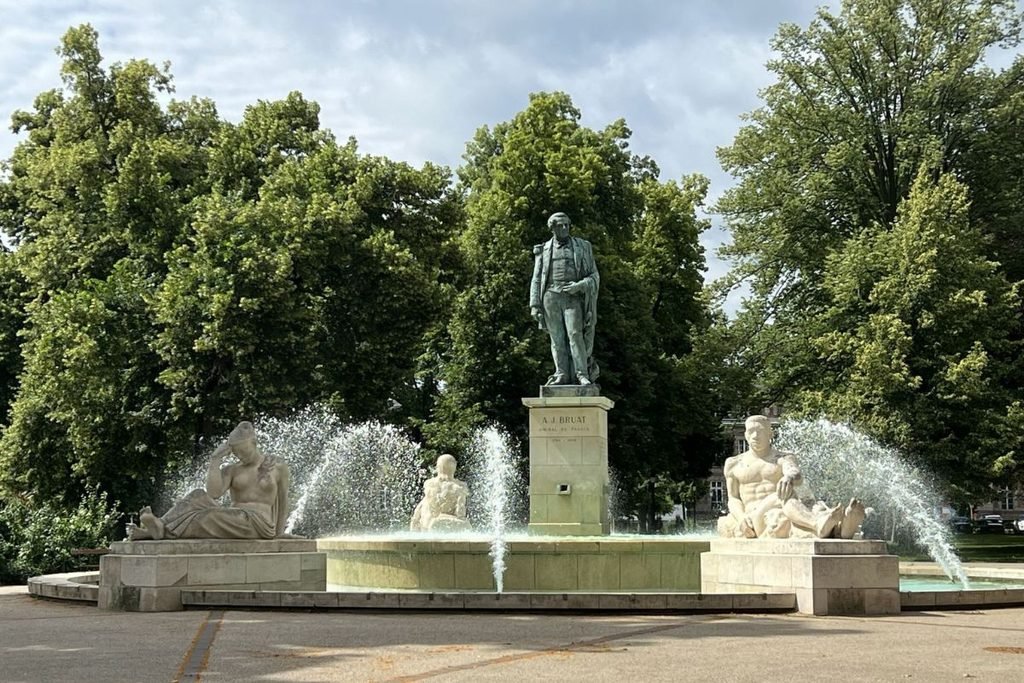
We also visited Parc du Champ de Mars, a lovely green space near the historic centre, where we stopped to see the Colmar sign and enjoy a quieter part of town.
Colmar was a lovely place to spend the day, combining sightseeing with a few everyday travel errands and some delicious local produce.
Exploring Soultzmatt and the Alsace Wine Region
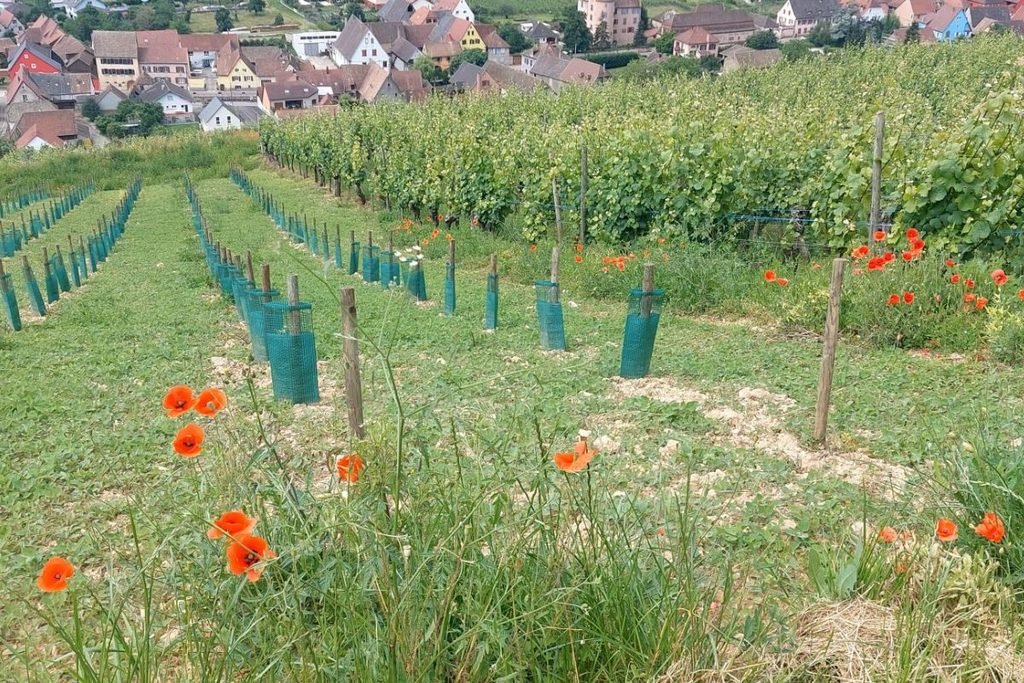
Approximately 20 kilometres south of Colmar, Soultzmatt lies among the vineyards and wooded hills of the Alsace wine-growing region. Part of the Alsace Wine Route, the village has a strong connection to local winemaking, with vineyards extending across the surrounding slopes.
Unlike Colmar’s busy historic centre, Soultzmatt offers an opportunity to discover the agricultural landscape and everyday traditions of this part of France.
Discovering the Village of Soultzmatt
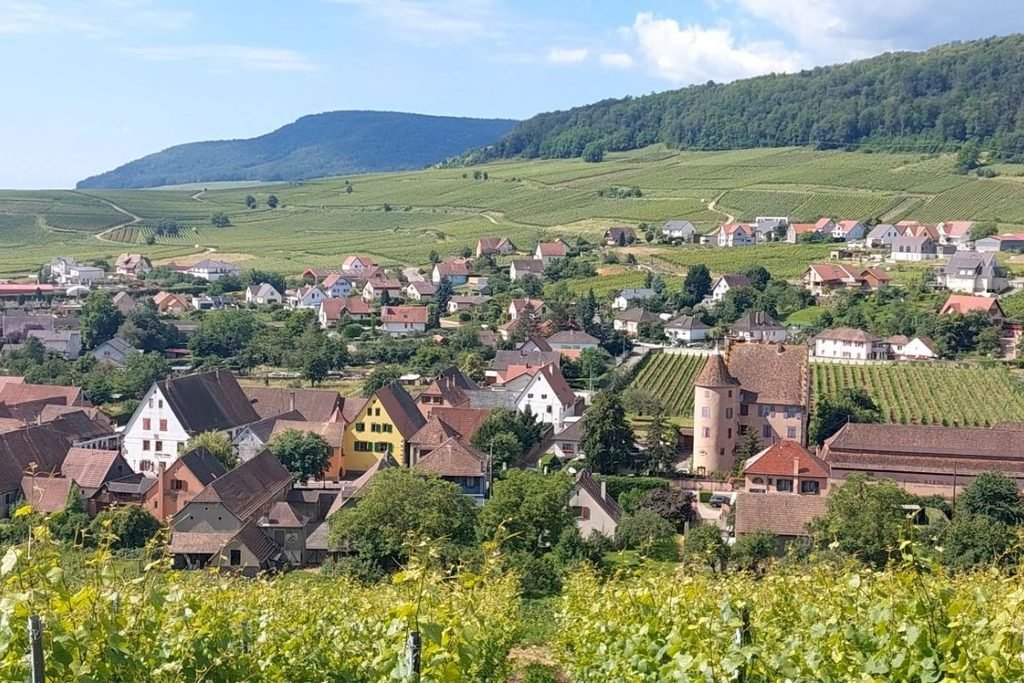
Soultzmatt is a beautiful little French village, with traditional Alsatian architecture, narrow streets and vineyards stretching towards the surrounding hills.
Although relatively small, the village has useful local shops and businesses, making it a convenient place to stay without needing to drive everywhere.
Some of the things we enjoyed included:
- Local Boulangeries: Perfect for picking up fresh bread, pastries and breakfast treats.
- Traditional Butcher’s Shop: We stopped at the local boucherie to buy sausages for dinner.
- Small Wineries: Wine producers are dotted throughout the village and surrounding countryside.
- Village Walks: Quiet streets, traditional buildings and opportunities to explore on foot.
- Surrounding Vineyards: Beautiful scenery, with rows of grapevines covering the nearby slopes.
We enjoyed wandering through Soultzmatt, discovering its small shops and appreciating the relaxed atmosphere away from the larger towns.
Walking Through the Vineyards and Hills of Soultzmatt
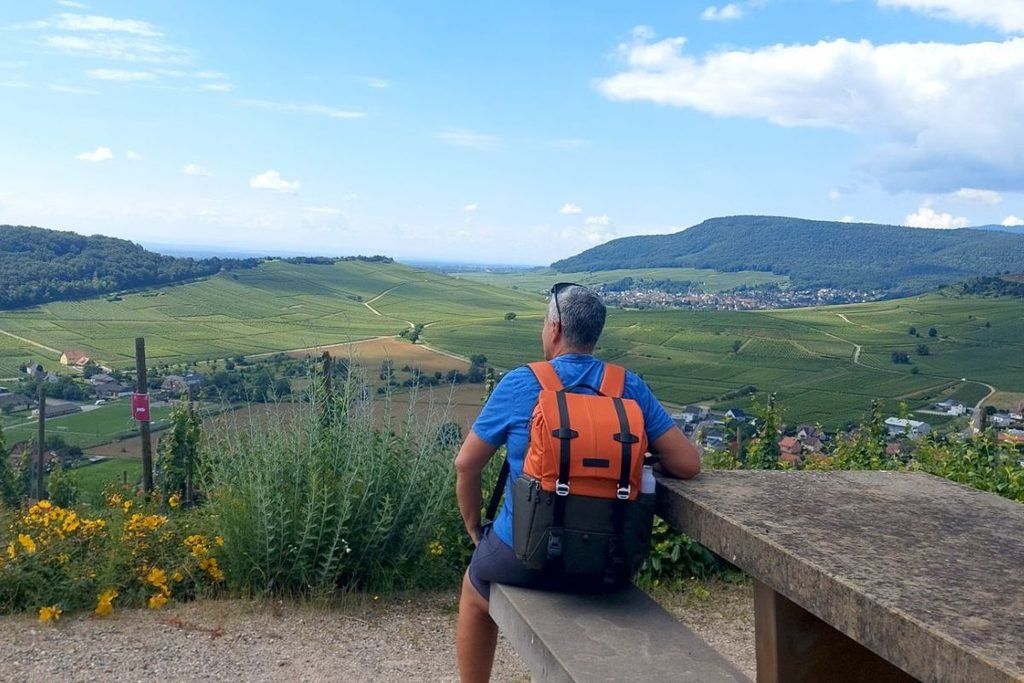
One of the highlights of staying in Soultzmatt was having walking routes into the surrounding hills within easy reach of our accommodation.
The landscape around the village features vineyards, wooded slopes and rural pathways, offering opportunities to explore the Alsace countryside without travelling far.
Walking in this area is particularly enjoyable for visitors interested in:
- Vineyard Scenery: Rows of grapevines stretching across the hillsides.
- Countryside Walking: Rural tracks and paths leading away from the village.
- Scenic Viewpoints: Elevated areas overlooking Soultzmatt and the surrounding landscape.
- Photography: Traditional village buildings framed by vineyards and green hills.
Our Experience: On our final full day in Soultzmatt, we headed into the hills above the village for a walk. It was a lovely way to enjoy the countryside before returning to prepare for our drive to Paris the following morning.
Discovering the Wines of Alsace
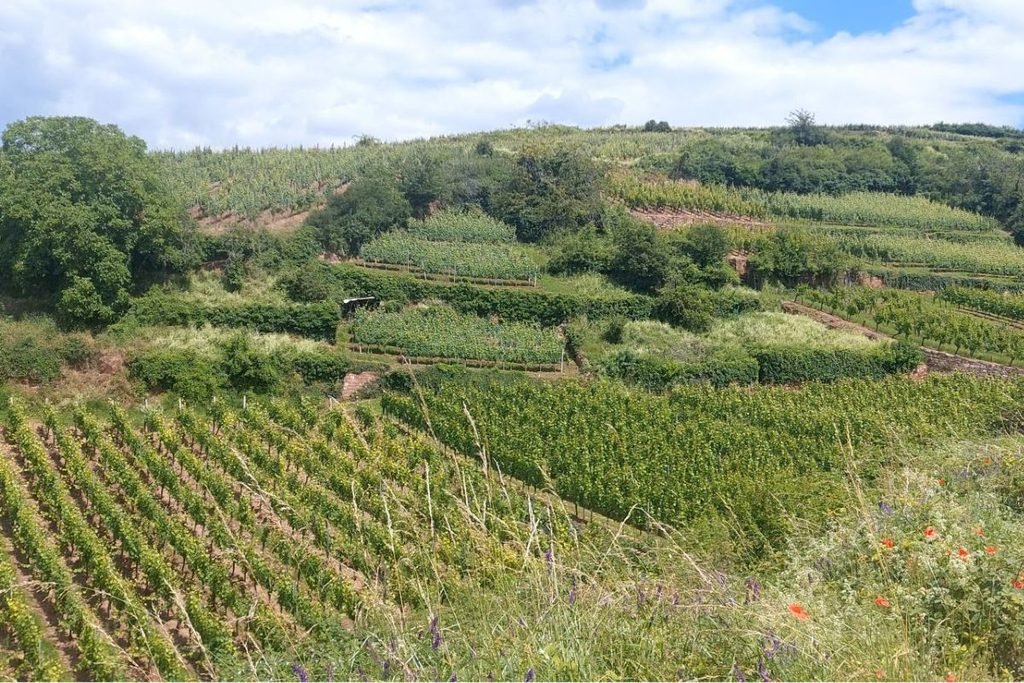
The Alsace Wine Route is one of France’s best-known wine regions, extending through vineyard-covered countryside and historic wine-producing villages.
Alsace is particularly famous for its white wines, although the region also produces red and sparkling varieties.
Some of the best-known Alsatian wines include:
- Riesling: Generally dry, with fresh acidity and citrus or mineral notes.
- Gewürztraminer: An aromatic wine often featuring floral and spicy characteristics.
- Pinot Gris: A fuller-bodied white wine with rich fruit flavours.
- Pinot Blanc: A lighter, versatile white wine.
- Crémant d’Alsace: The region’s traditional-method sparkling wine.
Many wineries throughout the region offer cellar-door sales and tastings, although opening arrangements vary between producers.
For visitors interested in exploring the wine region, Soultzmatt provides a convenient base without needing to stay in one of the more heavily visited Alsatian towns.
Visiting the Villages of Alsace
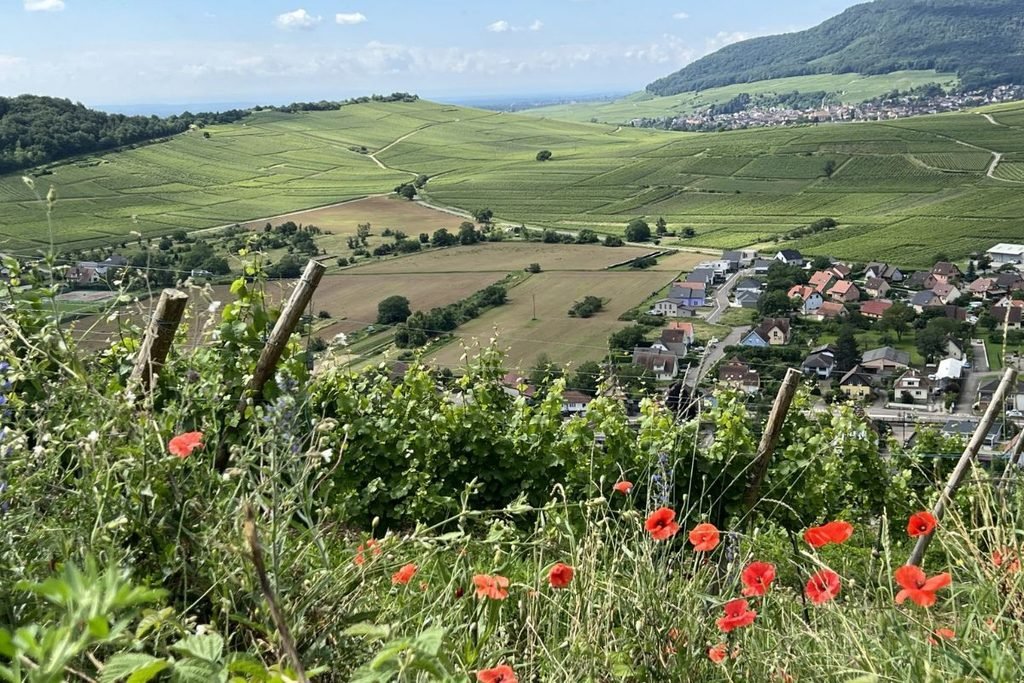
Beyond Colmar and Soultzmatt, the Alsace Wine Route passes through some of northeastern France’s most picturesque villages, known for their half-timbered houses, cobbled streets and surrounding vineyards.
Many are located within a short drive of Colmar, making them excellent additions to an Alsace road trip.
Beautiful Alsace Villages Worth Exploring
Some of the region’s best-known villages include:
- Eguisheim: A charming village approximately 7 kilometres from Colmar, famous for its circular streets, colourful houses and traditional wine cellars.
- Riquewihr: A beautifully preserved medieval village surrounded by vineyards, with historic buildings, wine shops and cobbled lanes.
- Kaysersberg: Known for its picturesque river, fortified bridge, medieval architecture and castle ruins overlooking the village.
- Ribeauvillé: A historic wine-producing town featuring colourful buildings, traditional shops and nearby castle ruins.
- Turckheim: A smaller village close to Colmar, recognised for its fortified gateways, traditional architecture and local wineries.
Planning a Village Road Trip
With several historic villages located relatively close together, it’s possible to explore different parts of the Alsace Wine Route in a single day.
Rather than trying to visit every village, consider choosing two or three destinations based on what interests you most.
For example, you could combine:
- Eguisheim and Turckheim: Two villages close to Colmar with distinctive historic centres.
- Riquewihr and Ribeauvillé: A combination of medieval streets and established wine-growing communities.
- Kaysersberg and Riquewihr: An appealing route for visitors interested in architecture, local shops and village scenery.
We concentrated on Colmar, Soultzmatt and Freiburg during our stay, so these are suggestions for travellers wanting to explore further rather than places we visited ourselves.
A Day Trip to Freiburg im Breisgau, Germany
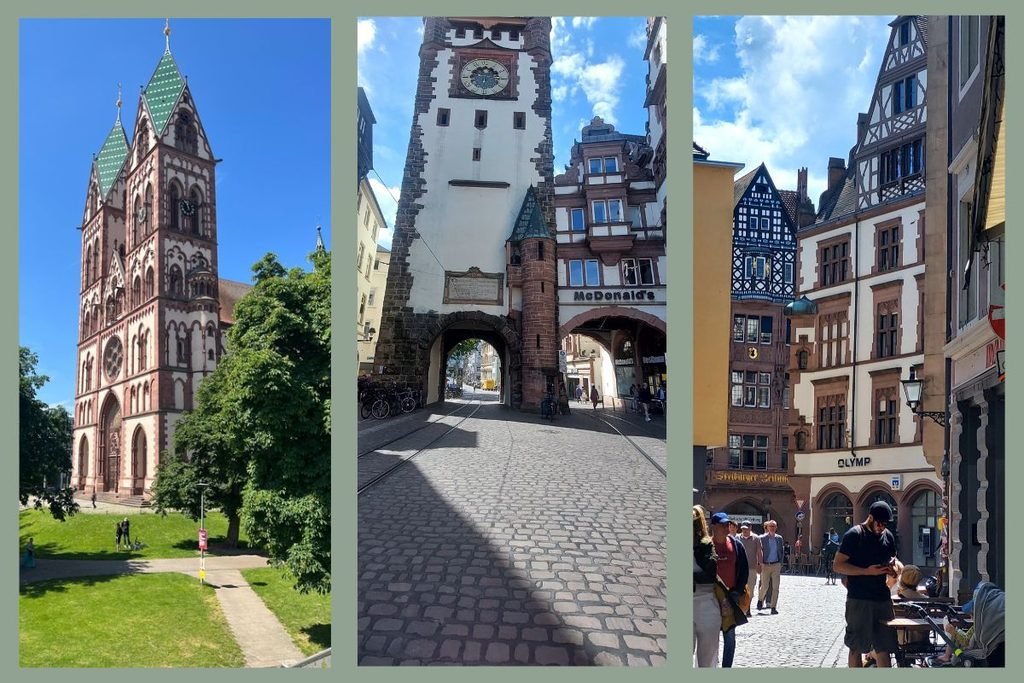
Located in southwestern Germany, close to the French border, Freiburg im Breisgau is a historic university city known for its medieval architecture, lively squares, traditional German restaurants and proximity to the Black Forest.
From Soultzmatt, Freiburg makes an enjoyable day trip from the Alsace region, offering an opportunity to experience a neighbouring country without travelling too far.
Our decision to visit was fairly spontaneous. We’d heard good things about Freiburg, but our main motivation was much simpler: German sausages, sauerkraut and a good beer!
Crossing the Border from France into Germany
We travelled to Freiburg in our leased Citroën C3 Aircross, enjoying the straightforward drive through the countryside towards Germany.
One unexpected highlight was stopping near the border to watch large commercial vessels passing through a navigation lock.
These impressive structures allow boats and ships to travel between waterways at different water levels.
We stopped for a while to watch the fascinating process:
- Entering the Lock: Large vessels manoeuvred into the enclosed chamber.
- Closing the Gates: The lock gates closed behind the vessel.
- Changing Water Levels: Water entered or drained from the chamber, raising or lowering the vessel.
- Continuing the Journey: Once the water levels matched, the gates opened and the vessel continued along the waterway.
It was fascinating watching such large vessels being moved between different water levels, and the stop became an unexpected part of our day.
Exploring Freiburg’s Historic Old Town
After arriving in Freiburg, we found parking outside the main centre and continued exploring on foot.
The Altstadt (Old Town) is filled with historic buildings, pedestrian streets, traditional shops and lively public squares.
Some of Freiburg’s main attractions include:
- Freiburg Minster (Freiburger Münster): An impressive Gothic cathedral dominating the historic centre.
- Martinstor: One of Freiburg’s surviving medieval city gates.
- Münsterplatz: The main square surrounding the cathedral, known for its historic buildings and market.
- Freiburg’s Bächle: Small water channels running alongside many streets in the old town.
- Schwabentor: Another historic city gate, located near the edge of the old town.
We enjoyed wandering through the centre, admiring the architecture and discovering different parts of the city without following a particular sightseeing itinerary.
Freiburg Minster was particularly impressive from the outside. Although we didn’t go inside, we spent time admiring its architecture and surroundings.
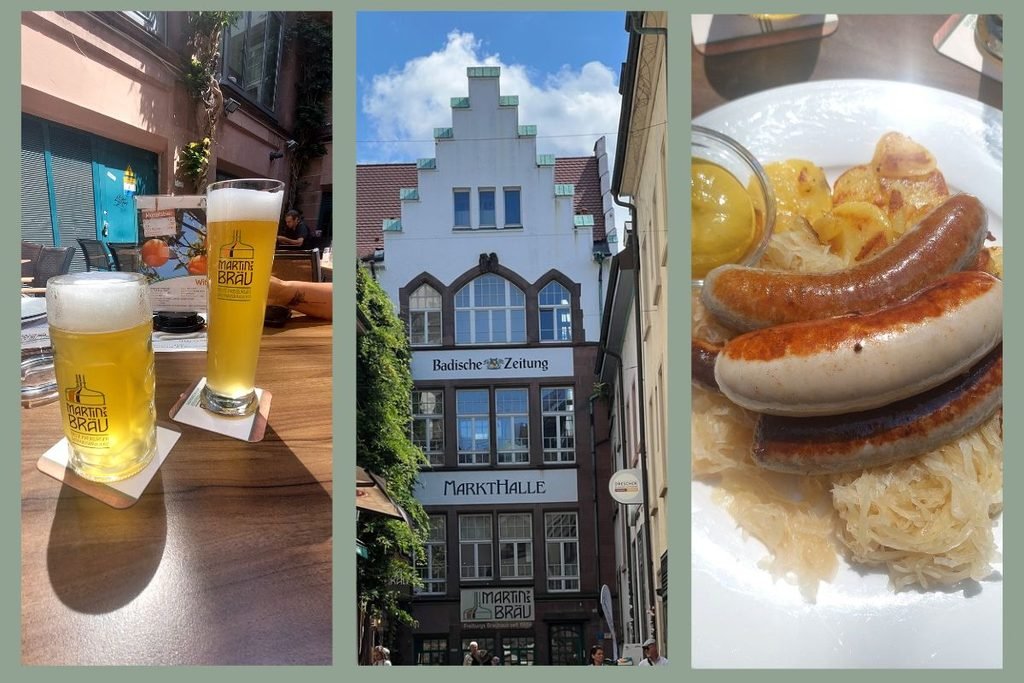
Enjoying German Food at Martins Bräu
One of the main highlights of our Freiburg visit was lunch at Martins Bräu, a traditional brewery restaurant in the historic centre.
We’d been looking forward to trying some authentic German food, particularly the sausages and sauerkraut we’d heard so much about.
Our meal certainly didn’t disappoint!
The combination of traditional German food and a freshly poured beer was exactly what we’d hoped for when deciding to cross the border.
Martins Bräu was a wonderful place to stop for lunch, and the meal became one of our favourite memories of the day.
Our Experience Visiting Freiburg
We spent the day exploring Freiburg at a relaxed pace, with no particular attractions we felt we had to visit.
After wandering through the historic centre and enjoying our lunch, we found a spot near the water where we could sit and watch people going about their day.
What made Freiburg enjoyable was the combination of historic architecture, good food and a change of scenery from our time in France.
Our spontaneous day trip turned out to be well worth the drive, and we’d happily recommend Freiburg to anyone exploring Alsace with a car.
Where to Stay in Colmar and the Alsace Region
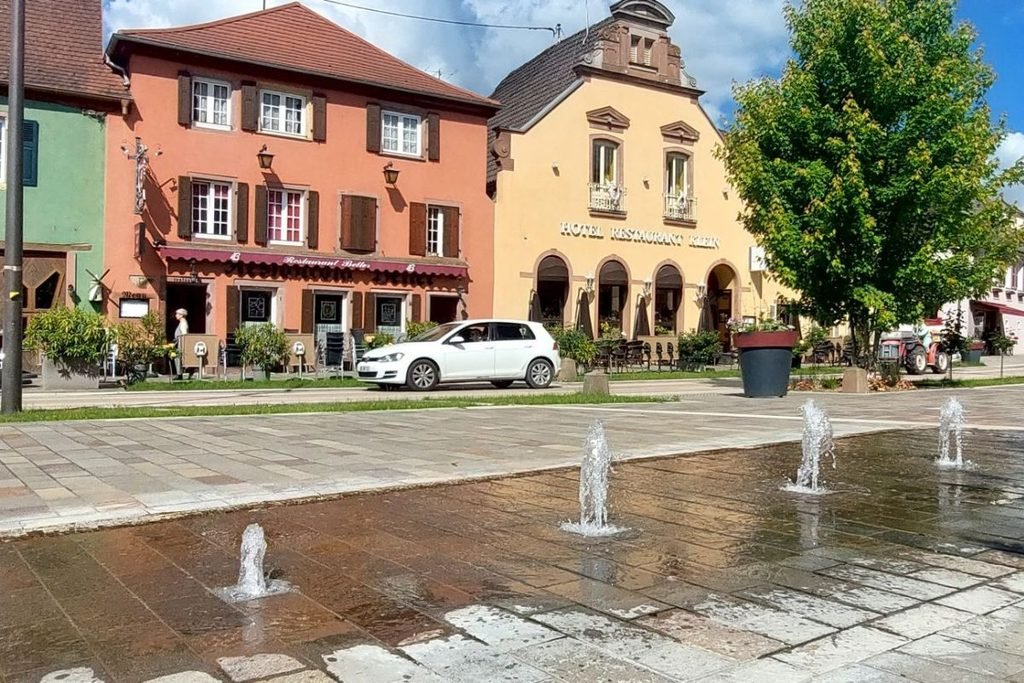
Choosing where to stay in Colmar and the Alsace region depends on whether you prefer the convenience of a historic town centre or a quieter village surrounded by vineyards. Colmar is a popular base for sightseeing, while smaller towns along the Alsace Wine Route offer an alternative for travellers exploring the region by car.
Accommodation ranges from traditional hotels and guesthouses to self-catering apartments and countryside holiday homes.
Our Airbnb Accommodation in Soultzmatt
We spent four nights in Soultzmatt, staying in a small Airbnb apartment beneath our host’s home.
The apartment was easy to find and conveniently located for exploring the village on foot. With local shops, boulangeries and vineyard walks nearby, it suited our road trip perfectly. What made our stay particularly memorable, however, was the hospitality of our Airbnb host. Although he spoke no English and our French was limited, that didn’t stop him from making us feel welcome.
During our stay, he invited us upstairs for happy hour, where we enjoyed sampling local Alsatian wines together. Before leaving, he also invited us for a farewell breakfast, complete with pastries, crisp toast-style bread and a selection of breakfast accompaniments. It was such a thoughtful gesture and a wonderful way to finish our time in Soultzmatt.
Experiences like this are one of the reasons we enjoy staying in smaller communities. Despite the language barrier, our host’s kindness made our accommodation feel much more personal than simply somewhere to sleep.
Best Areas to Stay in Colmar and Alsace
There are several good accommodation bases throughout the region, depending on your itinerary and transport arrangements.
- Colmar Old Town: Ideal for first-time visitors wanting restaurants, historic attractions, markets and shops within walking distance.
- Colmar Outskirts: A practical alternative for travellers with a car who prefer easier parking and access to surrounding roads.
- Soultzmatt: A quieter wine-producing village with local shops, wineries and countryside walks. An excellent option for exploring by car.
- Eguisheim: A picturesque village close to Colmar, popular for its traditional architecture and wine cellars.
- Riquewihr: A historic wine village suited to travellers wanting to stay along the Alsace Wine Route.
- Kaysersberg: A scenic town with traditional accommodation, restaurants and access to nearby vineyards.
Staying in Colmar or a Smaller Alsace Village?
Both options have advantages, depending on how you plan to explore the region.
Stay in Colmar if you prefer:
- Walking to restaurants, shops and attractions.
- Exploring the historic centre without needing a car.
- Convenient access to public transport.
- A livelier atmosphere with more accommodation choices.
Stay in a smaller Alsace village if you prefer:
- A quieter setting away from the main tourist areas.
- Easy access to vineyards and countryside walks.
- Local bakeries, wineries and village life.
- Using a car for day trips throughout the region.
Recommendation: Consider how much time you want to spend sightseeing compared with enjoying your accommodation and its surroundings.
For a short visit focused on Colmar itself, staying centrally makes sense. However, if you’re planning several days exploring the wider region, a smaller village can offer a more relaxed experience and a different perspective on Alsatian life.
Getting Around the Alsace Region
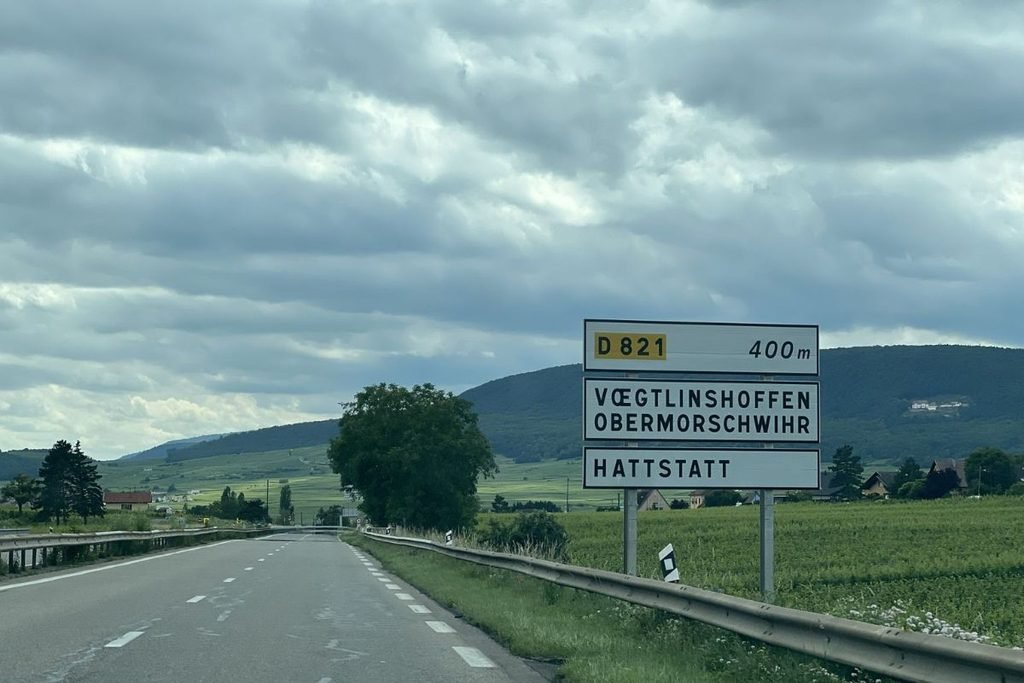
Exploring Colmar and the Alsace region is relatively straightforward, with good road connections, regional trains and local transport linking many of the main towns. The best way to get around depends on whether you’re staying in Colmar or planning to explore the smaller villages, vineyards and surrounding countryside.
Driving Around Colmar and Alsace
Hiring or leasing a car is an excellent option for travellers wanting the flexibility to explore the Alsace Wine Route and neighbouring regions. The roads are generally well maintained, with motorways connecting the larger towns and smaller roads winding through the vineyard-covered countryside.
A few things to consider when driving in Alsace:
- Road Conditions: Main roads are generally easy to navigate, with good connections between towns and villages.
- Village Streets: Historic centres can have narrow streets and pedestrian-only areas.
- Parking: Look for designated car parks outside the older town centres.
- Motorways: The A35 provides a major north–south connection through Alsace.
- Wine Route: Smaller regional roads connect many of the traditional wine-producing villages.
Our Experience: Travelling in our leased Citroën C3 Aircross gave us the flexibility to change plans, take smaller regional roads and explore places that interested us along the way. We found the road network straightforward to navigate, which made this part of our French road trip particularly enjoyable.
Parking in Colmar and the Alsace Villages
Parking arrangements vary depending on the size and popularity of each destination. In Colmar, several public car parks are located around the historic centre, making it possible to leave your vehicle and explore on foot. For smaller Alsace villages, parking areas are often situated near the entrances to the historic streets.
Useful parking tips include:
- Check Parking Signs: Some areas have time restrictions or paid parking.
- Avoid Historic Centres: Narrow streets and pedestrian zones can make driving inconvenient.
- Arrive Earlier During Busy Periods: Popular villages may have limited parking during weekends and holidays.
- Explore on Foot: Once parked, many historic centres are compact enough to walk around comfortably.
Exploring Alsace Without a Car
Travellers staying in Colmar or Strasbourg can explore parts of Alsace using trains, regional buses and organised excursions.
Options include:
- Regional Trains: TER services connect Colmar with Strasbourg, Mulhouse and several other towns.
- Local Buses: Regional routes serve some smaller communities, although frequencies vary.
- Guided Wine Route Tours: Organised excursions can provide transport between vineyards and villages.
- Cycling: Designated cycle routes offer another way to explore parts of the Alsace countryside.
Public transport works well for visiting larger towns, but reaching smaller wine villages may require additional planning.
Travelling Between Alsace and Germany
Alsace’s location near the German border makes cross-border day trips an appealing option. Freiburg im Breisgau is one of the best-known nearby German cities, accessible by road from the Colmar region.
If you’re planning to drive across the border:
- Check Your Rental or Lease Agreement: Confirm that travel into Germany is permitted and covered by your insurance.
- Carry Required Documents: Keep your driving licence, vehicle paperwork and identification accessible.
- Check Environmental Zone Rules: Some German cities have restrictions on certain vehicles entering designated areas.
- Allow for Different Road Rules: Speed limits, parking regulations and traffic signs may differ between countries.
For us, travelling between France and Germany was straightforward, making Freiburg an easy addition to our Alsace itinerary.
Best Time to Visit Colmar and the Alsace Region
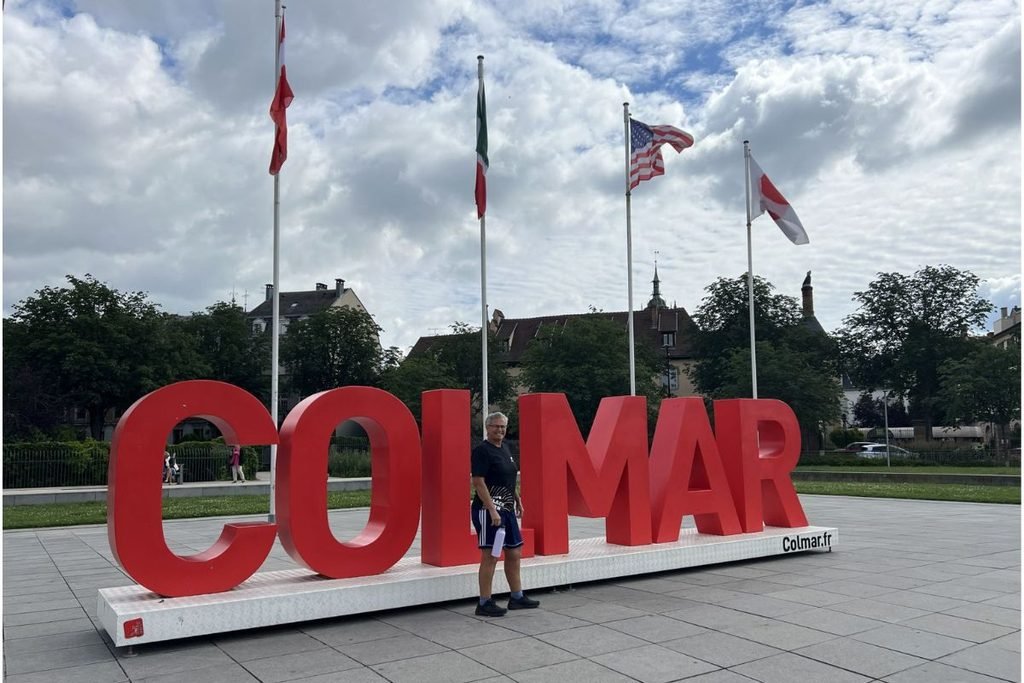
The best time to visit Colmar and Alsace depends on whether you’re interested in exploring historic towns, walking through vineyards, visiting local wineries or experiencing the region’s famous Christmas markets.
Spring through autumn offers pleasant conditions for sightseeing and countryside activities, while winter brings a completely different atmosphere to the historic towns.
Visiting Colmar and Alsace in Spring
Spring (March–May) is a lovely time to explore Alsace as the countryside begins turning green and temperatures gradually become milder.
Some advantages of visiting during spring include:
- Fewer Visitors: Generally quieter than the peak summer months, particularly outside public holidays.
- Comfortable Sightseeing: Mild days can be ideal for walking through historic towns.
- Vineyard Scenery: The surrounding countryside begins showing fresh seasonal growth.
- Outdoor Activities: Good opportunities for cycling and countryside walks when weather permits.
Weather can still be unpredictable, so carrying a waterproof jacket and warm layers is recommended.
Visiting Alsace in Summer
Summer (June–August) brings warmer temperatures, longer daylight hours and plenty of opportunities to explore the Alsace Wine Route. It’s a popular season for visiting Colmar and the surrounding villages, with outdoor dining, local events and vineyard walks adding to the experience.
Our Experience: We visited Alsace in early July 2024 and enjoyed lovely weather throughout our four-night stay.
Despite travelling during summer, we didn’t find the region particularly busy. Exploring Colmar, Soultzmatt and the surrounding countryside was enjoyable without feeling overwhelmed by crowds.
The pleasant conditions were especially welcome for our walks through the hills and vineyards around Soultzmatt.
Visiting Alsace in Autumn
Autumn (September–November) is particularly appealing for visitors interested in the region’s wine-producing heritage. As the vineyards change colour and the grape harvest gets underway, the countryside takes on a different appearance.
Highlights of an autumn visit include:
- Harvest Season: Opportunities to experience the atmosphere of the grape-growing season.
- Autumn Colours: Vineyards and surrounding hills display beautiful seasonal colours.
- Wine Experiences: Local producers and wine villages celebrate the region’s winemaking traditions.
- Cooler Temperatures: Often comfortable for exploring on foot, particularly in early autumn.
Harvest dates and local celebrations vary depending on the weather and individual wine producers.
Visiting Colmar During Winter
Winter (December–February) offers a different experience, particularly during the festive season. Colmar is well known for its Christmas markets, when the historic centre is decorated with lights, festive displays and traditional market stalls.
Visitors can enjoy:
- Christmas Markets: Seasonal stalls selling gifts, decorations and regional food.
- Festive Decorations: Illuminated streets and historic buildings throughout the old town.
- Traditional Winter Food: Warming Alsatian dishes, pastries and seasonal treats.
- A Different Atmosphere: The medieval streets take on a festive appearance during the Christmas period.
December can be particularly busy around the markets, while January and February are generally quieter.
When Would We Recommend Visiting?
For travellers planning an Alsace road trip, we’d recommend late spring, summer or early autumn for comfortable sightseeing and exploring the wine villages. Our early July visit worked particularly well, with good weather, manageable visitor numbers and plenty of daylight for day trips.
However, travellers wanting to experience Colmar’s famous Christmas markets may prefer visiting in late November or December, when the festive season becomes one of the region’s main attractions.
Practical Tips for Visiting Colmar and the Alsace Region
A little preparation can make exploring Colmar and the Alsace region more enjoyable, particularly if you’re combining historic towns, vineyard walks and local food experiences.
Here are a few useful tips to consider:
- Wear Comfortable Walking Shoes: Colmar and many Alsace villages have cobbled streets, while vineyard tracks can be uneven.
- Carry Some Cash: Smaller shops, market stalls and local producers may prefer cash for smaller purchases.
- Learn a Few French Phrases: English isn’t always widely spoken in smaller villages. A friendly bonjour and merci can go a long way.
- Check Winery Opening Hours: Smaller wine producers may require advance bookings for tastings or cellar visits.
- Try Regional Specialities: Look out for tarte flambée, choucroute garnie, Munster cheese and traditional Alsatian pastries.
- Bring a Reusable Shopping Bag: Handy for picking up bread, cheese, wine and other local produce from markets.
- Allow Time to Wander: Some of the most enjoyable discoveries are found along smaller streets and away from the main attractions.
Our Tip: Check local market days before planning your sightseeing. Markets can be a great opportunity to discover regional produce and local specialities, but opening days and hours vary between towns.
Final Thoughts on Colmar and the Alsace Region
Alsace was another memorable chapter of our 2024 French road trip, offering a wonderful mix of history, beautiful scenery and local experiences.
What we appreciated most was being able to explore without a rigid itinerary. Some days were spent discovering historic streets, while others unfolded through spontaneous decisions and conversations with people we met along the way.
Colmar is certainly worth visiting, but we’d encourage travellers to look beyond its famous old town and discover more of the surrounding region.
For us, the most lasting memories weren’t necessarily the major attractions. They were the smaller, unexpected moments that made our time in Alsace feel special.
“The places we visit may draw us in, but it’s often the people we meet and the unexpected moments that stay with us longest.”
🌍 Travel Planning Resources
These are the tools we personally use and trust when planning our travels from finding a place to stay to booking activities, transport and insurance. Let your “Tohu” guide you “Trust the Journey” and follow what feels right for you.
- ✈️Flights – Compare great deals with Trip.com then Kiwi.com for flexible, affordable options.
- 🚐 Campervans – Compare rental deals with Motorhome Republic across Aotearoa and beyond.
- 🛏️ Stays – Compare hotels on Trip.com and TripAdvisor or Booking.com.
- 🚐 Rental Cars – Compare prices and book through Airport Rentals by Motorhome Republic for trusted brands and easy airport pickup.
- 🎟️ Activities – Browse tours and experiences on Viator, Get Your Guide, or TripAdvisor
- 🚆12Go Asia – Compare and book trains, buses, and ferries across Asia in one place with 12Go.
- 🛡️ Travel Insurance – Get flexible short-term coverage with Insubuy for your next holiday.
- 💳 Travel Money – Send, spend and manage money internationally with Wise, with easy currency conversion and a handy option for travellers.
- 🔒 Protect Your Privacy with a VPN – We recommend Surfshark VPN for secure and private browsing while travelling. It’s fast, affordable and works worldwide, perfect for public Wi-Fi at airports, cafes and hotels.
- 📱 Travel eSIM – Stay connected with Airalo
- 💼 Lounge Access – Treat yourself with Priority Pass for UK or US
- 🎶 Events & Concerts – Book tickets worldwide through Ticketmaster.
🧭 Note: Some booking links can be a bit shy when you’re using a VPN. If one doesn’t open, try pausing your VPN or switching to a different server location or secure Wi-Fi network to get things flowing again.