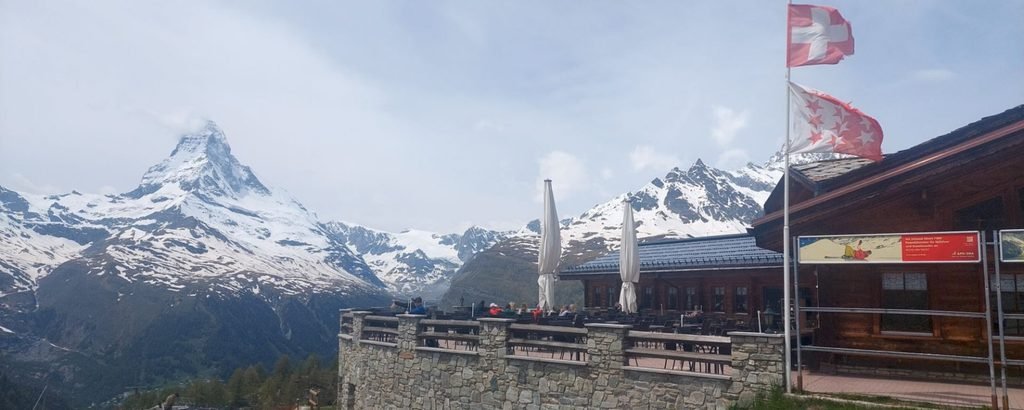
Set in the Swiss Alps beneath the iconic Matterhorn, Zermatt is one of Switzerland’s most recognisable mountain destinations. This car-free Alpine village is surrounded by towering peaks, forested valleys and an extensive network of hiking trails. Famous for its skiing, mountain railways and spectacular scenery, Zermatt attracts visitors throughout the year. Beyond the village, walking tracks lead through traditional mountain settlements and towards viewpoints overlooking the Matterhorn, offering plenty of opportunities to explore this remarkable Alpine region.
Is Zermatt Worth Visiting?
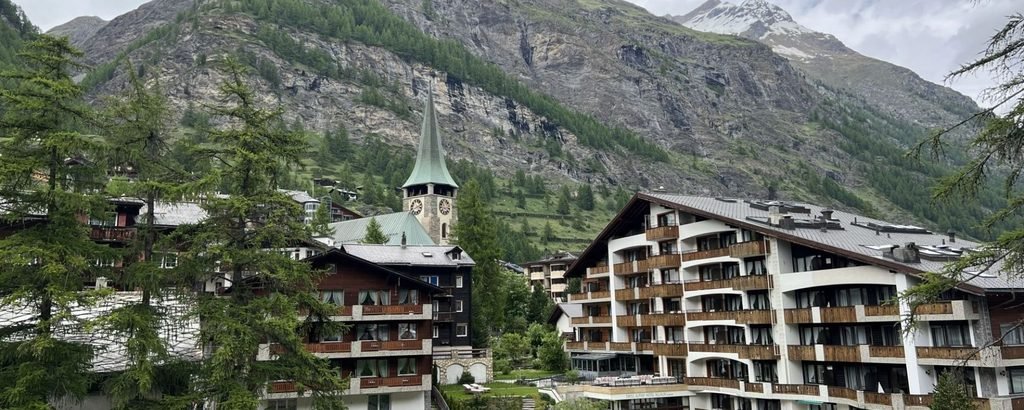
Is Zermatt worth visiting if you’re not skiing or planning expensive mountain excursions? Absolutely! While its famous railways and cable cars are major attractions, Zermatt also offers beautiful walking trails, traditional Alpine architecture and opportunities to explore the surrounding mountains independently. However, it’s an expensive destination, and the season can significantly affect what’s accessible, particularly if hiking is your main reason for visiting.
Our Experience in Zermatt
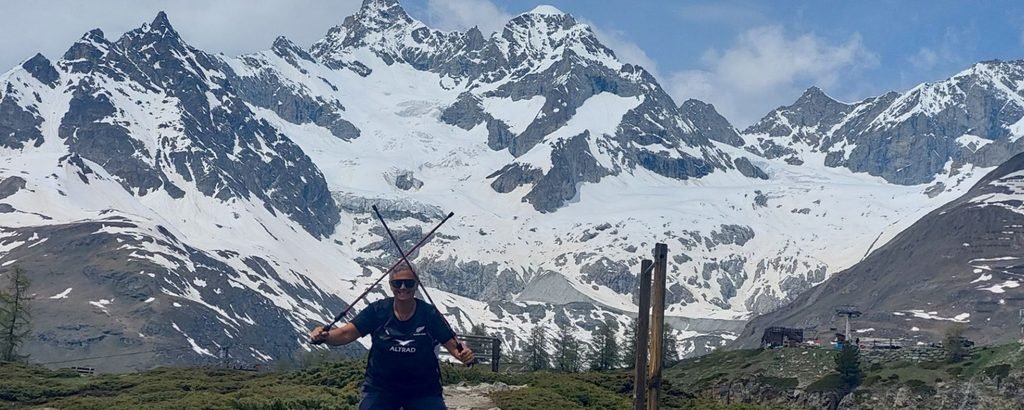
We spent four nights in Zermatt in early June 2024, following six nights exploring Grindelwald and the Bernese Oberland. Our main reason for visiting was to hike the famous Five Lakes Trail, particularly to see the Matterhorn reflected in Stellisee. Unfortunately, lingering snow meant we had to change our plans. Instead, we explored alternative walking routes, discovered some wonderful Alpine wildlife and enjoyed three days of clear Matterhorn views despite occasional drizzle. We loved Zermatt, and although our visit didn’t go entirely to plan, it certainly gave us some memorable experiences.
Table of Contents
Getting to Zermatt via Täsch
Zermatt is a car-free village, so visitors arriving by car must leave their vehicles in Täsch, approximately 5 kilometres away, before continuing by train or authorised transport.
We arrived in our French leased car, which we’d been using to explore Europe, and parked in Täsch for our four-night stay.
Parking in Täsch
Täsch has several parking facilities, including the large Matterhorn Terminal Täsch complex near the railway station.
Parking for multiple days can be expensive, and the Swiss Half Fare Card doesn’t provide a discount. It’s worth comparing current parking rates and including this additional expense in your travel budget.
Choosing parking close to the railway station also makes transferring luggage onto the shuttle train easier.
Taking the Shuttle Train to Zermatt
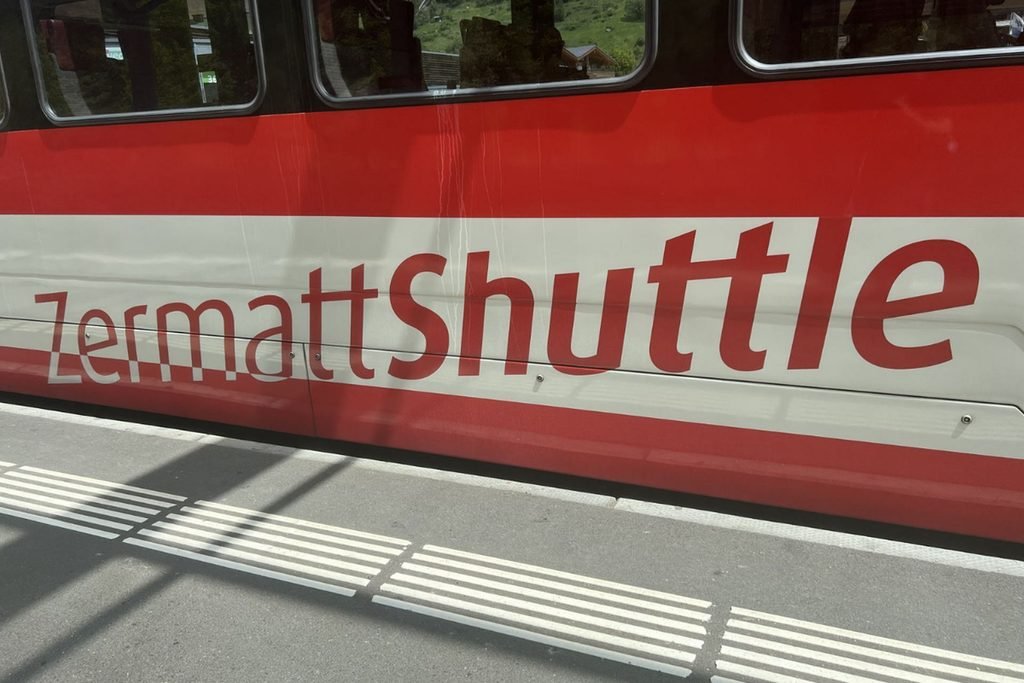
From Täsch, we caught the shuttle train to Zermatt, a journey of approximately 12 minutes. Trains depart regularly throughout the day, making the transfer straightforward.
We used our Swiss Half Fare Cards to receive a discount on the train tickets.
Once in Zermatt, we walked to our accommodation at Haus Zer Weidu on Unterer Mattenweg, conveniently located near the railway station and village centre.
Best Things to Do in Zermatt

Beyond its famous skiing and mountain excursions, Zermatt offers traditional Alpine architecture, beautiful walking tracks and opportunities to discover the surrounding landscape. Here are some of the highlights worth including in your visit.
Exploring Zermatt Village
Zermatt is a compact village filled with traditional Swiss chalets, historic timber buildings, hotels, restaurants and shops. Its main shopping street, Bahnhofstrasse, runs through the centre, while the older neighbourhoods offer a glimpse into the village’s Alpine heritage.
Some places worth exploring include:
- Hinterdorf: An historic neighbourhood featuring centuries-old wooden buildings and traditional stone roofs.
- Bahnhofstrasse: The main shopping area, with outdoor equipment stores, boutiques, souvenir shops and cafés.
- The village streets: A mixture of traditional architecture and modern accommodation, with occasional views of the Matterhorn appearing between the rooftops.
We enjoyed wandering through the village and admiring its buildings, although shopping and dining out weren’t priorities for us. Much of the centre caters to tourists, but the older streets were particularly interesting to explore.
Seeing the Matterhorn
Standing at 4,478 metres, the Matterhorn is one of Switzerland’s most recognisable mountains, famous for its distinctive pyramid-shaped peak.
For Toni, seeing it was particularly special. Toblerone is her favourite chocolate, and the Matterhorn was featured on its packaging for many years. After seeing that familiar mountain silhouette so often, we were finally standing beneath the real thing!
Despite occasional drizzle, we enjoyed three days with clear views of the Matterhorn as the clouds parted throughout the day.
One of the things we appreciated was seeing the mountain from different perspectives. From the village, it appeared above the traditional rooftops, while higher along the hiking trails, we enjoyed more expansive views of the surrounding peaks.
Discovering the Local Wildlife

One of the unexpected pleasures of our Zermatt hikes was encountering wildlife along the walking tracks.
We spotted several animals that made our walks particularly memorable:
- Marmot: We heard its distinctive call before finally spotting it in the distance. Although it was some way from us, we still had a good view.
- Deer: One unexpectedly wandered onto the track while we were hiking, giving us a wonderful surprise.
- Squirrels: We saw plenty scampering through the forest. Coming from New Zealand, where we don’t have wild squirrels, this was a real novelty for us.
- Valais Blackneck goats: These striking goats have long shaggy coats, black front halves and white backs. They were completely unfazed by everyone taking photographs, simply carrying on with their business.
These unexpected encounters were among our favourite memories of Zermatt, particularly because we came across the animals while exploring the trails.
Other Popular Mountain Experiences
Zermatt has several well-known mountain attractions for visitors wanting to reach higher elevations by railway or cable car.
- Gornergrat Railway: A scenic cogwheel train climbing to approximately 3,089 metres, with panoramic views of the Matterhorn, glaciers and surrounding peaks.
- Matterhorn Glacier Paradise: A high-altitude cable car excursion reaching approximately 3,883 metres, featuring a viewing platform and glacier palace.
- Sunnegga: A mountain viewpoint accessible by underground funicular, with connections to walking trails and the Five Lakes area.
- Rothorn: Reached via the Sunnegga and Blauherd transport network, offering elevated viewpoints and summer hiking opportunities.
We didn’t use these mountain services during our visit, but they’re worth considering depending on your interests, budget and the time of year.
Check seasonal operating dates before booking, particularly during the transition between winter and summer activities.
Hiking Around Zermatt

Zermatt has an extensive network of hiking trails, from lower forest walks to challenging routes through the higher Alpine mountains. Many connect traditional settlements, mountain lakes and viewpoints, offering something for different fitness levels and hiking interests.
We explored two main routes during our stay, both accessible directly from Zermatt village.
The Five Lakes Trail and Early June Closures
The Five Lakes Trail (5-Seenweg) was the main reason we’d included Zermatt in our Switzerland itinerary. This popular route passes five Alpine lakes, with several offering beautiful reflections of the Matterhorn when conditions are right.
The trail is approximately 11 kilometres long, generally taking three to four hours to complete. It connects the Blauherd and Sunnegga areas, with many hikers using mountain transport to reach the starting point.
Our particular interest was Stellisee, famous for its Matterhorn reflections. We’d hoped to visit at sunrise, but sections of the trail remained closed because of lingering snow during our early June 2024 visit.
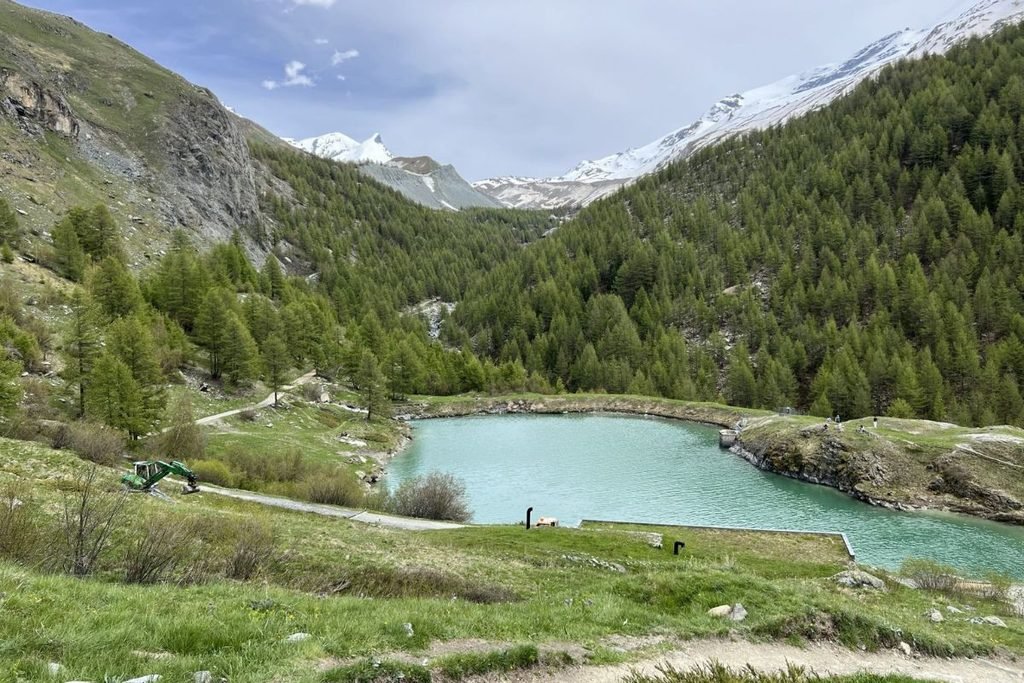
We were still able to reach two of the lakes, Leisee and Mosjesee, before encountering the closure.
For anyone planning the complete Five Lakes Trail, July through September generally offers a better chance of accessible routes, although opening dates depend on seasonal conditions.
Hiking from Zermatt to Sunnegga and the Alpine Lakes

We began our hike in Zermatt, following a steady uphill trail through dense forest towards Sunnegga. As we gained elevation, the trees gradually gave way to more open mountain scenery.
After reaching Sunnegga, we continued towards the Alpine lakes.
Our route included:
- Leisee: Our first lake, situated close to Sunnegga and surrounded by beautiful mountain scenery.
- Mosjesee: Our second lake, with striking turquoise water and views across the surrounding landscape.
- The trail closure: Beyond the accessible section, signs prevented us from continuing towards the remaining lakes.
Although we saw other hikers walking beyond the closure, we decided not to take the risk. With snow still affecting the higher trails, we preferred to follow the official advice.
Rather than retracing our steps, we returned to Zermatt along a different walking track, completing a longer loop through the mountain landscape.
The contrast between the forested sections and the open Alpine surroundings made this a particularly enjoyable hike, even though we couldn’t reach our original destination.
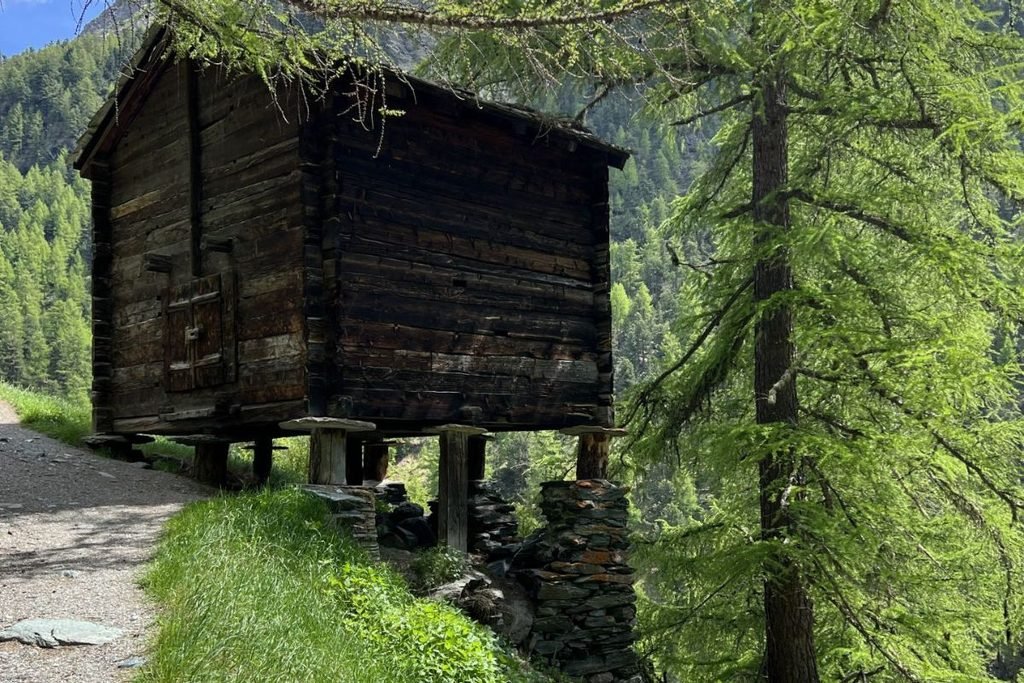
On our return to Zermatt, we passed through a small traditional Alpine settlement, believed to be Ze Gassen in Findeln. Its old wooden buildings, with the Matterhorn rising in the distance, provided one of our favourite photo opportunities of the hike.
Hiking from Zermatt to Furi and Blatten

Our second hike took us from Zermatt towards Furi, through Blatten and back to the village, following a mixture of forest trails and tracks connecting traditional mountain settlements.
Furi sits above Zermatt and can be reached by cable car or on foot. We chose the walking route, which took us through wooded surroundings before continuing towards Blatten.
Some of the highlights included:
- Forest walking tracks: Peaceful sections through woodland, away from the busier village streets.
- Traditional Alpine buildings: Beautiful timber chalets and stone-roofed buildings around Blatten.
- Matterhorn viewpoints: Open stretches of the trail where we could admire the mountain above the valley.
We particularly enjoyed the traditional buildings around Blatten. With their weathered timber, stone roofs and the Matterhorn rising behind them, they made a wonderful setting for photographs.
This route offered a different experience from our Sunnegga hike, with more time spent among the forests and older mountain settlements.
Where to Stay in Zermatt

Zermatt offers accommodation ranging from self-catering apartments and traditional Swiss chalets to luxury hotels with Matterhorn views. Prices vary considerably depending on the location and season, so booking ahead is worthwhile.
Our Accommodation
We spent four nights at Haus Zer Weidu, booked through Booking.com and located at Unterer Mattenweg 29.
The property was in a neighbourhood with a mixture of residential buildings, apartments and hotels, close to the railway station and tourist information centre.
The location suited us perfectly. We could walk to the village centre, explore the surrounding streets and return to our accommodation without needing additional transport.
Best Areas to Stay in Zermatt
Where you stay will depend on your budget and planned activities.
- Near Zermatt Railway Station: Convenient for arriving with luggage and accessing train connections.
- Zermatt Village Centre: Ideal for restaurants, shops and exploring the main streets.
- Winkelmatten: A quieter residential neighbourhood with traditional chalets and Matterhorn views from some properties.
- Near the Sunnegga Funicular: A practical base for visitors planning mountain excursions and hikes in the Sunnegga area.
If you’re travelling during the busy skiing or summer hiking seasons, booking early generally provides a wider choice of accommodation.
Getting Around Zermatt Without Mountain Transport
Although Zermatt is officially a car-free village, we were surprised by how busy its streets were. Electric taxis, hotel shuttles and delivery vehicles seemed to be everywhere, and some travelled surprisingly quickly!
Visitors can get around using:
- Walking: Convenient for exploring the village centre and nearby neighbourhoods.
- Electric taxis and hotel shuttles: Useful for transporting luggage or reaching accommodation further from the railway station.
- Electric buses: Connecting different areas of the village, including mountain lift stations.
- Mountain transport: Funiculars, gondolas and cable cars providing access to higher elevations.
We found walking convenient for our needs, but car-free certainly doesn’t mean traffic-free. Keep an eye out for electric vehicles when exploring the village streets.
How Many Days Do You Need in Zermatt?

How long you spend in Zermatt depends on whether you’re visiting for sightseeing, hiking or skiing.
We stayed four nights, but based on our experience, we’d recommend:
- One night or one full day: Enough to explore the village, admire the Matterhorn and enjoy the atmosphere without planning major hikes.
- Two nights and three days: Our preferred option for visitors wanting to complete a couple of hikes, explore the surrounding area and allow some flexibility for the weather.
- Four nights or longer: Better suited to skiing holidays, multiple mountain excursions or more extensive hiking plans.
Two nights with three days to explore would have been ideal for us. However, if you’re visiting primarily for the mountain scenery, an extra day can be useful when clouds obscure the Matterhorn.
Practical Tips for Visiting Zermatt

A little preparation can make your visit easier, particularly during the early hiking season.
- Check seasonal trail openings: Higher routes may remain closed by snow well into June, so research specific hikes before booking your visit.
- Prepare for changing weather: Pack waterproof clothing and layers, even when the forecast looks promising.
- Wear suitable hiking footwear: Some trails involve steep climbs, uneven surfaces and lengthy descents.
- Carry hiking essentials: Water, snacks, extra clothing and offline maps are useful when exploring beyond the village.
- Compare mountain transport costs: Check ticket prices and available discounts before deciding which excursions to include.
- Consider self-catering accommodation: Zermatt has supermarkets, making it possible to prepare meals rather than relying entirely on restaurants.
- Respect trail closures: Conditions at higher elevations can be very different from those in the village, even when the weather appears fine.
Final Thoughts
Zermatt was a wonderful addition to our Switzerland journey, even though we didn’t get to complete the hike we’d originally planned.
We’d love to return later in the summer to walk the entire Five Lakes Trail and finally reach Stellisee for that famous sunrise reflection of the Matterhorn.
But for now, we’re happy with the memories we brought home, especially the unexpected wildlife encounters and the excitement of finally seeing that unmistakable mountain in person.
“We came to Zermatt chasing a reflection of the Matterhorn but discovered there was so much more worth seeing along the way.”
🌍 Travel Planning Resources
These are the tools we personally use and trust when planning our travels from finding a place to stay to booking activities, transport and insurance. Let your “Tohu” guide you “Trust the Journey” and follow what feels right for you.
- ✈️Flights – Compare great deals with Trip.com then Kiwi.com for flexible, affordable options.
- 🚐 Campervans – Compare rental deals with Motorhome Republic across Aotearoa and beyond.
- 🛏️ Stays – Compare hotels on Trip.com and TripAdvisor or Booking.com.
- 🚐 Rental Cars – Compare prices and book through Airport Rentals by Motorhome Republic for trusted brands and easy airport pickup.
- 🎟️ Activities – Browse tours and experiences on Viator, Get Your Guide, or TripAdvisor
- 🚆12Go Asia – Compare and book trains, buses, and ferries across Asia in one place with 12Go.
- 🛡️ Travel Insurance – Get flexible short-term coverage with Insubuy for your next holiday.
- 💳 Travel Money – Send, spend and manage money internationally with Wise, with easy currency conversion and a handy option for travellers.
- 🔒 Protect Your Privacy with a VPN – We recommend Surfshark VPN for secure and private browsing while travelling. It’s fast, affordable and works worldwide, perfect for public Wi-Fi at airports, cafes and hotels.
- 📱 Travel eSIM – Stay connected with Airalo
- 💼 Lounge Access – Treat yourself with Priority Pass for UK or US
- 🎶 Events & Concerts – Book tickets worldwide through Ticketmaster.
🧭 Note: Some booking links can be a bit shy when you’re using a VPN. If one doesn’t open, try pausing your VPN or switching to a different server location or secure Wi-Fi network to get things flowing again.