
Located in the heel of Italy’s boot, Puglia is a region of beautiful coastlines, historic towns, traditional stone houses and fascinating local culture. Stretching between the Adriatic and Ionian seas, it offers everything from sandy beaches and dramatic coastal cliffs to whitewashed villages, centuries-old architecture and delicious regional food. Whether you’re planning a seaside holiday, exploring historic towns or travelling through southern Italy, Puglia has plenty to discover beyond its better-known destinations.
Is Puglia Worth Visiting?

Looking for a part of Italy where you can combine beautiful beaches, fascinating towns and authentic local experiences? Puglia is certainly worth considering. From the seaside streets of Gallipoli and the clifftop setting of Polignano a Mare to the distinctive trulli of Alberobello and the whitewashed buildings of Ostuni, the region offers an impressive variety of places to explore. One of its biggest attractions is the opportunity to experience both beautiful coastal destinations and fascinating inland towns, although Puglia is a large region, so allowing enough time to travel between places is important.
Our Experience

Our journey through Puglia began in Marina di Pescoluse, where we spent five nights in traditional trullo accommodation overlooking the sea. The bedroom was inside the trullo, while our open-air kitchen gave us a lovely outdoor space to prepare meals and enjoy the surroundings. Travelling outside the peak season meant we secured our accommodation for around half the usual price, giving us a wonderful base to enjoy the coastline, swim and explore nearby Gallipoli and Santa Maria di Leuca.
From there, we travelled north, stopping to explore Ostuni before continuing to Casamassima. We hadn’t originally chosen Casamassima as a sightseeing destination, but I needed a dental appointment, and finding an available English-speaking dentist led us there. As it turned out, accommodation was considerably cheaper than in the more popular tourist towns, and it worked well as a base for day trips to Polignano a Mare and Alberobello.
What began as a practical decision gave us the opportunity to discover another side of Puglia, combining coastal experiences with some of the region’s most distinctive historic towns.
Table of Contents
- Is Puglia Worth Visiting?
- Our Experience
- Best Places to Visit in Southern Puglia
- Best Places to Visit in Central Puglia
- More Things to Discover in Puglia
- Where to Stay in Puglia
- Getting to and Around Puglia
- A Taste of Puglia – Local Food and Wine
- Best Time to Visit Puglia
- Practical Tips for Visiting Puglia
- Final Thoughts on Visiting Puglia
Best Places to Visit in Southern Puglia
Southern Puglia, particularly the Salento peninsula, offers beautiful beaches, historic coastal towns and access to both the Ionian and Adriatic seas. From long stretches of sand to rocky headlands and centuries-old harbours, this part of the region offers plenty of variety for travellers wanting to explore beyond the main tourist centres.
During our stay, we discovered just how much the coastline changed from one destination to another. We explored three places in southern Puglia that we’d happily recommend adding to your itinerary.
Marina di Pescoluse and the Salento Coast
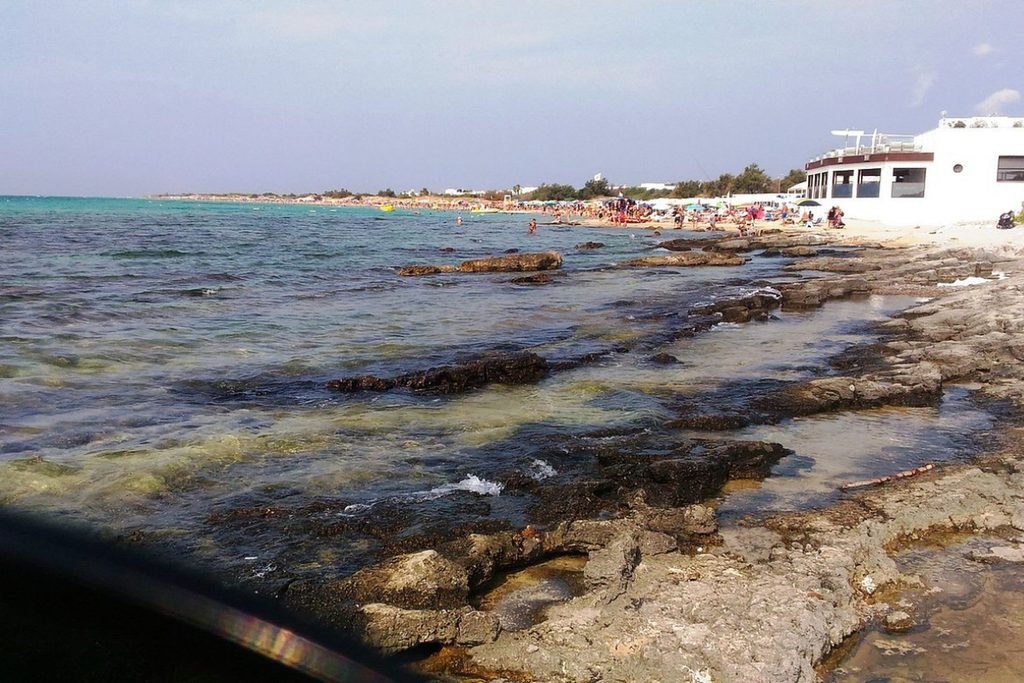
Located along the Ionian Sea in southern Salento, Marina di Pescoluse offers long stretches of golden sand, clear turquoise water and a relaxed seaside atmosphere. Its shallow water and beautiful beaches have earned this part of Puglia the nickname Maldives of Salento.
Unlike Puglia’s dramatic clifftop towns, Marina di Pescoluse is all about enjoying the coastline. Its sandy beaches make it particularly appealing for swimming, relaxing by the sea and spending time outdoors. During the warmer months, beach clubs and seaside facilities attract holidaymakers, while the quieter seasons offer a more peaceful experience.
Highlights of Marina di Pescoluse and the surrounding coast include:
- Beautiful sandy beaches: Enjoy long stretches of coastline and clear, shallow water ideal for swimming.
- Relaxed seaside atmosphere: Spend time along the waterfront, enjoying the beaches and local coastal communities.
- Coastal exploring: Discover nearby beaches and smaller seaside settlements along the Ionian coast.
- A convenient southern base: Stay within reach of Gallipoli, Santa Maria di Leuca and other destinations across southern Salento.
Gallipoli

Situated on Puglia’s western coast, Gallipoli is a fascinating seaside town where historic architecture, fishing traditions and coastal life come together. Its old town occupies a small island connected to the mainland by a bridge, creating a distinctive setting surrounded by the Ionian Sea.
The historic centre is one of Gallipoli’s biggest attractions. Narrow streets wind between traditional buildings, churches, small shops and restaurants, eventually opening onto waterfront views. The town’s fishing heritage remains an important part of its identity, with seafood featuring prominently in local cuisine.
Gallipoli also offers beautiful beaches and a lively summer atmosphere, making it an appealing destination for visitors who enjoy combining sightseeing with time by the sea.
Highlights of Gallipoli include:
- Historic Old Town: Wander through narrow streets, traditional buildings and small piazzas surrounded by the sea.
- Gallipoli Castle: Discover the imposing fortress guarding the entrance to the old town.
- Waterfront and fishing harbour: Enjoy coastal views and experience the town’s long connection with the sea.
- Churches and architecture: Visit historic churches, including the richly decorated Cathedral of Sant’Agata.
- Beaches and local food: Combine sightseeing with swimming, seafood and the relaxed atmosphere of southern Italy.
Santa Maria di Leuca

At the southern end of the Salento peninsula, Santa Maria di Leuca offers a combination of coastal scenery, historic landmarks and beautiful Mediterranean waters. The town occupies a remarkable position near the meeting of the Adriatic and Ionian seas, making it one of Puglia’s most distinctive coastal destinations.
Historic villas line the waterfront, while the impressive lighthouse and Basilica of Santa Maria de Finibus Terrae stand above the town. From the elevated viewpoint, visitors can enjoy sweeping views across the coastline and out towards the open sea.
The surrounding area offers sea caves, a rocky coastline and plenty of opportunities to explore by boat. It’s a very different coastal experience from the sandy beaches around Marina di Pescoluse, making the two destinations a lovely combination. It’s a different coastal experience from the sandy beaches around Marina di Pescoluse, making the two destinations a lovely combination.
Highlights of Santa Maria di Leuca include:
- Santa Maria di Leuca Lighthouse: Visit one of the area’s most recognisable landmarks and enjoy views from the surrounding headland.
- Basilica of Santa Maria de Finibus Terrae: Discover the historic sanctuary overlooking the coastline.
- Sea caves and boat trips: Explore the caves and rocky shoreline that make this stretch of coast so appealing.
- Waterfront promenade: Enjoy a walk past historic villas, seaside cafés and the marina.
- Coastal viewpoints: Take in the scenery around the southern tip of the Salento peninsula.
We explored Santa Maria di Leuca during our stay in southern Salento, and it’s well worth including for anyone wanting to discover more of Puglia’s varied coastline.
Want to explore these destinations in more detail? Discover our Best Things to Do in Puglia guide, where we share the towns, coastal areas and experiences from our travels through the region.
Best Places to Visit in Central Puglia
Moving further north through Puglia, the landscape changes from the sandy beaches of southern Salento to whitewashed hilltop towns, historic streets, traditional trulli and dramatic Adriatic coastlines. This part of the region offers a wonderful combination of history, architecture and coastal scenery, with several of Puglia’s most recognisable destinations within easy reach of one another.
We explored this area during the second part of our journey, stopping in Ostuni as we travelled north before taking day trips to Polignano a Mare and Alberobello from our accommodation near Bari.
Ostuni – The White City
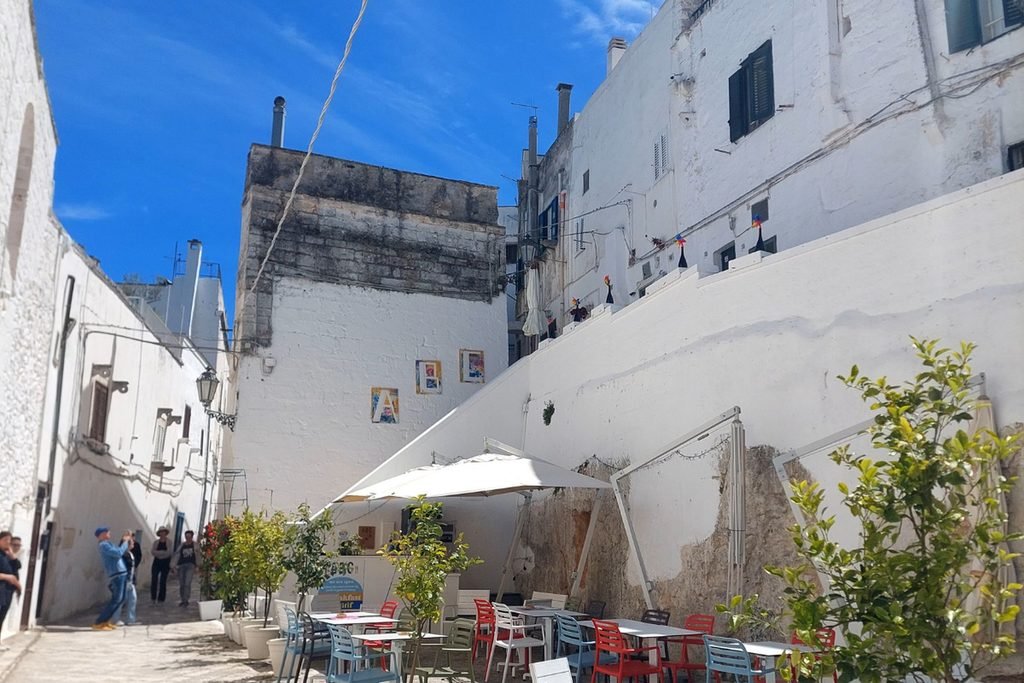
Perched on a hill overlooking the surrounding olive groves and countryside, Ostuni is one of Puglia’s most distinctive historic towns. Known as La Città Bianca, or the White City, its whitewashed buildings rise above the landscape, creating an impressive sight long before you reach the historic centre.
The old town is a maze of narrow cobbled streets, stone stairways, arched passageways and small piazzas. As you wander through the historic centre, you’ll discover traditional houses decorated with colourful flowers, local shops, cafés and restaurants tucked between centuries-old buildings.
At the heart of Ostuni stands its impressive cathedral, while viewpoints around the old town offer sweeping views across olive groves towards the Adriatic Sea. Exploring Ostuni on foot gives you time to wander through its historic streets and discover its hidden corners without rushing between attractions.
Highlights of Ostuni include:
- Historic Old Town: Explore whitewashed streets, stone archways, hidden courtyards and traditional architecture.
- Ostuni Cathedral: Admire the beautiful Gothic-Romanesque cathedral and its elaborate rose window.
- Piazza della Libertà: Visit the town’s lively main square, surrounded by cafés, historic buildings and the Column of Sant’Oronzo.
- Panoramic viewpoints: Enjoy views across the surrounding countryside and towards the Adriatic coastline.
- Local shops and restaurants: Browse handmade ceramics, regional products and small shops while discovering Puglia’s food traditions.
Polignano a Mare – A Town Above the Adriatic
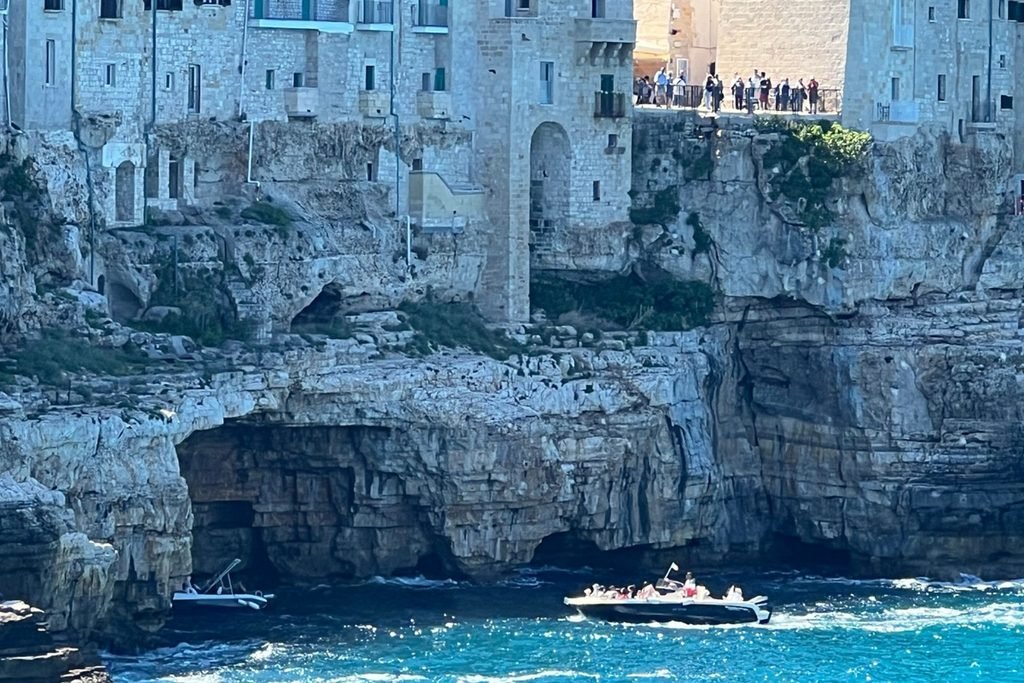
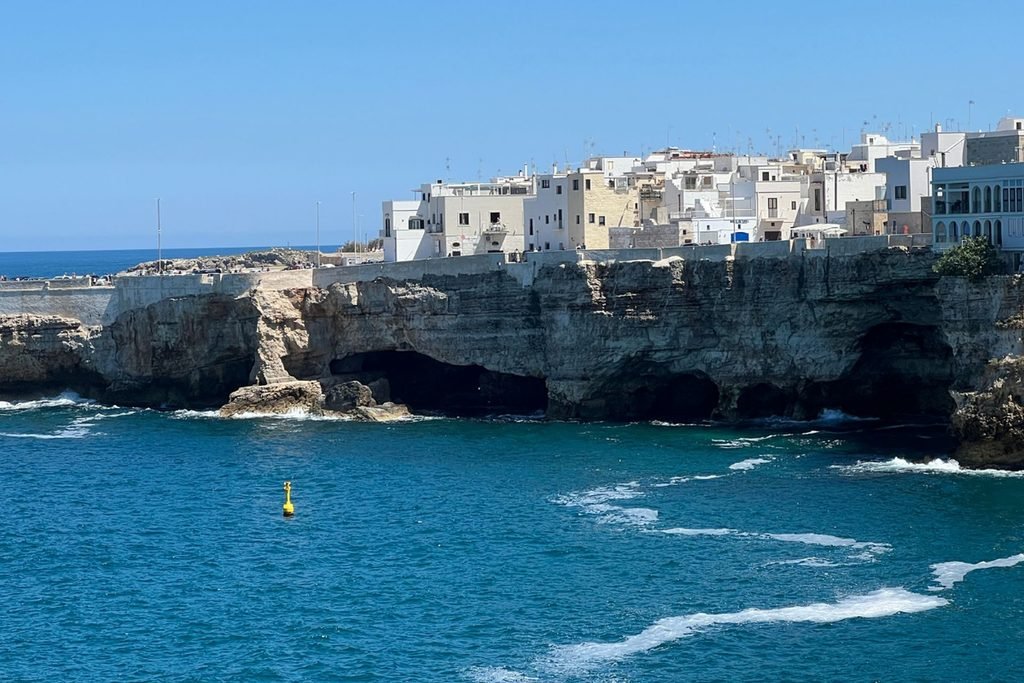
Built along dramatic limestone cliffs overlooking the Adriatic Sea, Polignano a Mare is one of Puglia’s most photographed coastal towns. Its whitewashed buildings sit high above the water, while narrow streets lead through the historic centre to terraces with spectacular views of the coastline.
One of the town’s most recognisable attractions is Lama Monachile, a small pebble beach nestled between towering cliffs beneath an old stone bridge. The beach is particularly popular during summer, although the view from above is impressive at any time of year.
Beyond its famous beach, Polignano a Mare has a charming historic centre filled with winding streets, small piazzas, restaurants and cafés. Several viewpoints between the buildings offer different perspectives of the cliffs, sea and historic town.
Polignano a Mare also celebrates its connection to Italian singer Domenico Modugno, whose famous song Volare remains an important part of the town’s cultural identity.
Highlights of Polignano a Mare include:
- Lama Monachile Beach: See the famous pebble beach framed by limestone cliffs and the historic bridge.
- Historic Old Town: Wander through narrow streets, whitewashed buildings and lively piazzas.
- Coastal viewpoints: Discover terraces overlooking the Adriatic Sea and dramatic rocky coastline.
- Domenico Modugno Statue: Visit the monument dedicated to the singer of Volare, who was born in Polignano a Mare.
- Boat trips and sea caves: Explore the surrounding coastline and natural caves from the water.
Alberobello – The Town of Trulli
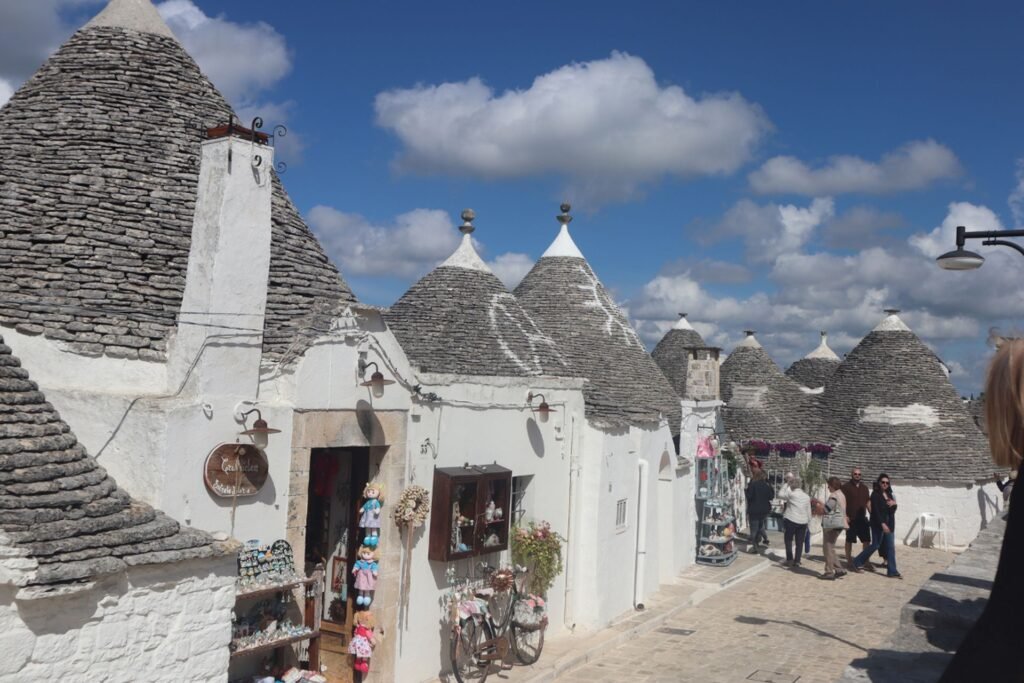
Few places in Italy are quite as distinctive as Alberobello, a town famous for its extraordinary collection of traditional trulli. These small limestone buildings, with their whitewashed walls and cone-shaped stone roofs, create a remarkable setting that looks unlike anywhere else in Puglia.
Traditional builders constructed the trulli using dry-stone techniques, without mortar, and many date from the 18th and 19th centuries. Their unusual design and cultural significance earned Alberobello’s trulli districts UNESCO World Heritage status in 1996.
Today, visitors can explore entire neighbourhoods filled with these fascinating buildings. Some remain private homes, while others now operate as shops, cafés, restaurants and visitor accommodation.
Two of the most interesting areas are Rione Monti, where hundreds of trulli line the streets, and Aia Piccola, a quieter residential neighbourhood where traditional life continues among the historic buildings.
Highlights of Alberobello include:
- Rione Monti: Explore the town’s largest and most visited trulli district, with narrow streets lined by traditional stone buildings.
- Aia Piccola: Discover a quieter neighbourhood where many trulli remain residential homes.
- Trullo Sovrano: Visit an unusual two-storey trullo, now operating as a museum showcasing traditional life.
- Church of Sant’Antonio: See a distinctive church built in the architectural style of a trullo.
- Traditional shops and local crafts: Browse handmade souvenirs, regional products and artisan workshops housed inside the historic buildings.
Alberobello is one of Puglia’s most popular destinations, so allowing enough time to explore beyond the busiest streets is worthwhile. The quieter residential areas offer a different perspective from the souvenir shops and visitor attractions.
More Things to Discover in Puglia
We explored several wonderful destinations during our journey through Puglia, but many more towns, villages and historic sites deserve a place on your itinerary. The region and its surrounding areas offer plenty more to discover, from elaborate Baroque architecture to traditional fishing harbours and ancient cave dwellings.
If you have additional time in southern Italy, here are five destinations worth considering.
Lecce – The Florence of the South
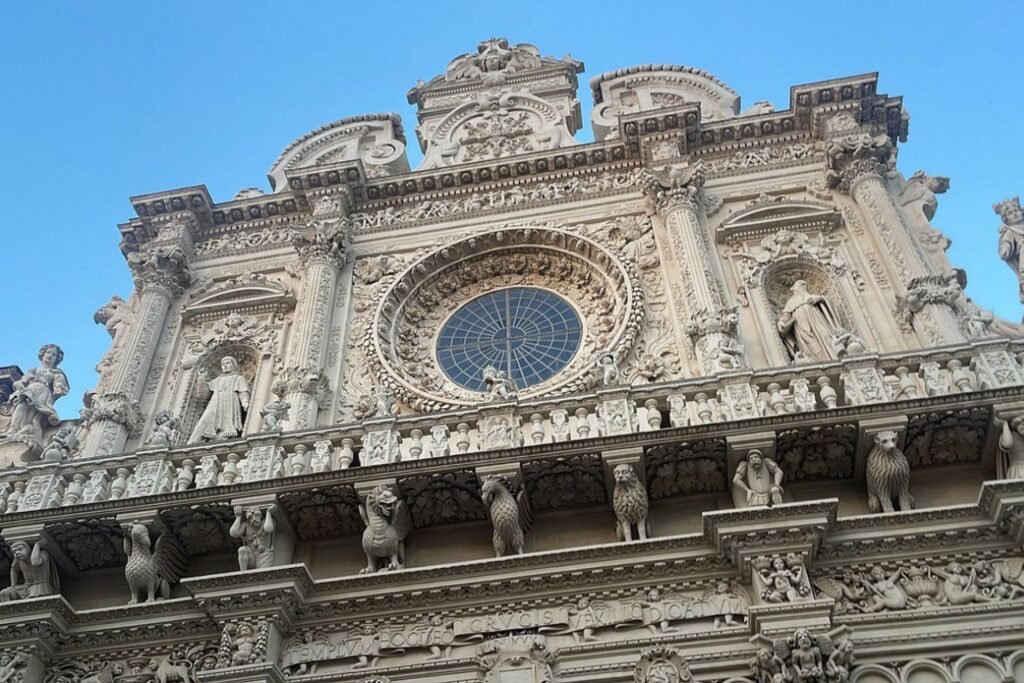
Often called the Florence of the South, Lecce is famous for its extraordinary Baroque architecture. Local stonemasons carved much of it from the region’s warm, golden-coloured limestone. Located in the Salento peninsula, the city boasts an impressive collection of churches, palaces and historic buildings.
The beautiful Basilica di Santa Croce is one of its most recognisable landmarks. Its elaborately decorated façade showcases the craftsmanship of local stonemasons. Piazza del Duomo is another highlight, with magnificent historic buildings surrounding the square. Nearby, the remains of a Roman amphitheatre offer a glimpse into the city’s ancient past.
Beyond its architecture, Lecce offers lively piazzas, traditional restaurants and local crafts. These include papier-mâché figures that local artisans have created for generations.
Why visit? Lecce is an excellent choice for travellers interested in architecture and history. It’s also one of southern Italy’s most culturally significant cities.
Bari – Puglia’s Historic Capital
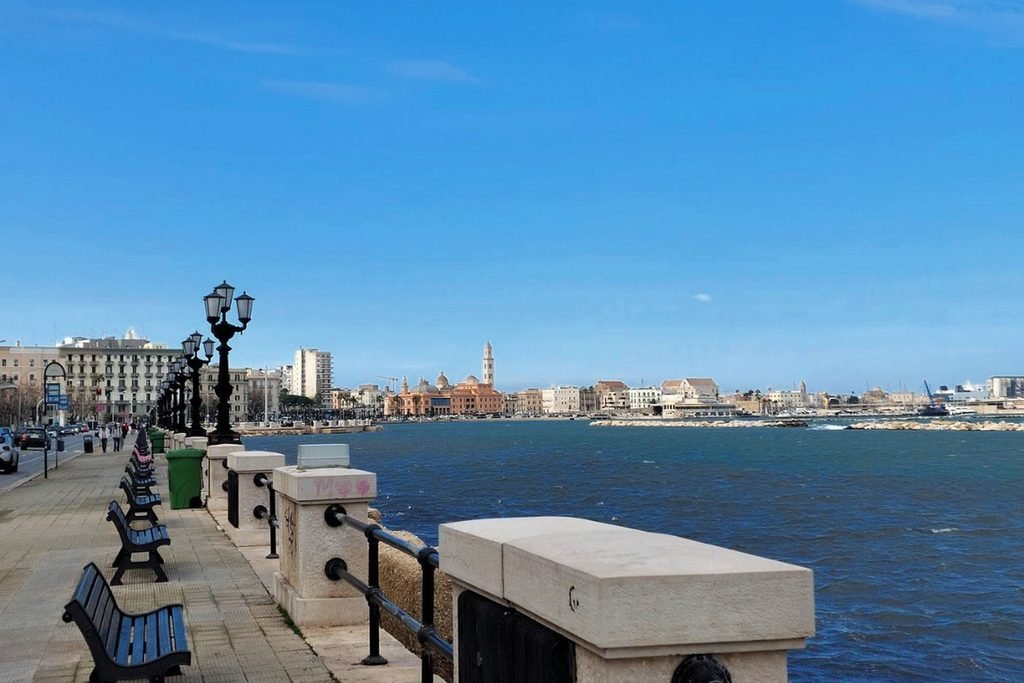
As the capital of Puglia, Bari combines a busy modern city with a fascinating historic centre known as Bari Vecchia. Its maze of narrow streets, traditional homes and small piazzas offers a glimpse into everyday life in southern Italy.
One of Bari’s most interesting traditions is the making of orecchiette, Puglia’s distinctive ear-shaped pasta. In parts of the old town, you can watch local women preparing fresh pasta by hand. Families have passed down this tradition through generations.
The Basilica di San Nicola is another important landmark, attracting visitors and pilgrims. Meanwhile, the waterfront promenade offers an enjoyable place to walk beside the Adriatic Sea.
Why visit? Bari combines local food traditions, historic landmarks and everyday city life. It’s a worthwhile stop for travellers wanting to experience more than Puglia’s smaller tourist towns.
Monopoli – A Charming Adriatic Harbour Town
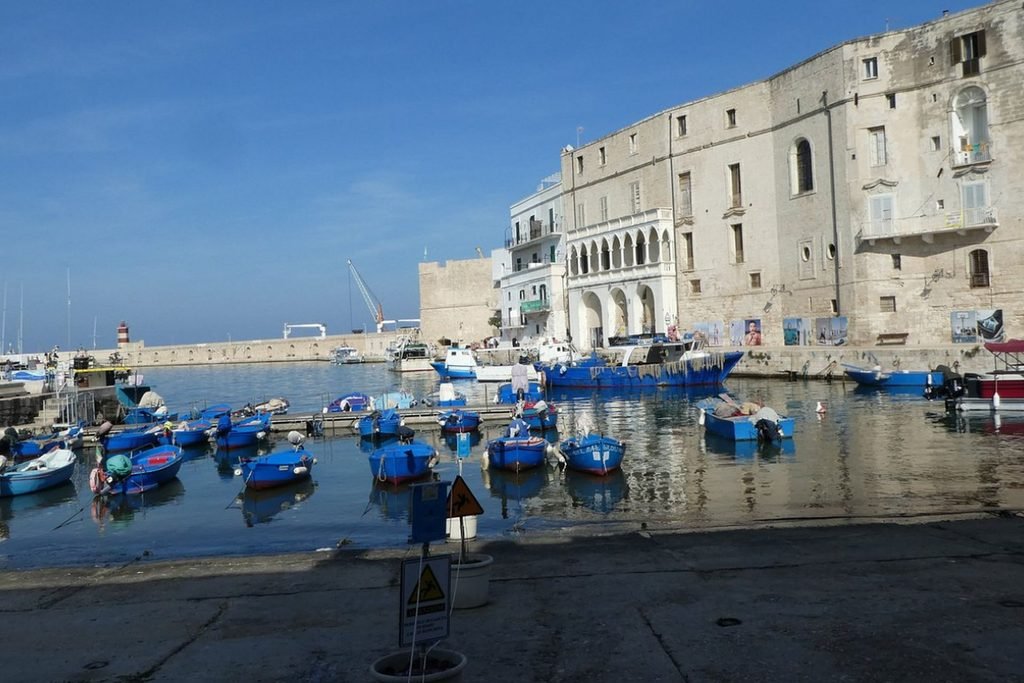
Located along the Adriatic coastline, Monopoli is a historic harbour town with whitewashed buildings, colourful fishing boats and a beautiful waterfront.Its old town sits beside the sea, with narrow streets leading between churches, traditional houses and small piazzas.
The picturesque Porto Antico, or old harbour, is one of Monopoli’s most recognisable features. Colourful fishing boats rest in the sheltered water, surrounded by historic buildings and stone walls.
Visitors can also explore the Cathedral of Maria Santissima della Madia, wander along the old defensive walls or enjoy the small beaches found around the town’s coastline.
Why visit? Monopoli is ideal for travellers who enjoy coastal scenery, historic streets and a traditional harbour atmosphere.
Locorotondo – One of Puglia’s Prettiest Hilltop Towns

Situated in the Valle d’Itria, Locorotondo features a circular historic centre, whitewashed buildings and beautiful views across the surrounding countryside. Its name means round place, reflecting the distinctive layout of the old town.
Unlike the cone-shaped trulli of nearby Alberobello, Locorotondo features traditional cummerse houses with steeply pitched stone roofs.
As you wander through the historic centre, you’ll discover narrow lanes, flower-decorated balconies, small churches and inviting piazzas. Beyond the town, vineyards, olive groves and traditional rural properties dot the countryside.
The area also produces its own white wine, making Locorotondo an appealing destination for visitors interested in regional food and wine.
Why visit? Locorotondo is a lovely addition to an itinerary for travellers who enjoy exploring smaller historic towns, traditional architecture and countryside scenery.
Matera – The Ancient Cave City
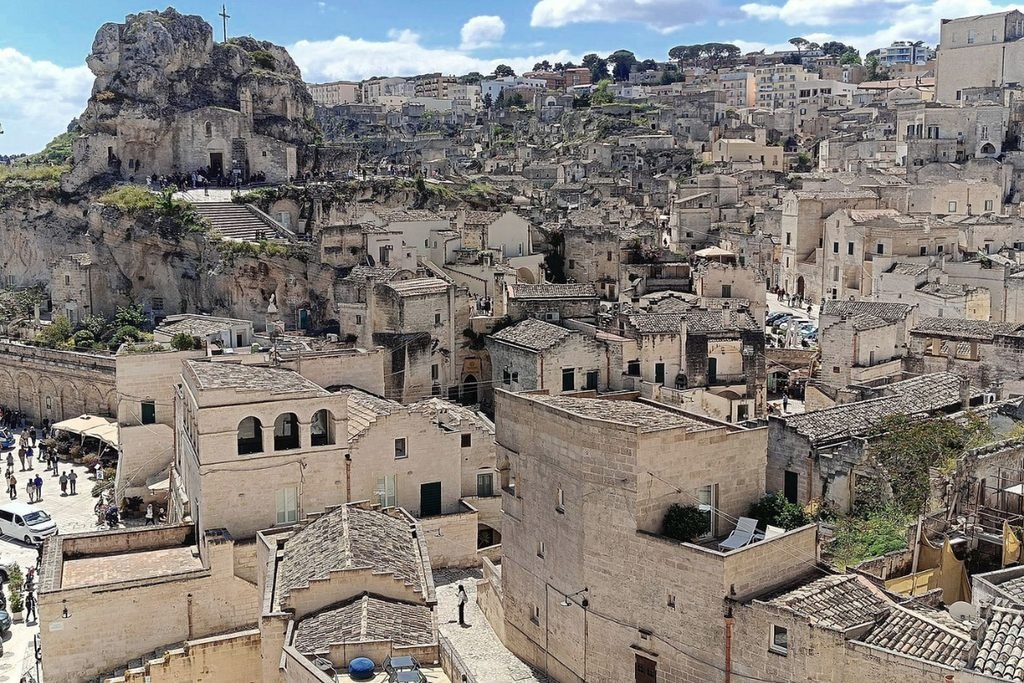
Although Matera is located in neighbouring Basilicata rather than Puglia, its proximity makes it a popular addition to a southern Italy itinerary.
Matera is famous for the Sassi, ancient neighbourhoods where generations of residents carved homes, churches and passageways into the limestone landscape. These cave dwellings have a history stretching back thousands of years, creating one of Italy’s most extraordinary historic settings.
Once a place of severe poverty and difficult living conditions, Matera has undergone significant restoration. Today, many former cave homes serve as accommodation, restaurants and museums, while the historic districts hold UNESCO World Heritage status.
Visitors can explore the winding stone streets, visit rock-hewn churches and discover viewpoints overlooking the remarkable cave city.
Why visit? Matera offers a fascinating opportunity to explore ancient settlement history and a landscape unlike anywhere else in southern Italy.
Planning More Time in Puglia
With so many destinations to choose from, it’s worth planning your itinerary around your interests rather than trying to visit everything. Whether you enjoy historic architecture, coastal towns, local food or smaller villages, taking your time to explore each destination will make the experience far more rewarding.
If your schedule allows, consider adding a few extra days to discover places beyond the region’s most famous attractions. Sometimes the destinations you hadn’t originally planned to visit can become some of the most memorable.
Where to Stay in Puglia
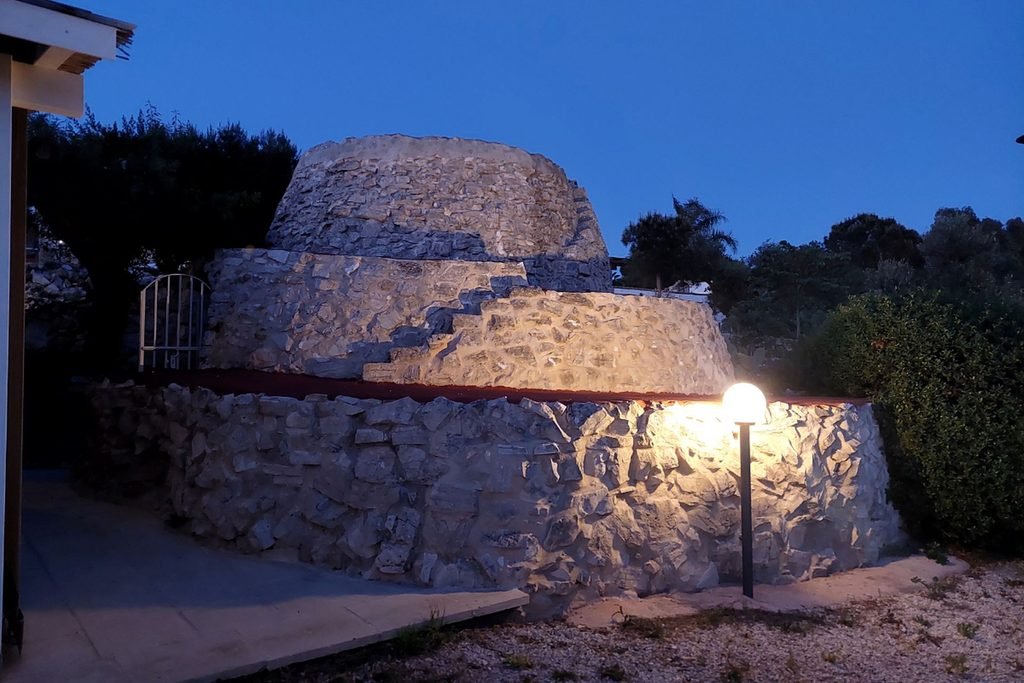
Choosing the right accommodation in Puglia can make a real difference to your travel experience and budget. From traditional trulli and countryside retreats to seaside apartments and boutique hotels, the region offers plenty of options for different travel styles.
Puglia covers a large area, so choosing two or more accommodation bases can be more practical than trying to explore the entire region from one location. Consider which destinations interest you most before deciding where to stay.
Choosing Your Accommodation
Where you stay can become part of the experience itself. Puglia is particularly well known for its traditional trulli, but you’ll also find restored stone farmhouses known as masserie, self-contained apartments and family-run guesthouses.
Each offers something different:
- Traditional trulli: Stay in one of Puglia’s distinctive stone buildings, often surrounded by countryside or olive groves.
- Masserie: Historic rural farmhouses, many converted into boutique accommodation with gardens, swimming pools and restaurants.
- Seaside apartments: Ideal for travellers wanting easy beach access and the flexibility to prepare their own meals.
- Historic centre accommodation: Perfect for those who enjoy stepping outside into local streets, cafés and restaurants.
- Countryside holiday homes: Often provide more space, privacy and parking, particularly useful for longer stays.
Finding Good Value Accommodation
Looking beyond the busiest tourist centres can make a noticeable difference to accommodation costs. Smaller towns and rural properties are also worth comparing, especially if you’re travelling by car. Staying within walking distance of major attractions may not be necessary.
Travelling outside the peak summer season can also mean lower prices and a wider choice of accommodation. However, it’s worth checking which facilities are available, as some coastal properties and nearby businesses operate seasonally.
Before booking, consider:
- Parking: Check whether it’s included and how far it is from your accommodation.
- Location: Compare travel distances to the places you plan to visit.
- Facilities: Air conditioning, kitchen facilities and laundry access can be useful, particularly for longer stays.
- Guest reviews: Look for recent feedback about cleanliness, comfort and the accuracy of the property description.
- Total cost: Check cleaning fees, local tourist taxes and any additional charges before confirming your booking.
Planning your stay in Puglia? Browse accommodation options across the region, compare locations and find somewhere that suits your itinerary and budget.
Getting to and Around Puglia

Puglia is a region that rewards travellers who take their time. It’s also a popular holiday destination for Italians, many of whom head south to enjoy its beaches, coastal towns and relaxed summer atmosphere away from Italy’s more internationally famous tourist destinations. With attractions spread across the coastline, inland villages and rural countryside, how you choose to travel can make a big difference to your experience. While having your own vehicle provides the greatest flexibility, it’s certainly possible to explore parts of the region using trains, buses and organised tours.
Getting to Puglia
Puglia is accessible by air, train and road, making it relatively straightforward to include in a wider Italian itinerary. Bari and Brindisi are the region’s two main airports, with connections to destinations across Italy and parts of Europe.
Depending on where you’re travelling from, there are several options:
- By air: Bari Karol Wojtyła Airport is convenient for exploring central and northern Puglia, while Brindisi Airport is well positioned for visiting Lecce and the Salento peninsula.
- By train: Long-distance rail services connect Bari and other major towns with cities elsewhere in Italy, including Rome and Naples.
- By car: Driving into Puglia is a practical option for travellers exploring southern Italy, particularly if you’re planning to visit smaller towns and coastal areas.
Consider where you want to begin your journey before choosing your arrival point. Starting near the destinations you plan to explore can save unnecessary travel time, especially if you’re visiting both northern and southern Puglia.
Exploring Puglia by Car
Driving gives you the freedom to explore beyond the main tourist routes, stop at places that catch your attention and visit smaller communities that may be difficult to reach by public transport.
We travelled through Puglia in our Lease Car, which allowed us to plan our days around what we wanted to see rather than transport timetables. Some days were spent exploring historic centres, while others were simply about enjoying the coastline.
A few things to consider when driving:
- Historic centres: Many Italian towns have restricted traffic zones, known as Zona a Traffico Limitato (ZTL). Entering without authorisation can result in a fine.
- Parking: Look for designated parking areas outside historic centres and check whether payment is required.
- Road conditions: Main roads generally connect larger towns, while smaller rural roads can be narrow and require extra care.
- Navigation: Check your route before setting off, particularly when GPS directions lead through narrow streets or restricted areas.
- Allow extra time: Traffic, parking and walking into historic centres can add time to what initially looks like a short journey.
Exploring Puglia by Train and Bus
Public transport can be a practical and affordable option, particularly for travellers visiting larger towns along established rail routes.
Trenitalia operates services on major routes, while regional operators provide additional train and bus connections across parts of Puglia. However, smaller coastal communities and rural destinations may have limited services, especially outside the busy summer season.
Before travelling:
- Check connections: Some journeys require changing trains or transferring to a bus.
- Review timetables: Services can be less frequent on Sundays, public holidays and certain regional routes.
- Plan your return journey: Make sure you know when the last suitable service departs.
- Allow flexibility: Regional transport can take longer than driving, particularly when several connections are involved.
For travellers without a car, choosing accommodation close to a railway station or reliable bus route can make exploring much easier.
Exploring Puglia with Organised Tours
If you’d prefer not to drive, organised day tours offer another way to experience Puglia, particularly when visiting several destinations in one day.
Tours can be especially useful for reaching smaller villages, discovering local food traditions or visiting places where public transport connections are limited.
Popular options include:
- Historic town tours: Explore traditional architecture, local history and cultural landmarks with a guide.
- Food and wine experiences: Discover regional dishes, olive oil production, vineyards and traditional cooking.
- Coastal boat trips: See sea caves, cliffs and stretches of coastline that are difficult to appreciate from land.
- Small-group excursions: Visit several destinations without needing to organise your own transport.
Planning Your Route Through Puglia
Rather than travelling long distances every day, grouping nearby destinations together makes exploring more enjoyable and manageable.
Consider how much time you want to spend sightseeing, whether you’ll need to find parking and how long it takes to travel between destinations. A town that looks close on a map may still require extra time once you’ve navigated the roads and reached its historic centre.
We prefer to leave some flexibility in our plans, allowing time for unexpected stops, a leisurely meal or simply enjoying somewhere longer than anticipated.
A Taste of Puglia – Local Food and Wine

Food is an important part of life in Puglia, where simple ingredients, traditional recipes and locally grown produce are at the heart of the region’s cuisine. With its extensive coastline, olive groves and agricultural traditions, Puglia is known for fresh seafood, handmade pasta, vegetables, cheeses and some of Italy’s high-quality olive oils.
Unlike the rich, creamy dishes often associated with northern Italy, Puglian cooking tends to focus on bringing out the natural flavours of its ingredients. Many traditional recipes have their roots in cucina povera, a style of cooking that developed around making the most of affordable, seasonal produce.
Traditional Foods to Try in Puglia
If you’re exploring the region, there are several local specialities worth looking out for:
- Orecchiette pasta: Puglia’s famous ear-shaped pasta, traditionally served with cime di rapa (turnip greens), garlic, olive oil and sometimes anchovies.
- Focaccia Barese: A soft, olive oil-rich bread topped with tomatoes, olives and herbs, particularly popular around Bari.
- Burrata: A creamy fresh cheese with a mozzarella-like outer shell and a rich, soft centre, originating from the Andria area.
- Panzerotti: Small pockets of dough, traditionally filled with tomato and mozzarella, then folded and fried until golden. A popular street food throughout Puglia.
- Tiella Barese: A baked dish combining rice, potatoes and mussels, layered together with tomatoes and seasonings.
- Taralli: Small, crunchy ring-shaped snacks, often flavoured with fennel seeds, black pepper or olive oil.
Seafood Along the Coast
With access to both the Adriatic and Ionian seas, fresh seafood features prominently on menus throughout coastal Puglia. Fishing remains an important tradition in many seaside communities, and local restaurants often serve dishes based on the day’s catch.
Grilled fish, octopus, mussels, clams and seafood pasta are common choices, while some coastal areas are known for their traditions of serving raw seafood.
For visitors who enjoy seafood, exploring local restaurants and harbour areas can be a delicious part of travelling through the region.
Olive Oil and Local Wines
Puglia is one of Italy’s major olive oil-producing regions, and olive oil is central to its cooking traditions. Olive groves stretch across large areas of the countryside, with many producers continuing generations of cultivation and oil-making.
The region is also known for its wines, particularly robust reds made from Primitivo and Negroamaro grapes. White wines, including Locorotondo DOC, provide lighter options that pair well with seafood and local dishes.
Whether you’re enjoying a simple meal in a family-run restaurant or sampling regional produce, Puglia’s food reflects its strong connection to the land and sea.
Best Time to Visit Puglia
Puglia enjoys a Mediterranean climate, with hot, dry summers and generally mild winters, making it possible to explore the region throughout much of the year. However, the experience can vary considerably depending on when you visit, particularly along the coast, where summer brings large numbers of Italian holidaymakers.
For travellers wanting a balance of pleasant weather, manageable crowds and reasonable accommodation prices, late spring and early autumn are often the best times to visit.
Spring – April to June
Spring is a wonderful time to explore Puglia, with pleasant temperatures, fewer visitors and comfortable conditions for sightseeing. Travelling before the busy Italian summer holiday season also offers the opportunity to enjoy the coastline at a more relaxed pace.
We visited Puglia in April, and the weather was fantastic throughout our stay. After travelling through Calabria and the Amalfi Coast, where we experienced sunshine and clear skies one day followed by rain the next, Puglia was noticeably warmer and sunnier. We had beautiful weather the entire time, making it ideal for exploring historic towns and enjoying the coastline.
One thing that surprised us was how empty the beaches were. We couldn’t understand why nobody was swimming when the sun was shining and the water looked so inviting! We later learned that many locals prefer to wait until July or August, when the sea has warmed up. Coming from Aotearoa – New Zealand, we found the water a very welcoming temperature, and we certainly weren’t going to miss the opportunity for a swim.
A few things to consider when visiting Puglia in spring:
- Swimming: The sea can still be cool, particularly in April, so whether it’s enjoyable depends on your tolerance for colder water.
- Seasonal facilities: Some beach clubs, restaurants and coastal services may not yet be operating for the summer season.
- Weather: Spring conditions can vary, so pack a light jacket and something waterproof even if the forecast looks promising.
For us, April was an excellent time to visit Puglia. We enjoyed the sunshine and peaceful beaches without needing to wait for the busy summer season.
Summer – July to August
Summer is when Puglia’s coastal towns and beaches are at their busiest. Many Italians choose the region for their annual summer holidays, particularly during August when families traditionally head to the coast.
- Hot, sunny weather: Ideal for swimming, beach holidays and enjoying long evenings outdoors.
- Lively coastal atmosphere: Beach clubs, restaurants and seaside towns are busy with holidaymakers.
- Higher prices and crowds: Accommodation can be expensive, particularly around Ferragosto on 15 August.
If you’re travelling during summer, booking accommodation well in advance is advisable, especially in popular coastal destinations.
Autumn – September to October
Early autumn is an excellent time to experience Puglia without the peak summer crowds. The sea often remains warm enough for swimming, particularly in September, while daytime temperatures become more comfortable for sightseeing.
- Warm sea temperatures: Swimming can remain enjoyable well into autumn, depending on the weather.
- Quieter destinations: Beaches and historic towns generally become less crowded after the summer holidays.
- Better value: Accommodation prices may drop as demand decreases.
Some seasonal beach clubs and coastal businesses begin closing as autumn progresses, so it’s worth checking what will be operating during your visit.
Winter – November to March
Winter brings a much quieter atmosphere to Puglia, particularly in seaside communities where tourism slows considerably.
- Peaceful historic towns: Explore popular destinations with fewer visitors.
- Lower accommodation rates: Good deals may be available outside the holiday periods.
- Cooler, wetter weather: Conditions are less suitable for beach holidays but can still be pleasant for sightseeing on clear days.
For travellers interested in history, food and local culture, winter can be a good time to explore Puglia, although it’s less suitable for swimming and beach holidays.
Our Recommendation
For a combination of comfortable temperatures, fewer crowds and better value, we’d suggest considering April, May, June, September or early October.
These months offer a good balance between enjoying the coastline and exploring Puglia’s historic towns without the intense heat and crowds of peak summer.
Practical Tips for Visiting Puglia

A little preparation can make travelling through Puglia much easier, particularly if you’re exploring independently. While the region is well established as a holiday destination, some aspects of travelling in southern Italy can be quite different from what visitors are accustomed to, especially outside the main tourist centres.
Here are a few practical things worth knowing before your visit.
Language and Communication
Italian is the main language spoken throughout Puglia, and while English is common in some tourist businesses, it’s not always widely spoken in smaller towns and local establishments.
Learning a few basic Italian phrases can be helpful, particularly when ordering food, asking for directions or shopping in local businesses.
Having a translation app available offline can also make everyday interactions much easier.
Opening Hours and Afternoon Closures
In smaller towns, some shops and family-run businesses close for several hours during the afternoon before reopening in the evening. This traditional break can catch visitors by surprise, particularly if they’re accustomed to shops remaining open throughout the day.
- Shops and boutiques: Some close during the early afternoon and reopen later.
- Restaurants: Lunch and dinner are often served during set hours, with kitchens closed between services.
- Supermarkets: Larger supermarkets may stay open throughout the day, although hours vary.
- Sundays and public holidays: Smaller businesses may have reduced opening hours or remain closed.
Checking opening times before making a special journey can save unnecessary frustration.
Payments and Cash
Cards are widely accepted in hotels, supermarkets and many restaurants, but carrying a small amount of cash is still useful, particularly when visiting markets, smaller businesses or rural areas.
Keep some coins handy for small purchases and facilities that may require cash.
When using an ATM or payment terminal, choosing to pay in euros rather than having the machine convert the amount into your home currency will often avoid an unfavourable exchange rate.
Public Toilets and Facilities
During our travels through Italy, we chose to avoid toll roads wherever possible, which meant travelling through smaller towns and local communities. We generally found public toilets along the way, although they weren’t always easy to locate, and some charged a small fee for entry.
If you’re travelling on Italy’s toll motorways, you’ll often find well-equipped service areas with toilets, petrol stations, cafés, shops and snacks, and sometimes picnic areas where you can stop and take a break.
It’s still worth carrying a few coins and some tissues, particularly when exploring smaller towns or travelling away from the main routes.
Respecting Local Communities
Many of Puglia’s historic centres are also residential neighbourhoods, where people continue their everyday lives alongside tourism.
Being mindful of residents helps preserve the character of these places, particularly in narrow streets and quieter communities.
- Keep noise to a reasonable level when exploring residential areas.
- Respect private homes, doorways and courtyards when taking photographs.
- Dress appropriately when visiting churches and religious sites.
- Dispose of rubbish responsibly, particularly around beaches and coastal areas.
Allow Time for the Unexpected
One of the pleasures of travelling independently is having the freedom to change plans. A local market, an interesting street or an unexpected viewpoint can easily turn into a memorable stop.
Leaving some flexibility in your itinerary allows you to enjoy these discoveries rather than feeling pressured to move on to the next destination.
For us, that freedom is an important part of travelling through Italy, particularly in regions like Puglia where there is so much to discover beyond the main attractions.
Planning your Puglia adventure? Explore our Best Things to Do in Puglia guide for places to visit and experiences to enjoy, then discover Where to Stay in Puglia to find the perfect base for your travels.
Final Thoughts on Visiting Puglia

Puglia was a wonderful surprise during our travels through southern Italy. We arrived hoping to enjoy the coastline and explore some of its historic towns, but what stood out was how much variety the region offered. From traditional architecture and local food to beautiful coastal scenery, there was always something interesting to discover.
April turned out to be an excellent choice for us, and we left feeling that we’d experienced Puglia at just the right time. There were certainly more places we could have visited, but we were happy with what we’d chosen to explore.
Would we recommend adding Puglia to an Italian itinerary? Absolutely. Whether you’re planning a coastal holiday or exploring southern Italy more widely, it’s a region that deserves more than a passing visit.
“The best journeys leave you with a longer list of places to return to than places you’ve crossed off.”
🌍 Travel Planning Resources
These are the tools we personally use and trust when planning our travels from finding a place to stay to booking activities, transport and insurance. Let your “Tohu” guide you “Trust the Journey” and follow what feels right for you.
- ✈️Flights – Compare great deals with Trip.com then Kiwi.com for flexible, affordable options.
- 🚐 Campervans – Compare rental deals with Motorhome Republic across Aotearoa and beyond.
- 🛏️ Stays – Compare hotels on Trip.com and TripAdvisor or Booking.com.
- 🚐 Rental Cars – Compare prices and book through Airport Rentals by Motorhome Republic for trusted brands and easy airport pickup.
- 🎟️ Activities – Browse tours and experiences on Viator, Get Your Guide, or TripAdvisor
- 🚆12Go Asia – Compare and book trains, buses, and ferries across Asia in one place with 12Go.
- 🛡️ Travel Insurance – Get flexible short-term coverage with Insubuy for your next holiday.
- 💳 Travel Money – Send, spend and manage money internationally with Wise, with easy currency conversion and a handy option for travellers.
- 🔒 Protect Your Privacy with a VPN – We recommend Surfshark VPN for secure and private browsing while travelling. It’s fast, affordable and works worldwide, perfect for public Wi-Fi at airports, cafes and hotels.
- 📱 Travel eSIM – Stay connected with Airalo
- 💼 Lounge Access – Treat yourself with Priority Pass for UK or US
- 🎶 Events & Concerts – Book tickets worldwide through Ticketmaster.
🧭 Note: Some booking links can be a bit shy when you’re using a VPN. If one doesn’t open, try pausing your VPN or switching to a different server location or secure Wi-Fi network to get things flowing again.