
Switzerland has one of Europe’s most impressive transport networks, connecting cities, mountain villages and Alpine valleys through an extensive system of roads, trains, buses, boats and cable cars. Whether you’re planning a self-drive holiday or travelling entirely by public transport, there are plenty of ways to discover the country. However, understanding how the different services connect, where vehicles are restricted and which transport passes offer the best value can make a considerable difference to your travel plans.
Is It Better to Drive or Use Public Transport in Switzerland?
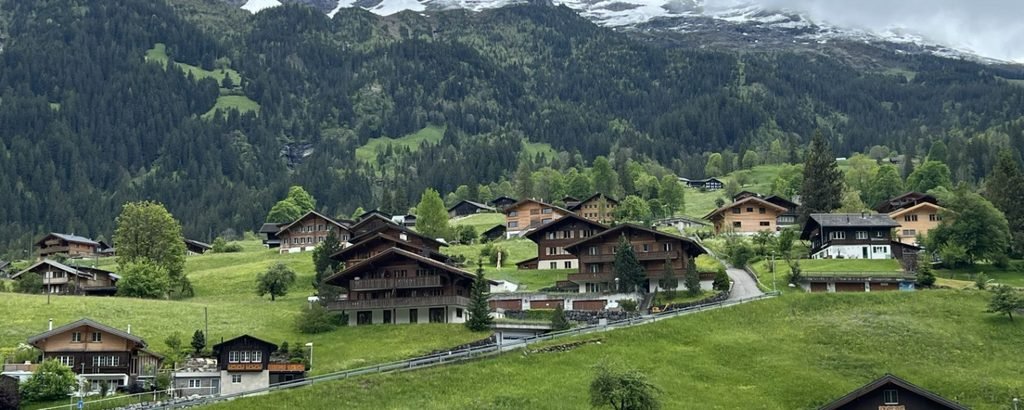
Both options have their advantages, and the best choice depends on your itinerary, budget and preferred travel style. Driving offers the freedom to explore smaller towns, take scenic detours and travel at your own pace, while Switzerland’s excellent public transport network reaches destinations that cars cannot. Many visitors find that combining driving with public transport works particularly well, especially in mountain regions where trains, gondolas and cable cars provide access to popular attractions and hiking trails.
Our Experience Getting Around Switzerland

We spent 10 days exploring Switzerland in early June 2024, arriving from Austria in our French-leased Citroën C3 Aircross. Our journey took us through Diepoldsau, a brief detour into Liechtenstein and Lucerne before reaching the Bernese Oberland. We based ourselves in Grindelwald for six nights, then continued to Zermatt for four nights. Although we had our own vehicle, we made extensive use of Switzerland’s trains, buses, boats, gondolas and funiculars, particularly around Grindelwald. We also experienced the unusual Lötschberg Car Transport Train, which carried our vehicle through the mountains and saved us several hours of driving. Combining our car with public transport gave us the flexibility we wanted while allowing us to reach places that would otherwise have been difficult to access.
Table of Contents
- Is It Better to Drive or Use Public Transport in Switzerland?
- Our Experience Getting Around Switzerland
- Driving in Switzerland
- Taking the Lötschberg Car Transport Train Through the Swiss Alps
- Parking in Switzerland and Car-Free Destinations
- Travelling Around Switzerland by Train and Bus
- Exploring Switzerland by Gondola, Cable Car and Funicular
- Travelling Around Switzerland by Boat
- Choosing the Best Transport Options for Your Switzerland Itinerary
- Practical Tips for Getting Around Switzerland
- Final Thoughts
Driving in Switzerland

Switzerland’s roads are generally well maintained, with clear signage and routes connecting major cities, smaller towns and Alpine regions. However, driving in Switzerland comes with a few requirements that visitors should understand before setting out, particularly when arriving in a foreign-registered vehicle.
Entering Switzerland with a Foreign-Registered Vehicle
We entered Switzerland from Austria in our French-leased Citroën C3 Aircross, spending our first night in Diepoldsau before continuing towards Lucerne and Grindelwald.
Visitors travelling in a foreign-registered vehicle should check the following before crossing the border:
- Driving licence: Confirm whether your licence is accepted or if an International Driving Permit or translation is required.
- Vehicle documents: Carry the relevant registration paperwork, especially when driving a rental or leased vehicle.
- Insurance coverage: Check that your policy covers Switzerland and every other country on your itinerary.
- Cross-border conditions: Make sure your rental or lease agreement permits travel into each country.
We discovered how important those last two points were during our brief detour into Liechtenstein. Although it borders Switzerland, Liechtenstein was excluded from our particular vehicle lease insurance policy.
The Swiss Motorway Vignette
Switzerland uses a motorway vignette rather than individual toll booths on most of its national motorway network.
The vignette costs CHF 40 and remains valid for 14 months, from 1 December of the preceding year until 31 January of the following year. There is no shorter-duration option for visitors.
Two versions are available:
- Adhesive vignette: Attached to the inside of the windscreen.
- Electronic vignette (e-vignette): Linked to the vehicle’s registration number.
We purchased a vignette for our leased car, giving us access to the Swiss motorway network during our visit.
Some Alpine tunnels and car transport trains charge separately, so the vignette doesn’t cover every possible road journey.
Swiss Road Rules and Speed Limits
Switzerland enforces its road regulations strictly, and speeding fines can be expensive.
Unless otherwise signposted, the general speed limits for passenger cars are:
- 50 km/h: Built-up areas
- 80 km/h: Roads outside built-up areas
- 100 km/h: Expressways
- 120 km/h: Motorways
Other important requirements include:
- Headlights: Daytime running lights or dipped headlights must be used during the day.
- Seatbelts: Compulsory for drivers and passengers.
- Alcohol: The general blood alcohol limit is 0.05%, with stricter limits for certain drivers.
- Pedestrian crossings: Drivers must give way to pedestrians as required by Swiss road rules.
Always follow posted speed limits, particularly around tunnels, roadworks and residential areas.
Driving on Mountain Roads
Switzerland’s mountain roads offer some remarkable scenery, but higher Alpine passes aren’t necessarily open year-round.
Snow can affect routes well into spring, while narrow roads, steep gradients and sharp bends may require slower driving.
Before heading into the mountains:
- Check current road conditions and seasonal pass openings.
- Allow extra time for winding roads and slower traffic.
- Use appropriate gears on long descents.
- Be prepared for sudden changes in weather and visibility.
For some journeys, a car transport train can provide a practical alternative to driving around a mountain range, as we discovered when travelling from Grindelwald towards Zermatt.
Taking the Lötschberg Car Transport Train Through the Swiss Alps
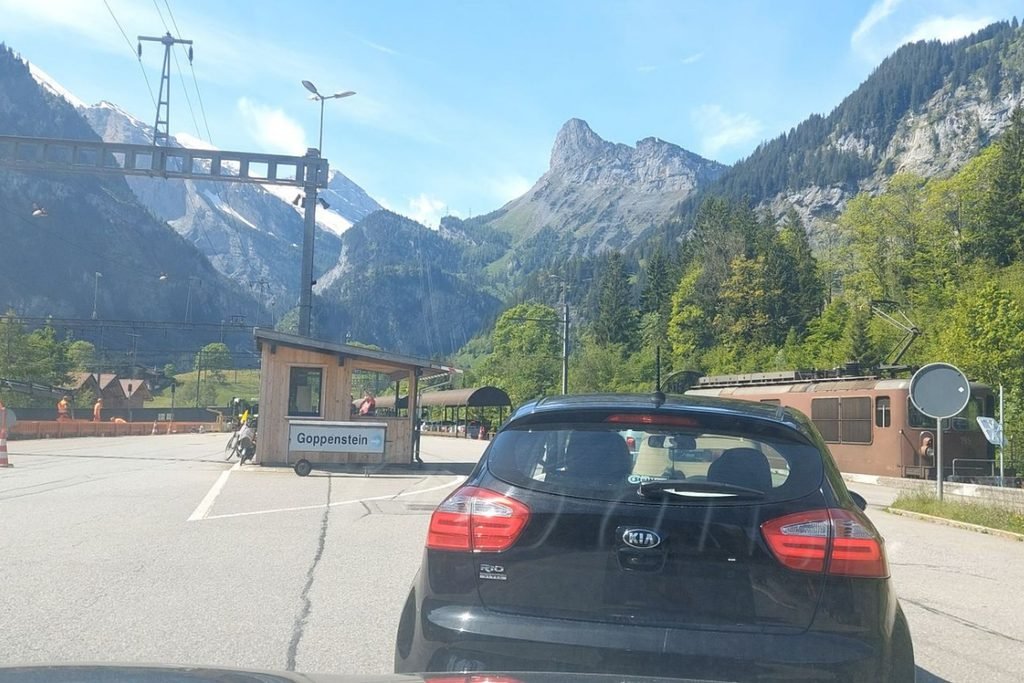
One of the more unusual parts of our Switzerland road trip was taking the Lötschberg Car Transport Train between Kandersteg and Goppenstein. This service carries vehicles through the Lötschberg Tunnel, providing a shortcut between the Bernese Oberland and the Valais region.
We used the car train when travelling from Grindelwald towards Zermatt. Our estimated journey time was approximately 2.5 hours using this route, compared with 5.5 hours by taking the alternative road route.
Saving around three hours of driving was a huge advantage, and the opportunity to take our car through a mountain made the decision even easier.
How Does the Lötschberg Car Train Work?
The Lötschberg service uses specially designed railway wagons that allow drivers to take their vehicles directly onto the train.
The process is straightforward:
- Drive to the terminal: Located at Kandersteg or Goppenstein, depending on your direction of travel.
- Purchase your ticket: Tickets are available online or at the terminal. Advance reservations aren’t available for the regular Kandersteg–Goppenstein service.
- Follow the loading instructions: Staff direct vehicles onto the railway wagons, where they’re parked closely together.
- Remain inside your vehicle: Passengers stay in their cars throughout the approximately 15-minute crossing.
- Drive off at the destination: Follow staff instructions when leaving the train.
The service operates separately from the motorway network, so the Swiss motorway vignette doesn’t cover the car train fare.
Our Experience on the Lötschberg Car Train
When we arrived at Kandersteg, there were several vehicles waiting to board. We were third in line, but our little Citroën C3 Aircross was the perfect size to fit into the remaining space.
We ended up as the very last vehicle on the train, tucked in beside a small staff compartment.
There wasn’t much room to move, and passengers had to remain inside their vehicles anyway. With a staff member sitting right beside us, there was certainly no chance of sneaking out for a photograph! lol.
Fortunately, we managed to capture a few photographs through the windows and some video footage.
The scenery around the railway was impressive, with mountains rising above the loading area. Once we entered the tunnel, however, everything became pitch-black.
Well, almost everything!
The driver in front of us kept their foot on the brake, leaving two bright red brake lights shining directly towards us throughout much of the tunnel journey.
Not quite the scenery we’d been admiring moments earlier, but it certainly made for a memorable crossing!
After emerging at Goppenstein, we continued towards Täsch, where we left our vehicle before travelling into car-free Zermatt.
Is the Lötschberg Car Train Worth Taking?
For us, absolutely. It reduced our driving time considerably and gave us an experience we wouldn’t have had on an ordinary road journey.
The actual train crossing takes approximately 15 minutes, although total travelling time depends on the departure schedule, waiting times and your onward route.
Before travelling, check the official BLS Car Transport website for current fares, timetables and vehicle restrictions:
https://www.bls.ch/en/fahren/autoverlad
If your itinerary includes both the Bernese Oberland and Valais, comparing the car train with the alternative driving routes could save you considerable time.
Parking in Switzerland and Car-Free Destinations
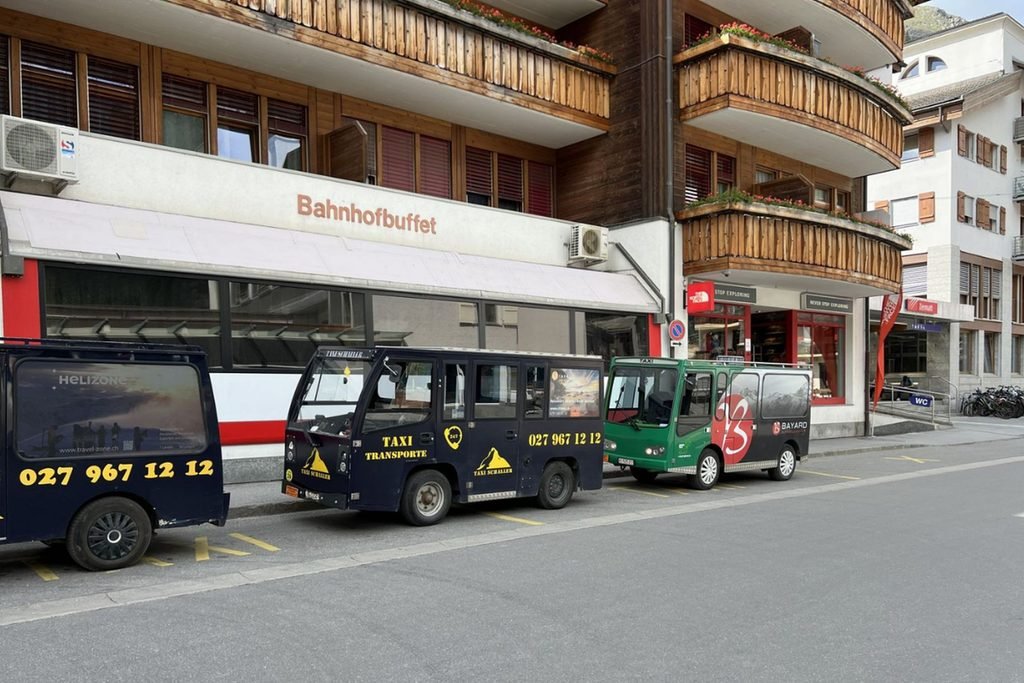
Parking is an important consideration when planning a self-drive holiday in Switzerland. Larger towns generally have public car parks and parking garages, but spaces can be limited and charges can add up, particularly in popular tourist destinations.
Some mountain villages also restrict private vehicles, meaning you’ll need to arrange parking and alternative transport before arriving.
Finding Parking in Swiss Towns and Cities
Switzerland has several types of parking spaces, often identified by coloured road markings.
- Blue zones: Generally allow limited free parking using a parking disc, subject to local restrictions.
- White marked spaces: May be free or paid, depending on the signs and location.
- Yellow marked spaces: Usually reserved for authorised vehicles or specific users.
- Parking garages: Useful for longer stays, with charges varying by location.
Always check local signs and time restrictions, as parking rules can differ between towns.
If you’re booking accommodation with a vehicle, confirm whether parking is included in the price. Some hotels and apartments charge separately, which can increase the cost of a multi-night stay.
Visiting Car-Free Mountain Villages
Several Swiss mountain destinations restrict private vehicle access, helping to reduce traffic in their village centres.
Some well-known examples include:
- Zermatt: Visitors generally park in Täsch and continue by shuttle train.
- Wengen: Reached by mountain railway from Lauterbrunnen, with no normal road access for visitors.
- Mürren: Accessed by cable car and connecting mountain transport rather than private vehicles.
When staying in these destinations, consider how you’ll transport your luggage from the nearest parking area or railway station to your accommodation.
Our Experience Parking in Täsch
When visiting Zermatt, we left our French-leased Citroën C3 Aircross at Matterhorn Terminal Täsch for four nights.
The parking facility was conveniently located beside the railway station, making it easy to transfer our luggage and catch the shuttle train into Zermatt.
The journey took approximately 12 minutes, and our Swiss Half Fare Cards gave us discounted train tickets. The discount didn’t apply to the parking itself.
Although parking for several nights added to our expenses, it was a straightforward arrangement and allowed us to explore Zermatt without worrying about our vehicle.
For more about visiting this car-free village, including accommodation and things to do, read Exploring Zermatt and the Matterhorn Region.
Travelling Around Switzerland by Train and Bus

Switzerland has an extensive public transport network connecting major cities, regional towns and Alpine communities. Trains and buses operate as an integrated system, with coordinated services making it relatively straightforward to travel between destinations without a vehicle.
For visitors unfamiliar with the country, understanding the different services and how to plan connections can make travelling much easier.
Travelling by Train in Switzerland
Switzerland’s railway network connects major destinations such as Zurich, Geneva, Lucerne, Interlaken and Bern, with regional services extending into smaller towns and mountain areas.
Swiss Federal Railways (SBB) operates much of the national network, alongside several regional railway companies.
The main types of train services include:
- InterCity (IC) and InterRegio (IR): Connect major cities and regional destinations.
- Regional trains: Serve smaller towns and local railway stations.
- Mountain railways: Provide access to Alpine villages and higher elevations.
- Panoramic trains: Offer scenic journeys through the Alps, including routes such as the Glacier Express and Bernina Express.
The SBB Mobile app is particularly useful for planning journeys. It provides timetables, platform information, connections and ticket options across much of the Swiss public transport network.
Some panoramic and mountain services require additional tickets or seat reservations, even when using a travel pass. Check the conditions before travelling.
Using Swiss PostBus Services
Switzerland’s distinctive yellow PostBus vehicles provide connections to smaller towns, villages and mountain valleys beyond the railway network.
These services are useful for:
- Reaching Alpine villages without direct rail connections.
- Accessing hiking trailheads in remote valleys.
- Connecting with railway stations and other public transport.
- Visiting rural areas where services may be limited.
PostBus routes often follow winding mountain roads, providing access to places that would otherwise be difficult to reach without a vehicle.
Services may be less frequent in remote areas, particularly outside the main tourist season. Check the timetable before setting out, especially if you’re relying on a bus for your return journey.
Our Experience Using Trains and Buses
During our six nights in Grindelwald, we made extensive use of the local train and bus services.
Our accommodation was near the Grund and Grindelwald Terminal area, giving us convenient connections to the surrounding villages and mountain transport stations.
We travelled by train to Interlaken, Wengen, Lauterbrunnen and Brienz, often using local buses to complete different parts of our journeys.
One thing we appreciated was how easy it was to move between services. We could travel from a small village to a major railway station, then continue towards another destination without needing to organise separate transport arrangements.
We purchased the Swiss Half Fare Card and a four-day Bernese Oberland Pass, which helped reduce our transport expenses considerably.
For a detailed breakdown of the passes, including what we paid and how much we saved, read Swiss Travel Passes: Which One Is Worth It?
Exploring Switzerland by Gondola, Cable Car and Funicular
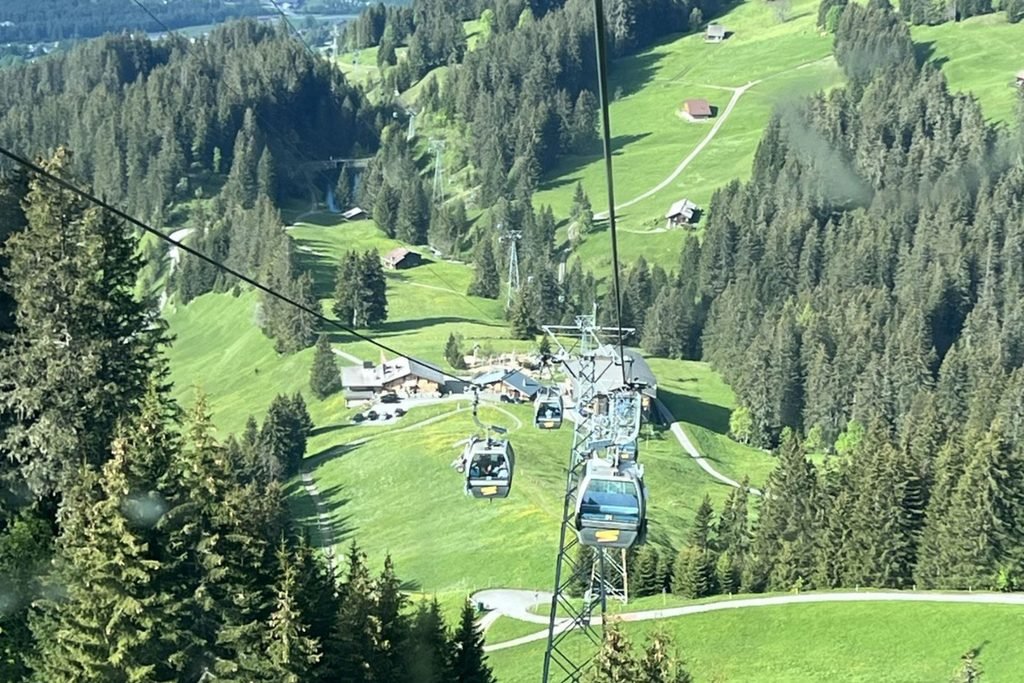
Switzerland’s network of gondolas, cable cars, funiculars and mountain railways provides access to Alpine villages, hiking trails and high-altitude viewpoints.
Some services are popular visitor attractions, while others are essential transport links for mountain communities. Each operates differently, and understanding the options can help when planning journeys into the Alps.
Gondolas and Cable Cars
Gondolas generally have smaller cabins that travel continuously along a cable, while aerial cable cars often use larger cabins operating between stations.
Some well-known routes include:
- Grindelwald First: A gondola journey from Grindelwald to First, providing access to the First Cliff Walk and surrounding hiking trails.
- Männlichen: Reached by gondola from Grindelwald Terminal or aerial cableway from Wengen, with several walking routes across the mountains.
- Schilthorn: A series of cable car connections above the Lauterbrunnen Valley, leading to the mountain summit.
- Matterhorn Glacier Paradise: A high-altitude cable car journey from the Zermatt area towards one of Europe’s highest mountain stations.
Ticket prices vary considerably, particularly for higher mountain excursions. Some regional passes cover specific routes, while others offer discounted fares.
Funiculars and Mountain Railways
Funiculars use cable-operated systems to carry carriages along steep tracks. Mountain railways operate on conventional or specialised tracks, with some using rack-and-pinion systems to climb steep gradients.
Popular examples include:
- Harder Kulm Funicular: Travels from Interlaken to a viewpoint overlooking Lakes Thun and Brienz.
- Allmendhubel Funicular: Connects Mürren with Allmendhubel and its surrounding walking trails.
- Gornergrat Railway: A mountain railway from Zermatt offering views of the Matterhorn and neighbouring peaks.
- Jungfrau Railway: Travels through the mountains to Jungfraujoch, one of Switzerland’s best-known high-altitude destinations.
These services make it possible to reach mountain locations without completing a lengthy uphill hike, leaving more time and energy for walking at higher elevations.
Our Experience Using Mountain Transport
During our six nights in Grindelwald, riding the gondolas, cable cars and mountain railways became one of our favourite activities.
With our four-day Bernese Oberland Pass, we travelled extensively throughout the region, often combining several different services in a single day.
One particularly memorable journey took us from Grindelwald to Männlichen, Wengen, Lauterbrunnen, Mürren and Allmendhubel, with walks and connecting transport along the way.
We also travelled up to Harder Kulm above Interlaken and visited Grindelwald First more than once.
Our first visit to the First Cliff Walk was surrounded by thick cloud, leaving us with very little visibility. Fortunately, the weather improved, and we returned on our third day to enjoy the clear mountain views we’d been hoping for.
What we appreciated most was the freedom to plan point-to-point hikes. We could travel up into the mountains, follow a walking route between villages and return using another service without having to retrace our steps.
Planning Mountain Transport Journeys
Mountain transport requires some forward planning, especially when travelling outside the peak summer season.
A few important considerations include:
- Seasonal operations: Some cable cars and mountain railways close between seasons or operate reduced schedules.
- Weather conditions: Cloud cover can obscure viewpoints, even when the valleys are clear.
- Last departures: Check the final service before starting a walk, particularly on longer routes.
- Pass coverage: Confirm whether your chosen journey is included, discounted or requires a separate ticket.
During our early June visit, some higher hiking trails and mountain services had not yet opened for summer. We adjusted our plans to suit the available routes and conditions.
For more about the mountain destinations we visited, read Best Things to Do in Grindelwald and the Bernese Oberland.
Travelling Around Switzerland by Boat
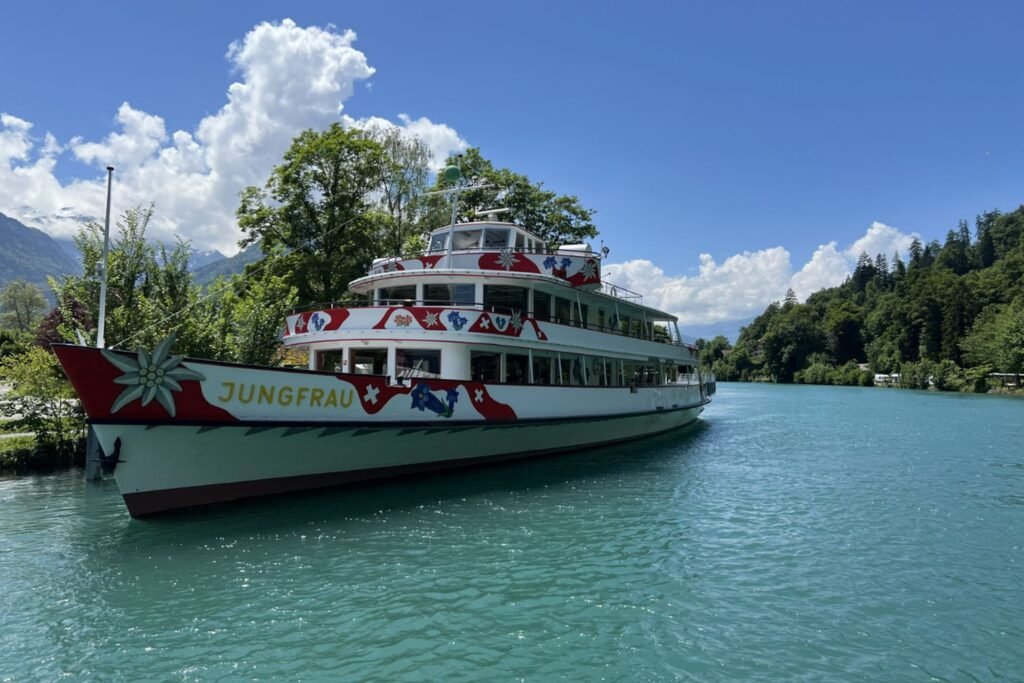
Switzerland’s lakes aren’t just scenic attractions. Many have scheduled passenger boat services connecting lakeside towns, villages and popular visitor destinations.
Lake Lucerne, Lake Geneva, Lake Thun and Lake Brienz are among the best-known examples, with services ranging from modern passenger vessels to traditional paddle steamers.
Travelling by boat offers a different perspective of the surrounding landscapes and can be incorporated into a wider sightseeing itinerary.
Using Lake Boats as Public Transport
Passenger boats can be a convenient way to visit lakeside destinations, particularly when combined with walking trails or other public transport.
A few things to consider include:
- Routes and stops: Some services call at several villages, allowing you to visit different locations along the shoreline.
- Seasonal timetables: Departure frequency varies throughout the year, with some routes operating fewer services outside summer.
- Travel passes: Certain Swiss transport passes include scheduled lake journeys, while others offer discounted fares.
- Journey times: Boats are often slower than trains or buses, so they’re better suited to days when you have time to appreciate the journey.
Not every boat operates frequently enough for spontaneous hop-on, hop-off sightseeing. Check the return sailing times if you’re planning to spend time ashore.
Our Experience Cruising Lake Brienz
One of our favourite days in the Bernese Oberland included a journey across Lake Brienz, with its distinctive turquoise water and mountains rising above the shoreline.
We travelled from Grindelwald through Interlaken to Brienz, where we boarded a boat to Giessbach.
After visiting Giessbach Falls and the historic Grandhotel Giessbach, we followed the lakeside walking trail towards Iseltwald.
From there, we caught a traditional paddle steamer back to Interlaken.
The paddle steamer was a particular highlight. We could sit back, watch the shoreline pass by and appreciate the lake from a completely different perspective.
Our Bernese Oberland Pass covered the scheduled boat journeys, so we didn’t need to purchase separate tickets for those services.
It was an excellent way to finish a day that had included mountain views, waterfalls, a lakeside walk and a relaxing journey across the water.
Planning a Scenic Lake Journey
If you’re including a boat trip in your Switzerland itinerary, consider choosing a lake that fits naturally into the region you’re visiting.
Lake Brienz and Lake Thun are convenient options when staying around Interlaken, while Lake Lucerne offers several routes connecting lakeside communities.
Traditional paddle steamers don’t operate on every departure, so check the vessel timetable if travelling aboard one is important to you.
Choosing the Best Transport Options for Your Switzerland Itinerary

With so many ways to travel around Switzerland, choosing the right combination depends on where you’re going, how long you’re staying and what you want to experience.
You don’t necessarily need to choose between driving and public transport for your entire holiday. Combining different options can provide greater flexibility, particularly when travelling between regions and exploring the Swiss Alps.
When Is Driving the Better Option?
Hiring or leasing a car can be particularly useful if you’re visiting several regions, travelling with luggage or planning to explore smaller towns along the way.
Driving may suit visitors who:
- Prefer flexible itineraries without fixed departure times.
- Want to visit smaller towns and rural areas beyond the main tourist routes.
- Are travelling between several accommodation bases.
- Enjoy scenic road trips and spontaneous stops.
However, parking charges, motorway requirements and vehicle restrictions can make driving less practical in some mountain destinations.
When Is Public Transport the Better Option?
Switzerland’s public transport network is particularly convenient for visitors concentrating on major cities, Alpine villages and popular mountain destinations.
It may be the better choice if you:
- Prefer travelling without the responsibility of driving or finding parking.
- Plan to spend several days exploring one mountain region.
- Want to combine hiking with trains, buses and cable cars.
- Are staying in car-free destinations such as Zermatt, Wengen or Mürren.
Public transport also gives hikers greater freedom, allowing them to begin and finish walks at different locations without returning to a parked vehicle.
Combining Driving and Public Transport
For travellers planning a wider road trip, using a car between regions and public transport within them can offer a practical balance.
This approach allows you to retain the flexibility of your vehicle while taking advantage of mountain transport where driving isn’t possible or convenient.
It’s worth comparing the total costs before deciding, including:
- Vehicle hire or lease, fuel and parking.
- Train, bus and mountain transport fares.
- Regional passes and available discounts.
- Additional charges for car transport trains or certain mountain excursions.
During our Switzerland journey, this combination worked particularly well. We used our leased car to travel between accommodation bases, then relied on local transport for most of our Alpine sightseeing and hiking.
Our biggest lesson was to plan transport around the activities we wanted to do, rather than choosing a transport method first and trying to make everything fit around it.
Practical Tips for Getting Around Switzerland
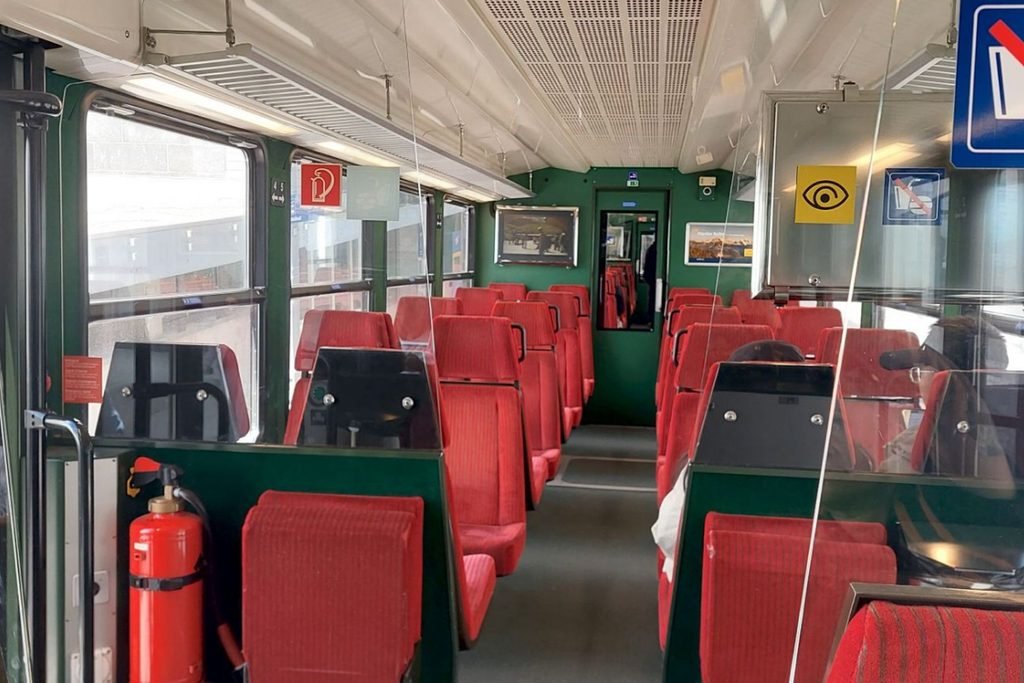
A few simple preparations can make travelling around Switzerland easier, particularly when using several transport services during the same day.
- Download the SBB Mobile app: Keep train, bus and boat timetables handy, along with platform information and connecting services.
- Allow extra time for transfers: Larger railway stations and mountain transport terminals may involve walking between platforms or boarding areas.
- Keep your tickets accessible: Store digital tickets on your phone or carry printed copies, along with any discount cards required for inspections.
- Download offline maps: These can be useful in mountain areas where mobile reception is limited.
- Carry a little Swiss cash: Although card payments are widely accepted, small purchases in rural areas may occasionally require cash.
- Check luggage arrangements: Some mountain transport services have limited space, so travelling light can make connections easier.
- Start longer excursions early: This provides more flexibility for sightseeing, walking and unexpected delays.
We found that having our routes and transport connections organised before leaving each morning made our days much easier, especially when visiting several destinations.
It also meant we could concentrate on the places we were visiting rather than constantly checking how to get to the next stop.
Final Thoughts

Looking back on our ten days in Switzerland, some of our favourite memories came from the journeys themselves. From squeezing our little Citroën onto the Lötschberg Car Transport Train to riding gondolas high above the Bernese Oberland, getting from one place to another became part of the adventure.
What impressed us most was how accessible the mountains were. We could spend our days discovering Alpine villages, following hiking trails and travelling through landscapes we’d previously only admired in photographs. Switzerland certainly wasn’t the cheapest country we visited, but the places we reached and the memories we brought home made every dollar worthwhile.
“A journey becomes unforgettable when the moments between destinations are just as memorable as the places themselves.”
🌍 Travel Planning Resources
These are the tools we personally use and trust when planning our travels from finding a place to stay to booking activities, transport and insurance. Let your “Tohu” guide you “Trust the Journey” and follow what feels right for you.
- ✈️Flights – Compare great deals with Trip.com then Kiwi.com for flexible, affordable options.
- 🚐 Campervans – Compare rental deals with Motorhome Republic across Aotearoa and beyond.
- 🛏️ Stays – Compare hotels on Trip.com and TripAdvisor or Booking.com.
- 🚐 Rental Cars – Compare prices and book through Airport Rentals by Motorhome Republic for trusted brands and easy airport pickup.
- 🎟️ Activities – Browse tours and experiences on Viator, Get Your Guide, or TripAdvisor
- 🚆12Go Asia – Compare and book trains, buses, and ferries across Asia in one place with 12Go.
- 🛡️ Travel Insurance – Get flexible short-term coverage with Insubuy for your next holiday.
- 💳 Travel Money – Send, spend and manage money internationally with Wise, with easy currency conversion and a handy option for travellers.
- 🔒 Protect Your Privacy with a VPN – We recommend Surfshark VPN for secure and private browsing while travelling. It’s fast, affordable and works worldwide, perfect for public Wi-Fi at airports, cafes and hotels.
- 📱 Travel eSIM – Stay connected with Airalo
- 💼 Lounge Access – Treat yourself with Priority Pass for UK or US
- 🎶 Events & Concerts – Book tickets worldwide through Ticketmaster.
🧭 Note: Some booking links can be a bit shy when you’re using a VPN. If one doesn’t open, try pausing your VPN or switching to a different server location or secure Wi-Fi network to get things flowing again.