
Grindelwald and the Bernese Oberland are home to some of Switzerland’s most spectacular alpine scenery, with towering mountain peaks, traditional villages, waterfalls, turquoise lakes and an impressive network of scenic railways and gondolas. From the famous First Cliff Walk to the car-free villages of Wengen and Mürren, there’s an incredible variety of places to discover.
Whether you’re planning mountain hikes, sightseeing excursions or leisurely days exploring the villages, this region offers plenty of opportunities to experience the Swiss Alps without needing to tackle challenging walking trails.
What Makes the Bernese Oberland So Special?

Can you experience the best of the Swiss Alps without being an experienced hiker? Absolutely. One of the things that makes the Bernese Oberland so appealing is how accessible its mountain scenery has become. Gondolas, cable cars and mountain railways carry visitors to remarkable viewpoints, while traditional villages and lakeside towns offer a completely different side of Switzerland.
With Grindelwald as your base, you can explore destinations such as Lauterbrunnen, Wengen, Mürren, Interlaken and Lake Brienz, combining several experiences in a single day.
Our Experience
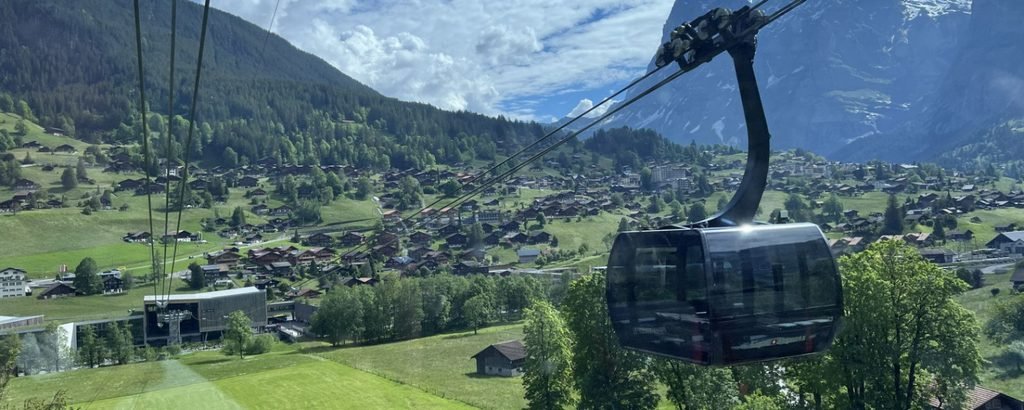
We spent six nights in Grindelwald in June 2024, having deliberately planned our arrival for the beginning of the summer mountain season. Switzerland was the first destination we’d organised for our European journey, and we’d spent months researching the region and deciding which places we wanted to explore.
Armed with a four-day Bernese Oberland Pass and our Swiss Half Fare Cards, we set off on four busy days of sightseeing. We travelled on gondolas, mountain railways and lake boats, explored alpine villages, visited waterfalls and enjoyed shorter walks along the way.
We reached mountain stations such as Männlichen and Kleine Scheidegg without completing the longer hikes between them, which suited our plans perfectly. Some higher trails were still closed because of snow, but there was more than enough to keep us occupied.
The weather wasn’t always cooperative either. Our first visit to Grindelwald First was almost completely obscured by cloud, so we returned when the skies cleared.
By the end of our stay, we’d explored an extraordinary amount of the region and were already talking about returning to experience more of its hiking trails.
Table of Contents
- What Makes the Bernese Oberland So Special?
- Our Experience
- Grindelwald First and the First Cliff Walk
- Männlichen and Kleine Scheidegg
- Exploring Wengen – A Car-Free Alpine Village
- Lauterbrunnen and Its Spectacular Waterfalls
- Visiting Mürren – A Mountain Village Above the Valley
- Exploring Interlaken – Between Two Alpine Lakes
- Lake Brienz and Its Beautiful Lakeside Villages
- Other Mountain Villages Worth Exploring
- Getting Around the Bernese Oberland
- Best Time to Visit Grindelwald and the Bernese Oberland
- Our Final Thoughts
Grindelwald First and the First Cliff Walk

One of Grindelwald’s most popular attractions is Grindelwald First, a mountain destination approximately 2,168 metres above sea level.
The gondola journey begins in Grindelwald village and climbs above the valley, passing mountain stations before reaching First. At the top, visitors can enjoy panoramic viewpoints, walking trails and several adventure activities.
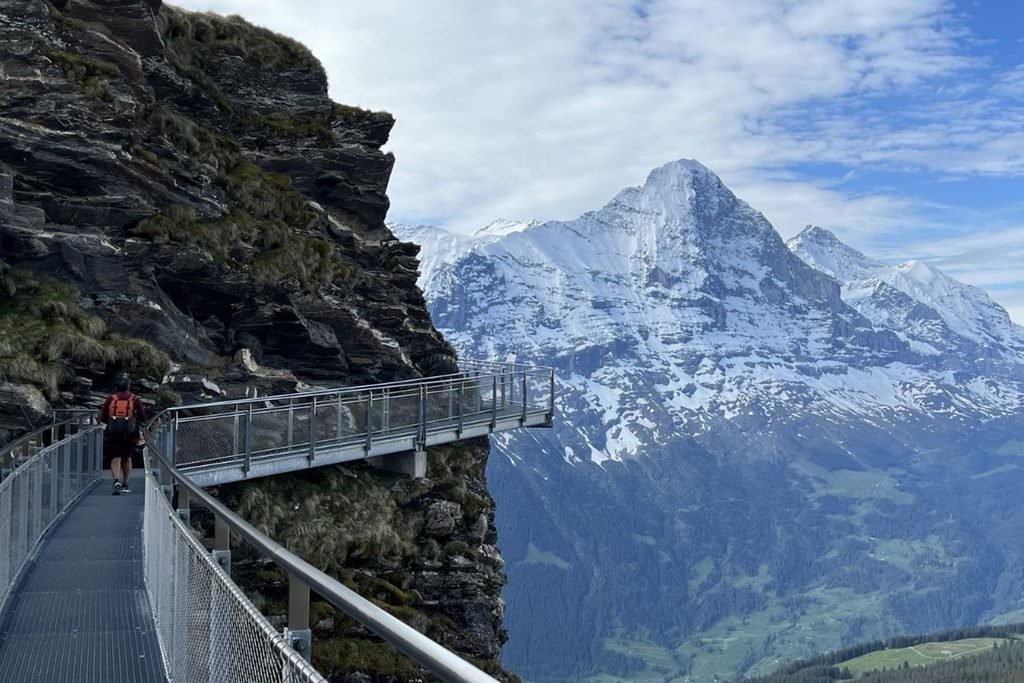
The main attraction is the First Cliff Walk, a metal walkway attached to the mountainside, with sections suspended above the steep slopes below. It leads to a viewing platform extending out from the mountain, providing spectacular views when the weather is clear.
The Cliff Walk itself doesn’t have a separate admission charge, although you’ll need a valid gondola ticket or suitable travel pass to reach First.
Our Two Visits to the First Cliff Walk
We’d been particularly looking forward to this attraction, but our first visit didn’t go quite as planned.
The mountain was almost completely covered in cloud. We walked along the metal pathway and ventured onto the viewing platform, but instead of the spectacular alpine scenery we’d imagined, there was very little visibility beyond the railings. It was still an interesting experience, although standing on a mountain viewing platform without being able to see the mountains was rather amusing.
Fortunately, we had the opportunity to return when the weather improved. The difference was remarkable. This time, we could finally appreciate the surrounding peaks and the dramatic location of the walkway.
Our second visit was well worth it, and we’re glad we didn’t settle for the cloudy views from our first attempt.
Other Things to Do at Grindelwald First
There’s plenty more to experience beyond the Cliff Walk:
- First Flyer: A zipline-style ride down the mountainside.
- First Glider: An aerial adventure where participants glide beneath a suspended structure.
- First Mountain Cart: A downhill ride on specially designed mountain carts.
- First Trottibike: A scooter-style descent along designated mountain routes.
- Bachalpsee: A popular alpine lake reached by a walking trail from First, famous for its mountain reflections on clear days.
These are additional activities to consider, with separate charges and seasonal conditions applying to some experiences.
Visitor tip: Check the mountain webcams before travelling up to First. Conditions at the summit can be completely different from those in Grindelwald village.
Männlichen and Kleine Scheidegg
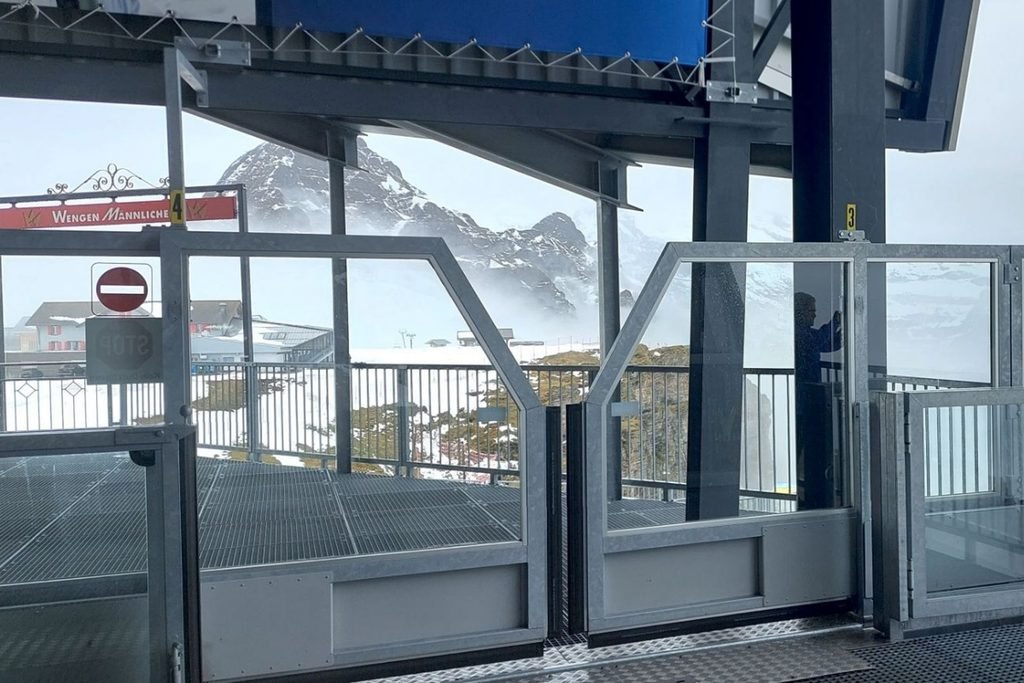
High above Grindelwald and Wengen, Männlichen and Kleine Scheidegg offer magnificent views of the Eiger, Mönch and Jungfrau mountains.
Both destinations are accessible using mountain transport, making them popular with visitors who want to enjoy high-altitude scenery, whether or not they’re planning a hike.
Exploring Männlichen
Situated approximately 2,343 metres above sea level, Männlichen is reached by gondola from Grindelwald Terminal or aerial cableway from Wengen.
The summit area provides beautiful views across the surrounding valleys and mountains, with several walking opportunities nearby.
Two of the best-known routes are:
- Royal Walk: A short uphill walk to a panoramic viewpoint above the mountain station.
- Panorama Trail: A scenic walking route connecting Männlichen with Kleine Scheidegg, offering views of the Eiger, Mönch and Jungfrau.
Both are popular during the summer hiking season, although trail conditions depend on the weather and remaining snow.
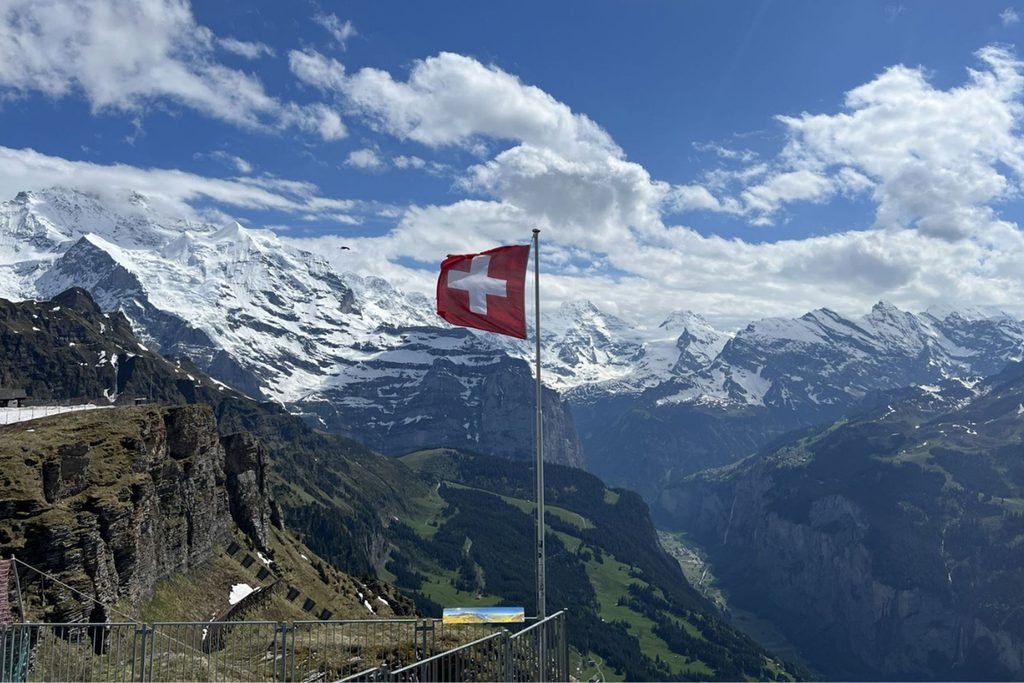
Visiting Kleine Scheidegg
At approximately 2,061 metres above sea level, Kleine Scheidegg sits beneath the famous north face of the Eiger.
It’s an important mountain railway junction, connecting Grindelwald and Wengen on the Wengernalp Railway. It’s also where visitors can continue towards Jungfraujoch on the Jungfrau Railway. Even without taking the journey to Jungfraujoch, Kleine Scheidegg is worth visiting for its mountain setting.
Visitors can enjoy views of the Eiger North Face, explore walking routes during the hiking season or stop at one of the alpine restaurants before continuing their journey.
Our Experience
We visited both mountain stations using a combination of public transport, gondolas and mountain railways rather than hiking between them.
The scenery changed as we climbed higher, and travelling between the stations was an experience in itself. Although some of the higher walking trails weren’t accessible during our early June visit, we still enjoyed exploring these remarkable mountain locations and taking in the surrounding peaks.
Exploring Wengen – A Car-Free Alpine Village

Wengen is a traditional car-free village approximately 1,274 metres above sea level, overlooking the Lauterbrunnen Valley.
Reached by the Wengernalp Railway from Lauterbrunnen or via Kleine Scheidegg, the village is known for its wooden chalets, flower-filled balconies and views across the mountains.
Wengen is a popular base for hiking and skiing, but it’s also a lovely destination for visitors who simply want to wander through a Swiss alpine village.
Things to See and Do in Wengen
- Explore the village centre: Discover traditional chalets, shops, cafés and restaurants.
- Enjoy the valley viewpoints: Look across the Lauterbrunnen Valley from viewpoints around the village.
- Visit the village church: The surrounding area offers particularly attractive views.
- Take the cable car to Männlichen: A scenic connection to the mountain viewpoints above Wengen.
- Explore local walking paths: Choose from gentle village walks or longer trails during the hiking season.
We included Wengen in our travels through the Bernese Oberland and enjoyed the contrast between the busy mountain stations and the village streets.
It’s the kind of place where you don’t need a packed sightseeing schedule. Allowing time to wander and enjoy the surroundings is part of its appeal.
Lauterbrunnen and Its Spectacular Waterfalls

Often called the Valley of 72 Waterfalls, Lauterbrunnen is one of the Bernese Oberland’s most distinctive landscapes.
The village sits on a valley floor surrounded by towering cliffs, with waterfalls cascading down the rock faces and traditional Swiss buildings scattered below.
Two waterfalls in particular are worth knowing about.
Staubbach Falls
Staubbach Falls drops approximately 297 metres from the cliffs overlooking Lauterbrunnen village.
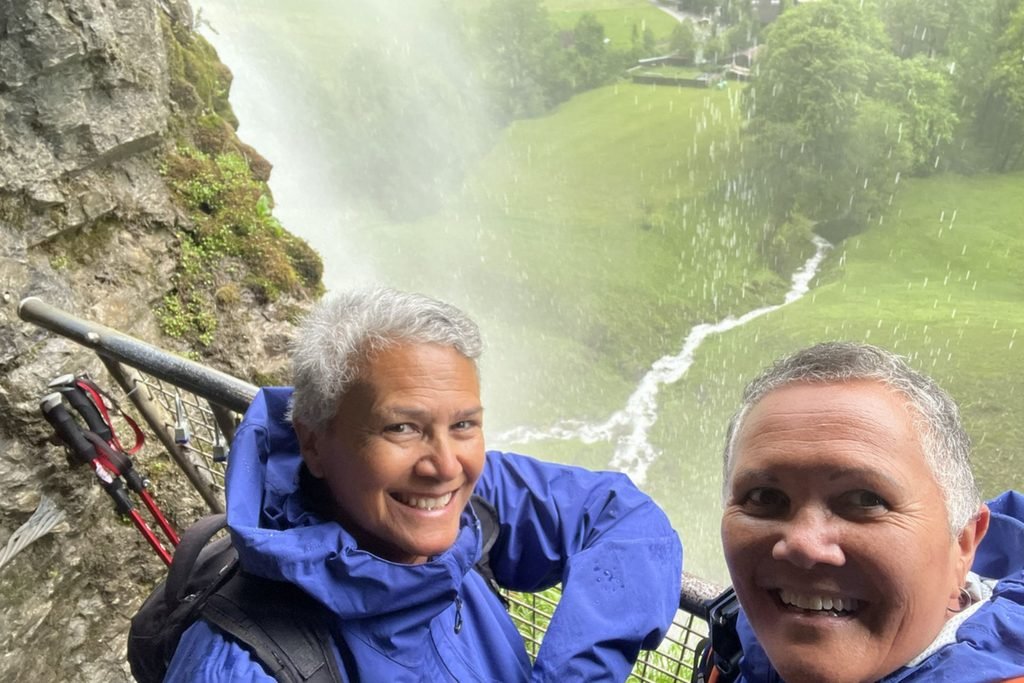
It’s one of the area’s most recognisable landmarks, particularly because the waterfall appears to fall almost directly behind the buildings below. Depending on the wind, the falling water disperses into a fine mist before reaching the ground.
During the warmer months, a seasonal walking path leads towards a viewing area behind part of the waterfall. However, Staubbach Falls is easily visible from the village itself.
Trümmelbach Falls
Unlike Staubbach Falls, Trümmelbach Falls is hidden inside the mountain.
This remarkable series of glacial waterfalls flows through narrow rock passages carved into the cliffs. Visitors can explore accessible sections using a tunnel lift, walkways, galleries and steps. The waterfalls are fed by glacial meltwater, creating powerful flows through the rock.
Admission is charged, and the attraction operates seasonally. There are also stairs and wet surfaces to navigate.
Exploring Lauterbrunnen Valley
Beyond the waterfalls, Lauterbrunnen offers opportunities to explore the valley floor. Walking and cycling routes lead towards Stechelberg, passing small settlements, meadows and additional waterfalls.
We included Lauterbrunnen in our travels from Grindelwald and particularly appreciated the contrast between the enormous cliffs and the villages sitting far below the surrounding mountain peaks.
It’s a destination that deserves more than a quick photograph of Staubbach Falls, especially if you enjoy walking through beautiful natural surroundings.
Visiting Mürren – A Mountain Village Above the Valley

Perched approximately 1,638 metres above sea level, Mürren is another beautiful car-free village, but its location is quite different from Wengen.
Built along a mountain terrace high above the Lauterbrunnen Valley, Mürren offers open views towards the Eiger, Mönch and Jungfrau.
Traditional wooden chalets, narrow village streets and the surrounding mountain scenery make it an inviting place to explore.
Getting to Mürren
There are two main approaches to Mürren:
- Via Grütschalp: Take the cable car from Lauterbrunnen to Grütschalp, then continue on the mountain railway to Mürren.
- Via Stechelberg: Travel along the Lauterbrunnen Valley to Stechelberg and use the cable car connections towards Mürren.
Both routes provide an opportunity to enjoy the scenery, and visitors can consider using different connections for their outward and return journeys.
Things to See and Do in Mürren
- Explore the village: Wander past traditional chalets, shops and restaurants.
- Enjoy the mountain viewpoints: Admire the Eiger, Mönch and Jungfrau from the village’s elevated position.
- Visit Allmendhubel: Take the funicular to a mountain viewpoint with walking trails and family-friendly attractions.
- Explore nearby trails: Choose from shorter scenic walks or more challenging hikes during summer.
- Continue to Schilthorn: Take the cable car towards the famous mountain destination associated with James Bond and its revolving restaurant.
We included Mürren in our exploration of the region, and its position high above the valley was what made it particularly memorable.
Looking across the surrounding peaks from the village was quite different from standing on the Lauterbrunnen Valley floor below.
Even if you’re not planning to continue to Schilthorn, Mürren is worth allowing time to explore.
Exploring Interlaken – Between Two Alpine Lakes

Situated between Lake Thun and Lake Brienz, Interlaken is one of the main gateways to the Bernese Oberland.
Compared with the smaller mountain villages, Interlaken is a busy tourist town with shops, restaurants, hotels and adventure activities.
Its location between two beautiful lakes makes it an excellent place to combine sightseeing with time around the water.
Things to See and Do in Interlaken
- Höhematte Park: A large green space in the town centre, with views towards the Jungfrau and paragliders frequently landing nearby.
- Höheweg: Interlaken’s main promenade, lined with hotels, shops and restaurants.
- Aare River: Enjoy walks beside the river connecting Lake Brienz and Lake Thun.
- Historic Interlaken: Explore the area around Interlaken Castle and the former monastery.
- Adventure activities: Interlaken is well known for paragliding, rafting, canyoning and other outdoor experiences.
We passed through Interlaken while exploring the wider region and found it a useful place for connecting with the nearby lakes and surrounding destinations.

Harder Kulm – Interlaken’s Mountain Viewpoint
Approximately 1,322 metres above sea level, Harder Kulm is one of Interlaken’s best-known viewpoints.
A funicular railway climbs from near Interlaken Ost to the summit, where visitors can enjoy views across Interlaken, Lake Brienz, Lake Thun and the surrounding mountains.
The main attraction is the Two Lakes Bridge, a viewing platform extending out from the mountainside.
There’s also a mountain restaurant, making Harder Kulm an appealing option for visitors wanting to enjoy the scenery without a long hike.
The funicular operates seasonally, and transport costs depend on your ticket or travel pass.
Lake Brienz and Its Beautiful Lakeside Villages
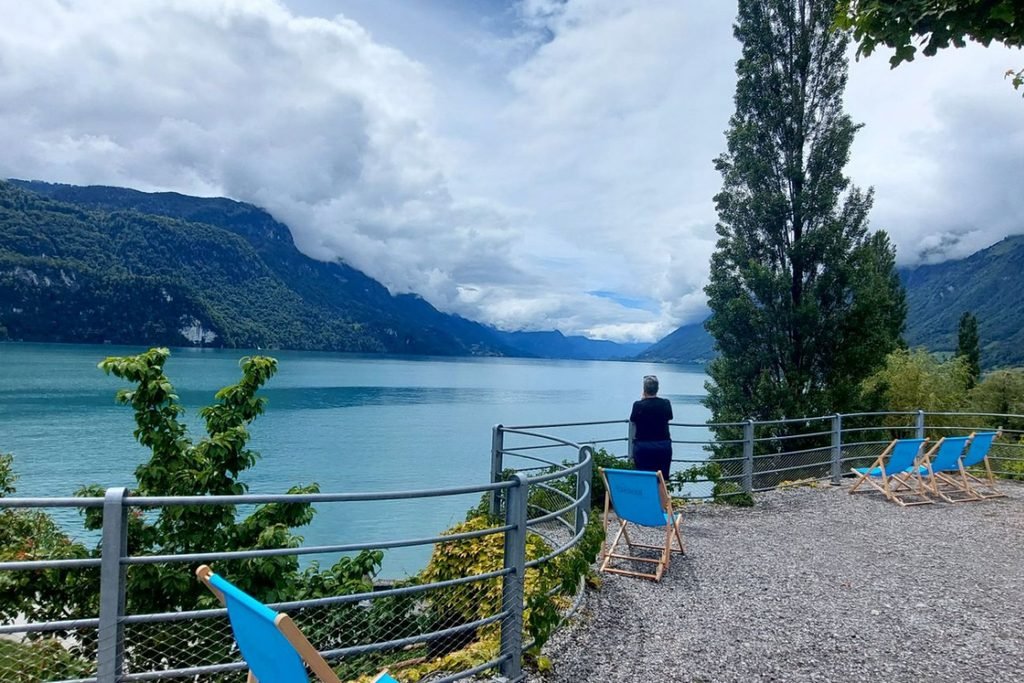
With its remarkable turquoise water and surrounding mountains, Lake Brienz is one of the Bernese Oberland’s most beautiful natural attractions.
The lake stretches between Interlaken and Brienz, with small villages, forested slopes and waterfalls along its shores.
Its distinctive colour comes from fine glacial sediment suspended in the water, creating striking blue-green shades when the light catches the lake.
Taking a Cruise on Lake Brienz
A scenic cruise is a wonderful way to appreciate Lake Brienz. Passenger boats travel between Interlaken Ost and Brienz, stopping at selected villages and attractions along the shoreline.
From the water, you can admire the steep mountains rising above the lake, with views that are quite different from those experienced on the mountain railways. Some services operate using traditional paddle steamers, adding another attraction to the journey.
We included lake cruises during our four days exploring the Bernese Oberland, and travelling across the water was a welcome change from our mountain excursions.

Iseltwald – A Picturesque Lakeside Village
Located along the southern shore of Lake Brienz, Iseltwald is known for its peaceful waterfront and traditional Swiss chalets. The village has become particularly popular for its picturesque shoreline and the distinctive Schloss Seeburg, which stands on a peninsula overlooking the lake.
Visitors can enjoy the lakeside promenade, wander through the village or stop at a café to admire the surroundings.
It’s an attractive option for anyone wanting a quieter lakeside experience.
Giessbach Falls – Waterfalls Above the Lake
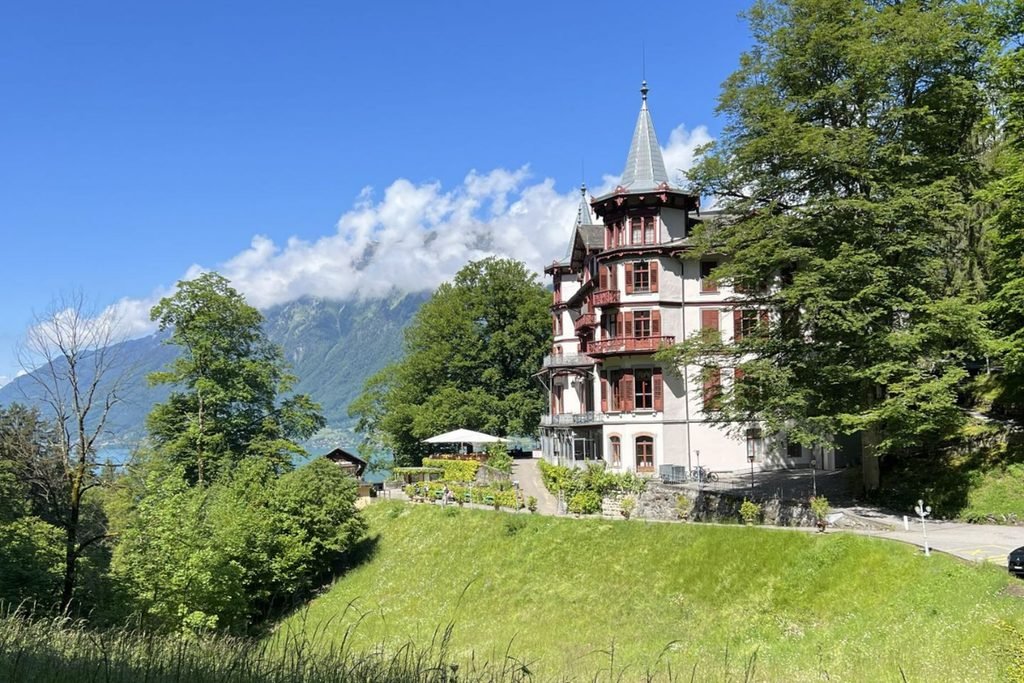
Giessbach Falls is a series of waterfalls cascading down the mountainside towards Lake Brienz. The falls are located near the historic Grandhotel Giessbach, which overlooks the lake from an elevated position.
Visitors arriving by boat at Giessbach See can continue towards the hotel and waterfalls using the historic Giessbach Funicular. Walking paths provide different views of the falls, including a route behind the falling water when conditions permit.
The combination of waterfalls, forest paths and historic buildings makes this an interesting stop for visitors exploring the lake.
Visiting Brienz Village
At the eastern end of Lake Brienz, Brienz is a traditional Swiss village known for its woodcarving heritage. Its waterfront promenade features wooden chalets, flower-filled balconies and views across the turquoise lake.
Brienz is also the departure point for the historic Brienz Rothorn Railway, a steam-powered mountain railway climbing high above the lake. The railway operates seasonally and may require an additional fare depending on your travel pass.
Iseltwald, Giessbach Falls and the Brienz Rothorn Railway are additional attractions worth considering when planning a visit to Lake Brienz.
Other Mountain Villages Worth Exploring
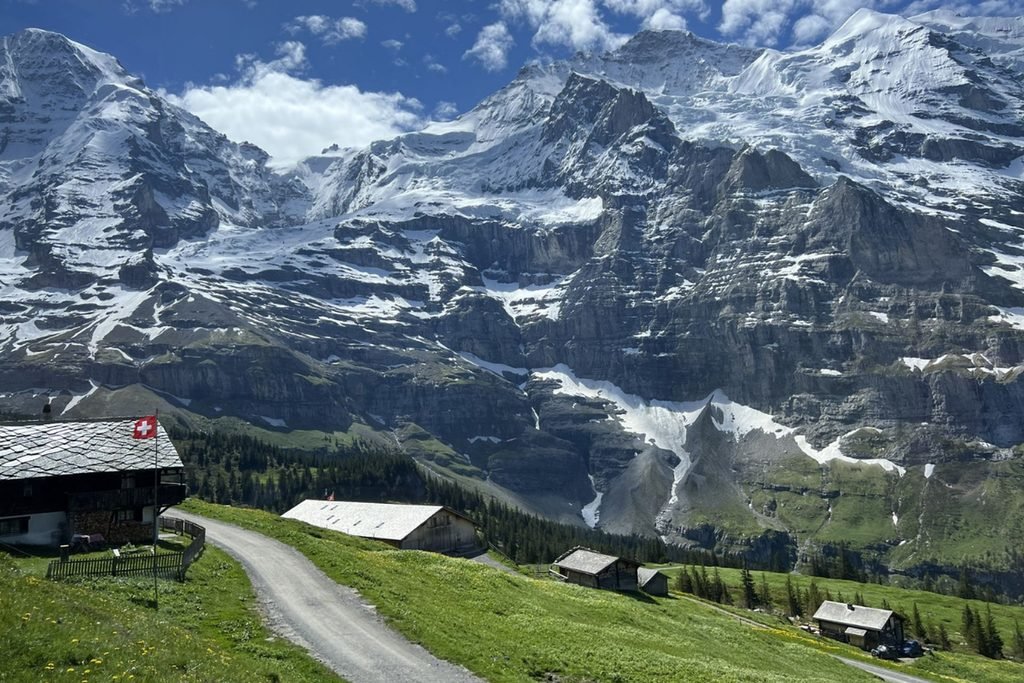
If you have additional time in the Bernese Oberland, several smaller villages offer opportunities to discover quieter parts of the region.
Gimmelwald
Situated below Mürren, Gimmelwald is a traditional mountain village with wooden chalets, working farms and beautiful views across the Lauterbrunnen Valley.
It’s accessible by cable car and appeals to visitors looking for a quieter alpine experience.
Stechelberg
At the far end of the Lauterbrunnen Valley, Stechelberg is surrounded by cliffs, waterfalls and mountain scenery.
It’s an important departure point for cable car journeys towards Gimmelwald, Mürren and Schilthorn, while nearby walking routes provide opportunities to explore the valley.
Wilderswil
Located near Interlaken, Wilderswil is known for its traditional buildings and connection to the Schynige Platte Railway.
This historic cogwheel railway climbs into the mountains, where visitors can enjoy panoramic viewpoints, alpine gardens and seasonal walking trails.
Hasliberg
East of Brienz, Hasliberg offers mountain transport, scenic viewpoints and walking trails around Meiringen and the surrounding valleys.
It’s an alternative worth considering for travellers spending longer in the Bernese Oberland and wanting to explore beyond the main Jungfrau attractions.
These are additional destinations to consider rather than villages we explored in detail ourselves.
Getting Around the Bernese Oberland

One of the biggest advantages of visiting the Bernese Oberland is that you don’t need a car to reach many of its most spectacular attractions.
Regional trains connect the main towns, while mountain railways, gondolas and cable cars provide access to alpine villages and viewpoints. Buses serve smaller destinations, and passenger boats operate on Lake Brienz and Lake Thun.
Grindelwald and Interlaken are particularly convenient bases for exploring the region.
Choosing a Travel Pass
Mountain transport can be expensive when purchasing individual tickets, particularly if you’re planning several excursions.
We used a four-day Bernese Oberland Pass combined with Swiss Half Fare Cards, which worked extremely well for our itinerary.
For a detailed comparison of the different options, including our 2024 costs and the value we received, read our guide to Swiss Travel Passes: Which One Is Worth It?
Planning Your Daily Routes
Before arriving, we downloaded maps of the transport network to understand which mountain stations, villages and attractions connected.
This helped us plan sensible routes and avoid unnecessary backtracking.
We recommend checking the latest timetables and pass-coverage maps before setting out, particularly when combining mountain transport with lake cruises or walking trails.
Best Time to Visit Grindelwald and the Bernese Oberland
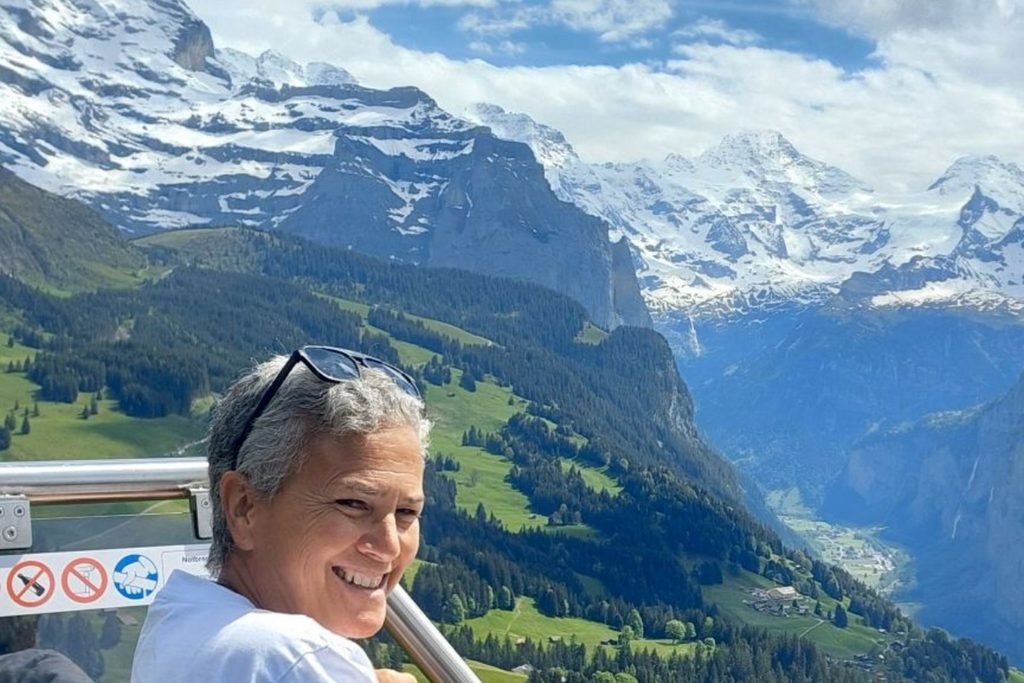
The best time to visit depends on whether you’re planning mountain sightseeing, hiking or winter sports.
Summer – June to September
Summer is the main season for exploring the Bernese Oberland’s mountain attractions and walking trails.
- June: Green valleys and snow-covered peaks, although some higher trails may still be closed.
- July and August: Generally the busiest months, with more high-altitude hiking routes accessible.
- September: Often a lovely period for sightseeing and hiking, with fewer visitors after the main summer holidays.
Spring and Autumn
April, May and October can be quieter times to visit, particularly for exploring villages and lower-level walking routes.
However, some mountain transport services close for maintenance or seasonal changes, so it’s important to check operating dates.
Winter – December to March
During winter, Grindelwald and the surrounding villages become popular destinations for skiing, snowboarding, sledging and other snow activities.
Many summer hiking trails are inaccessible, and transport services may operate differently.
Our Experience Visiting in Early June
We arrived in Switzerland on 1 June 2024, hoping to enjoy the beginning of the summer season before the busiest holiday period.
The combination of green valleys and snow-covered mountain peaks was beautiful, and we were able to enjoy most of the experiences we’d planned.
However, some higher walking trails were still closed because of snow, and the mountain weather was unpredictable.
For travellers whose main priority is high-altitude hiking, July through September may be a better choice. But if you’re interested in mountain sightseeing, villages, waterfalls and lake cruises, early June can be a wonderful time to visit.
Our Final Thoughts
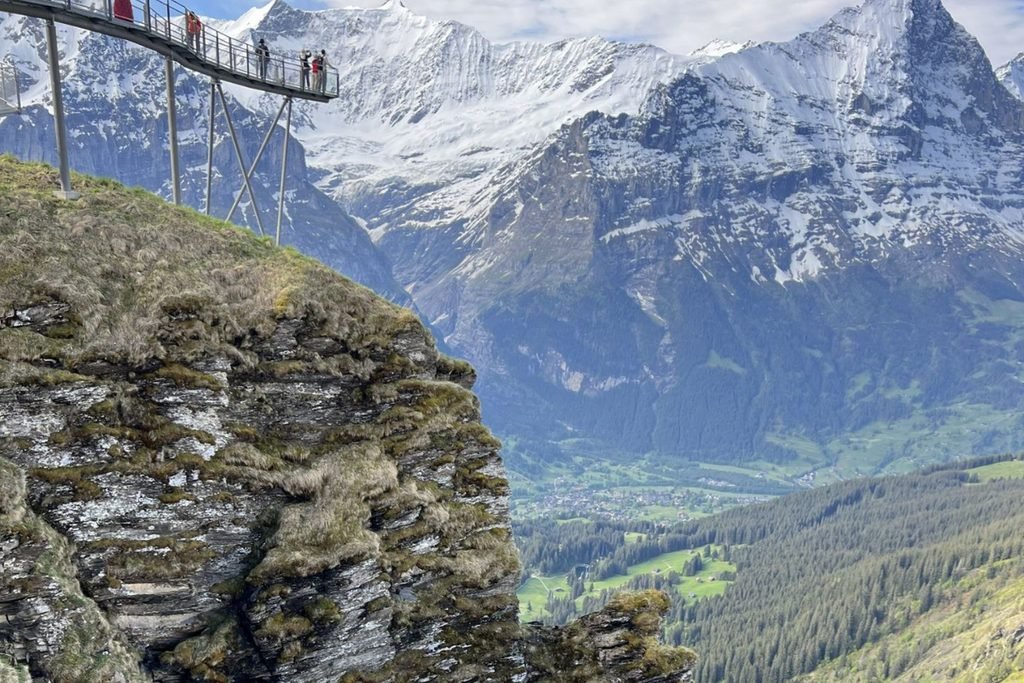
Grindelwald and the Bernese Oberland were among the highlights of our European journey, and we loved the variety of experiences packed into this remarkable region.
From the excitement of the First Cliff Walk to the traditional mountain villages, scenic railways and beautiful lakes, every day offered something different.
What surprised us most was just how much we could experience in four days. Although we would have loved to complete more of the mountain hikes, the remaining snow didn’t prevent us from enjoying an extraordinary visit.
Would we return? Absolutely. We’d love to see more of the hiking trails later in the summer and spend longer exploring the places we didn’t manage to reach.
If you’re planning a trip to the Swiss Alps, we’d recommend allowing several days to explore the Bernese Oberland rather than rushing through on a day trip. It’s a region that rewards taking your time, with plenty to discover beyond its most famous attractions.
“In the Swiss Alps, the journey between destinations can be just as extraordinary as the places themselves.”
🌍 Travel Planning Resources
These are the tools we personally use and trust when planning our travels from finding a place to stay to booking activities, transport and insurance. Let your “Tohu” guide you “Trust the Journey” and follow what feels right for you.
- ✈️Flights – Compare great deals with Trip.com then Kiwi.com for flexible, affordable options.
- 🚐 Campervans – Compare rental deals with Motorhome Republic across Aotearoa and beyond.
- 🛏️ Stays – Compare hotels on Trip.com and TripAdvisor or Booking.com.
- 🚐 Rental Cars – Compare prices and book through Airport Rentals by Motorhome Republic for trusted brands and easy airport pickup.
- 🎟️ Activities – Browse tours and experiences on Viator, Get Your Guide, or TripAdvisor
- 🚆12Go Asia – Compare and book trains, buses, and ferries across Asia in one place with 12Go.
- 🛡️ Travel Insurance – Get flexible short-term coverage with Insubuy for your next holiday.
- 💳 Travel Money – Send, spend and manage money internationally with Wise, with easy currency conversion and a handy option for travellers.
- 🔒 Protect Your Privacy with a VPN – We recommend Surfshark VPN for secure and private browsing while travelling. It’s fast, affordable and works worldwide, perfect for public Wi-Fi at airports, cafes and hotels.
- 📱 Travel eSIM – Stay connected with Airalo
- 💼 Lounge Access – Treat yourself with Priority Pass for UK or US
- 🎶 Events & Concerts – Book tickets worldwide through Ticketmaster.
🧭 Note: Some booking links can be a bit shy when you’re using a VPN. If one doesn’t open, try pausing your VPN or switching to a different server location or secure Wi-Fi network to get things flowing again.