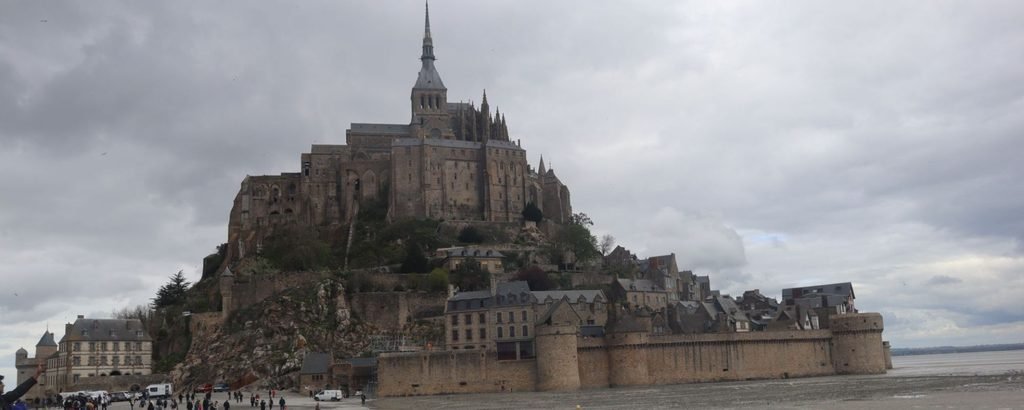
Rising dramatically from the tidal flats of Normandy, Mont Saint-Michel is one of France’s most extraordinary landmarks. This medieval island is crowned by a magnificent abbey, surrounded by ancient stone walls and filled with narrow streets, stairways and centuries of history. Beyond the island, the surrounding region offers historic towns, beautiful countryside and opportunities to experience a quieter side of northern France.
Is Mont Saint-Michel Worth Visiting?

Absolutely! Mont Saint-Michel is far more than a beautiful landmark to admire from a distance. Walking across the causeway, exploring the medieval village and climbing to the abbey reveals just how remarkable this UNESCO World Heritage Site really is. With spectacular views across the bay and fascinating history around every corner, it is a destination well worth including in a journey through France, particularly if you enjoy historic architecture and exploring on foot.
Our Experience Exploring Mont Saint-Michel and Normandy
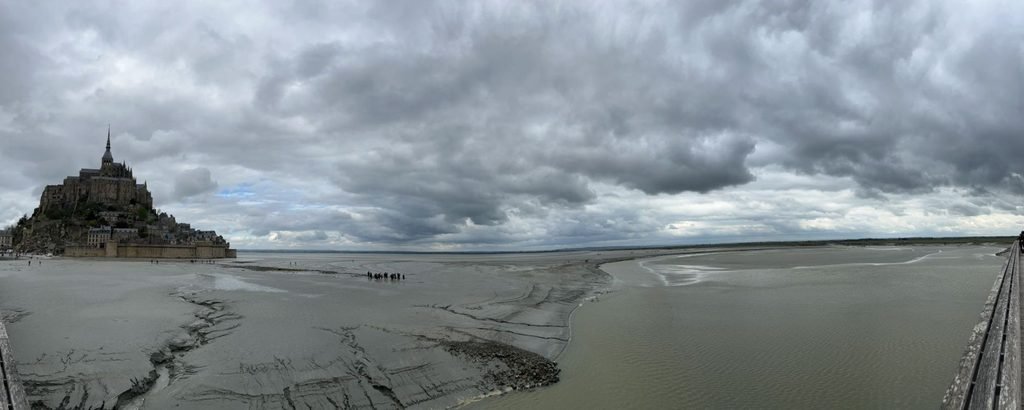
After leaving San Sebastián in Spain, we travelled north through France, stopping overnight in Le Blanc before continuing to Saint-Pierre-de-Plesguen, where we stayed for three nights. Mont Saint-Michel had caught our attention after watching a documentary and recommendations from friends encouraged us to explore both the island and nearby Dinan in Brittany. We spent half a day discovering Mont Saint-Michel, including its medieval streets, surrounding viewpoints and magnificent abbey, where we followed an audio-guided tour to learn more about its fascinating history.
Table of Contents
- Is Mont Saint-Michel Worth Visiting?
- Our Experience Exploring Mont Saint-Michel and Normandy
- Exploring Mont Saint-Michel
- Understanding the Tides at Mont Saint-Michel
- Visiting Dinan in Brittany
- Exploring the Surrounding Countryside
- Where to Stay Near Mont Saint-Michel
- Getting to Mont Saint-Michel and Around the Region
- Best Time to Visit Mont Saint-Michel
- Practical Tips for Visiting Mont Saint-Michel and Dinan
- Final Thoughts on Mont Saint-Michel and Normandy
Exploring Mont Saint-Michel

Exploring Mont Saint-Michel on foot is the best way to discover what lies beyond its famous exterior. Once through the fortified entrance, the pathways lead uphill through a remarkable medieval settlement, with plenty of opportunities to wander away from the main street.
Walking Through the Medieval Village
The main entrance leads into Grande Rue, the island’s principal street, where centuries-old buildings now house small shops, restaurants and cafés. The street gradually climbs uphill, with smaller pathways and staircases branching off in different directions.
Beyond the main thoroughfare, the quieter passages reveal another side of the village. Stone archways, historic doorways and unexpected viewpoints make wandering through the island an attraction in itself.
Some highlights to look out for include:
- Grande Rue: The main medieval street leading towards the abbey, lined with traditional buildings and shops.
- Narrow Passageways: Smaller lanes and staircases winding between the island’s historic stone buildings.
- Historic Architecture: Medieval houses, fortified walls and buildings that reflect the island’s long history.
- Hidden Viewpoints: Openings between buildings and elevated pathways offering different perspectives across the bay.
Walking the Ramparts and Enjoying the Views
The medieval ramparts surrounding Mont Saint-Michel offer some of the island’s most impressive viewpoints. These defensive walls once protected the settlement and now provide visitors with elevated walking routes overlooking the surrounding bay.
From different sections of the walls, you can admire the enormous tidal flats, the causeway connecting the island to the mainland and the remarkable arrangement of buildings rising towards the abbey.
Our Experience: We explored both inside and outside the fortified walls, discovering different angles of Mont Saint-Michel as we walked. Although dark clouds threatened rain throughout our visit, the weather held off, giving us plenty of opportunities to enjoy the views and take photographs.
Visiting Mont Saint-Michel Abbey
Standing at the highest point of the island, Mont Saint-Michel Abbey is the centrepiece of this extraordinary medieval settlement. Its history stretches back more than a thousand years, and the buildings reflect centuries of religious life, architectural development and changing uses.
Originally established as a place of pilgrimage, the abbey developed into an important religious and cultural centre. During the French Revolution, it was converted into a prison before eventually being restored and preserved as one of France’s most significant historic monuments.
Inside the abbey, visitors can explore an impressive collection of medieval spaces, including:
- The Abbey Church: A remarkable church combining Romanesque and Gothic architectural features.
- The Cloisters: An elegant courtyard surrounded by columns, once used by monks for quiet reflection.
- The Refectory: The large dining hall where the monastic community gathered for meals.
- Historic Halls and Chambers: Rooms illustrating the daily life and activities of the abbey’s former inhabitants.
- Elevated Terraces: Spectacular viewpoints overlooking the village, surrounding bay and distant coastline.
Our Experience: We climbed to the top of Mont Saint-Michel and explored the abbey’s interior, following an audio-guided tour that helped us understand the history and purpose of the different spaces. Having that additional information made the visit much more meaningful than simply walking through the buildings.
Allowing time to explore the abbey is something we’d highly recommend. The architecture is impressive, but learning about the people who lived and worked within these walls adds another dimension to the experience.
Understanding the Tides at Mont Saint-Michel
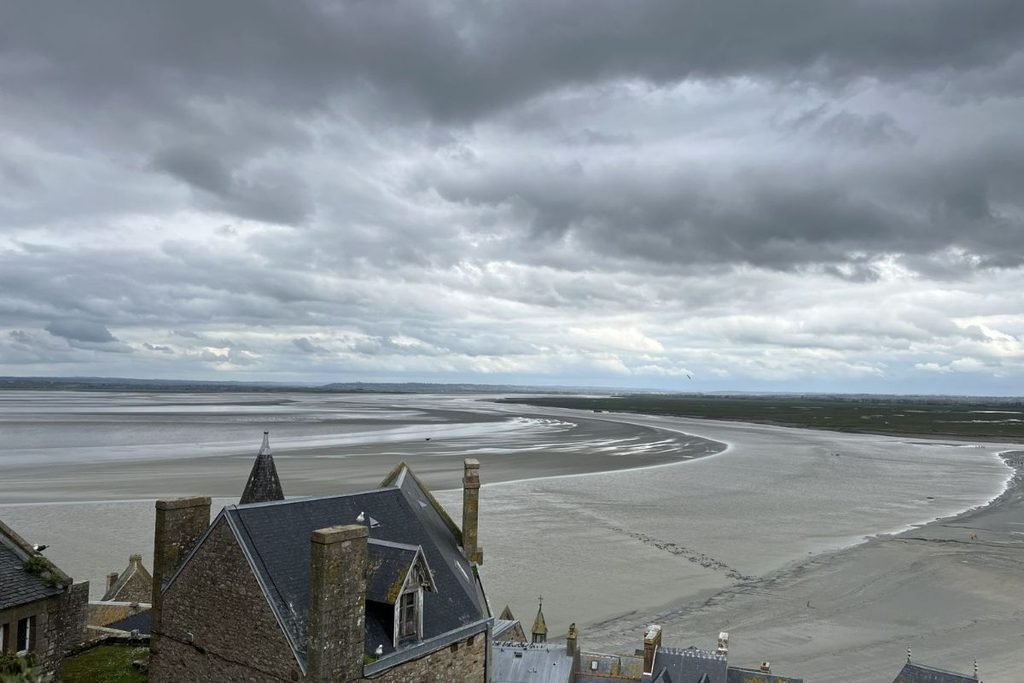
One of the most fascinating features of Mont Saint-Michel is its constantly changing tidal landscape. The surrounding bay experiences some of the largest tidal ranges in Europe, creating dramatically different scenery depending on the time of day and tidal conditions.
At low tide, vast stretches of sand and mudflats are exposed around the island. During particularly high tides, the incoming sea can surround Mont Saint-Michel, temporarily restoring its appearance as an island separated from the mainland.
Visiting Mont Saint-Michel at Low Tide
When the tide retreats, the enormous bay becomes a landscape of exposed sandbanks, shallow channels and tidal flats stretching towards the distant coastline.
Our Experience: We visited during low tide, when the exposed seabed revealed just how enormous the surrounding bay really is. Seeing the landscape without water gave us a completely different appreciation of Mont Saint-Michel’s unusual location. Although the weather was overcast, it remained dry throughout our visit, and the softer light provided lovely conditions for photographing the historic buildings and surrounding landscape.
Visiting During High Tide
During high tide, particularly around the highest spring tides, Mont Saint-Michel can appear completely surrounded by water. This creates the famous island setting seen in many photographs.
However, not every high tide surrounds the island. The height of the water varies throughout the month, so visitors hoping to witness this spectacle should check the official tide timetable before planning their visit.
The elevated access bridge generally remains accessible, although exceptional tidal conditions may temporarily affect access arrangements.
Is It Safe to Walk Across the Bay?
The exposed sands surrounding Mont Saint-Michel can look inviting, but walking independently across the tidal flats is not recommended.
The bay contains areas of soft sediment, tidal channels and rapidly changing water levels. The incoming tide can move surprisingly quickly, making it dangerous for anyone unfamiliar with the conditions.
For visitors interested in experiencing the bay on foot:
- Join a guided bay crossing: Experienced local guides lead walks across the tidal flats while explaining the area’s natural environment and history.
- Check tide times: Consult official tidal information before visiting, particularly during periods of exceptionally high tides.
- Use the designated access bridge: The safest and easiest way to reach Mont Saint-Michel is via the established pedestrian route.
- Stay on recognised pathways: Exploring the village, ramparts and designated walking areas provides plenty of opportunities to enjoy the scenery without venturing onto the tidal flats.
Travel Tip: If photography is a priority, consider checking both the high and low tide times. Each offers a completely different perspective of Mont Saint-Michel, and the changing landscape is one of the reasons this destination is so memorable.
Visiting Dinan in Brittany

Just across the regional border from Normandy, Dinan is one of Brittany’s most beautiful medieval towns, known for its half-timbered houses, cobbled streets, historic ramparts and picturesque setting above the River Rance.
Located approximately 40 minutes from Mont Saint-Michel by car, Dinan makes an excellent addition to a visit to northern France. Its remarkably preserved historic centre offers a wonderful opportunity to explore traditional Breton architecture, independent shops and local food.
Exploring Dinan’s Medieval Old Town
Dinan’s historic centre is filled with colourful half-timbered buildings, narrow cobbled streets and charming squares. Many of its buildings date back centuries, giving the town a distinctive medieval character.
One of its best-known streets is Rue du Jerzual, a steep cobbled lane lined with traditional houses and artisan workshops. It connects the upper town with the historic port along the River Rance.
Some of Dinan’s main attractions include:
- Place des Merciers: A picturesque square surrounded by historic timber-framed buildings.
- Rue du Jerzual: One of Dinan’s most famous medieval streets, known for its steep descent towards the river.
- Dinan’s Ramparts: Sections of the town’s historic defensive walls, which once protected this important trading centre.
- Basilica of Saint-Sauveur: A historic church featuring a mixture of architectural styles.
- The Clock Tower: A prominent medieval landmark offering panoramic views when open to visitors.
- Port of Dinan: A scenic riverside area with traditional buildings, cafés and walking paths.

Enjoying Traditional Breton Galettes
Brittany is particularly famous for its galettes, savoury pancakes traditionally made using buckwheat flour. Unlike the sweeter wheat-flour crêpes found throughout France, galettes are generally served as a main meal with a variety of savoury fillings.
Popular combinations include:
- Galette Complète: Ham, cheese and egg, one of the region’s traditional favourites.
- Cheese and Mushroom: A simple combination commonly found in Breton crêperies.
- Regional Specialities: Fillings featuring local cheeses, vegetables or other seasonal ingredients.
Galettes are a wonderful way to experience Brittany’s regional food culture, particularly when enjoyed in one of Dinan’s traditional crêperies.
Our Experience Exploring Dinan
A friend’s recommendation brought us to Dinan, and it turned out to be well worth the visit. We spent approximately four to five hours wandering through the historic centre, taking our time to explore the town and enjoy a traditional Breton galette.
What impressed us most was how beautifully preserved the town felt. Dinan was one of those unexpected discoveries that made our journey through France even more enjoyable.
Exploring the Surrounding Countryside
Beyond Mont Saint-Michel and Dinan, the countryside of northern Brittany offers traditional stone houses, small rural villages and peaceful farmland. It’s an interesting region to explore away from the main tourist attractions.
During our travels between Saint-Pierre-de-Plesguen and Dinan, we enjoyed discovering the smaller communities along the way. Although we hadn’t planned specific stops, the rural scenery added another enjoyable element to our time in the region.
Our Experience: During our three-night stay in Saint-Pierre-de-Plesguen, we spent time exploring the surrounding area, particularly on our day trip to Dinan. We passed through several small communities along the way, enjoying the scenery and discovering parts of Brittany we might otherwise have missed.
For travellers planning a similar journey, allowing time for a few unplanned stops can be a lovely way to experience the region beyond its main attractions.
Where to Stay Near Mont Saint-Michel
Choosing where to stay around Mont Saint-Michel depends on whether you prefer to be close to the island or use a quieter town as a base for exploring the wider region.
There are several accommodation options, from hotels near Mont Saint-Michel to countryside guesthouses, holiday homes and traditional French villages. For travellers with a car, staying a little further away can provide greater flexibility when visiting both Normandy and Brittany.
Our Accommodation in Saint-Pierre-de-Plesguen
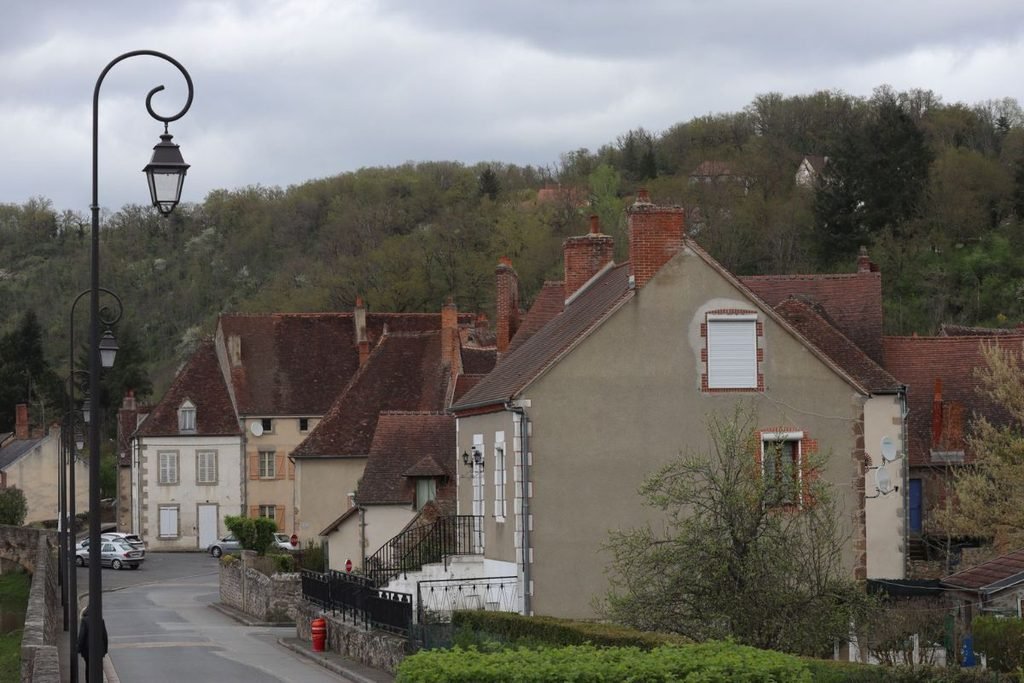
We spent three nights in Saint-Pierre-de-Plesguen, a small town in Brittany, conveniently located between Mont Saint-Michel and Dinan.
This location suited our road trip perfectly. Rather than changing accommodation between destinations, we could enjoy separate day trips to Mont Saint-Michel and Dinan while returning to the same base each evening.
Staying in a smaller community also gave us the opportunity to experience a quieter side of the region, away from the main tourist centres.
Best Areas to Stay Around Mont Saint-Michel
There are several areas worth considering when planning your visit:
- Mont Saint-Michel and La Caserne: Ideal for travellers wanting to stay close to the island, particularly for early morning or evening visits. Accommodation near the shuttle departure area can be convenient.
- Pontorson: A small town near Mont Saint-Michel with hotels, guesthouses, restaurants and transport connections.
- Dol-de-Bretagne: A historic Breton town offering a useful base for exploring both Mont Saint-Michel and the surrounding region.
- Dinan: An excellent choice for travellers wanting to spend more time in a medieval town, with restaurants, shops and historic attractions within walking distance.
- Saint-Pierre-de-Plesguen and Surrounding Villages: Suitable for travellers with a car who prefer quieter accommodation and easy access to both Normandy and Brittany.
Our Tip: If you’re planning to visit both Mont Saint-Michel and Dinan, consider staying somewhere between the two. Having a central base allowed us to explore each destination on a separate day without needing to pack up and move accommodation.
Getting to Mont Saint-Michel and Around the Region

Mont Saint-Michel is located on the Normandy coast, close to the border with Brittany. Although the island is relatively isolated, it is accessible by car, public transport and organised tours from several major French cities.
Having a car is particularly convenient if you plan to explore the surrounding countryside or combine Mont Saint-Michel with destinations such as Dinan and Saint-Malo.
Driving to Mont Saint-Michel
Travelling by car gives visitors the flexibility to explore Normandy and Brittany without relying on public transport schedules.
Mont Saint-Michel is approximately:
- 45 minutes from Dinan
- 1 hour from Rennes
- 1 hour from Saint-Malo
- 4–4.5 hours from Paris
Driving times are approximate and depend on traffic, road conditions and your starting point.
Our Experience: We travelled through the region in our leased Citroën C3 Aircross, using Saint-Pierre-de-Plesguen as our base. Having our own transport made it easy to visit Mont Saint-Michel and Dinan on separate days while exploring the countryside between them.
Parking at Mont Saint-Michel
Private vehicles are not permitted to drive directly onto Mont Saint-Michel. Instead, visitors use the designated mainland car parks, located approximately 2.5 kilometres from the island.
The parking facilities are well organised, with designated areas for different vehicle types and pedestrian routes leading towards the shuttle departure point.
A few things to know before arriving:
- Parking fees apply, with prices varying according to vehicle type, season and length of stay.
- Allow extra time to park, reach the shuttle and travel to the island.
- Keep your parking ticket, as you’ll need it when leaving.
- Check current parking rates on the official Mont Saint-Michel website before visiting.
Taking the Free Shuttle to Mont Saint-Michel
The Le Passeur shuttle bus provides a free connection between the mainland visitor area and Mont Saint-Michel.
Shuttles operate throughout the day, with services adjusted according to visitor demand and operating schedules. The buses stop near the access bridge, leaving visitors with a short walk towards the fortified entrance.
Our Experience: After parking, we caught the free shuttle towards Mont Saint-Michel. We got off near the bridge and walked the remaining distance, enjoying the changing views as we approached the island.
Walking Across the Access Bridge
Visitors can also choose to walk from the mainland parking area to Mont Saint-Michel instead of taking the shuttle. The pedestrian route crosses the modern access bridge, which was designed to allow tidal waters to flow more naturally around the island.
Walking provides excellent opportunities to photograph Mont Saint-Michel from different distances and appreciate its setting within the surrounding bay.
Our Tip: Even if you take the shuttle, make sure you walk the final section across the bridge. It’s one of the best opportunities to appreciate Mont Saint-Michel before entering the medieval village.
Visiting Mont Saint-Michel Without a Car
Travellers without their own vehicle can still visit Mont Saint-Michel using a combination of trains, connecting buses or organised tours.
Common options include:
- Train and Bus: Travel by train to a nearby transport hub such as Rennes or Pontorson, then use a connecting bus service towards Mont Saint-Michel.
- Organised Day Tours: Guided excursions are available from cities such as Paris and Rennes, with transport arrangements included.
- Regional Transport: Local and seasonal services may connect nearby towns, although timetables and availability vary.
For travellers planning to explore several destinations across Normandy and Brittany, having a car provides greater flexibility, particularly when visiting smaller towns and rural areas.
Travel Tip: Check public transport connections carefully before booking accommodation, especially outside the main tourist season when services may be less frequent.
Best Time to Visit Mont Saint-Michel
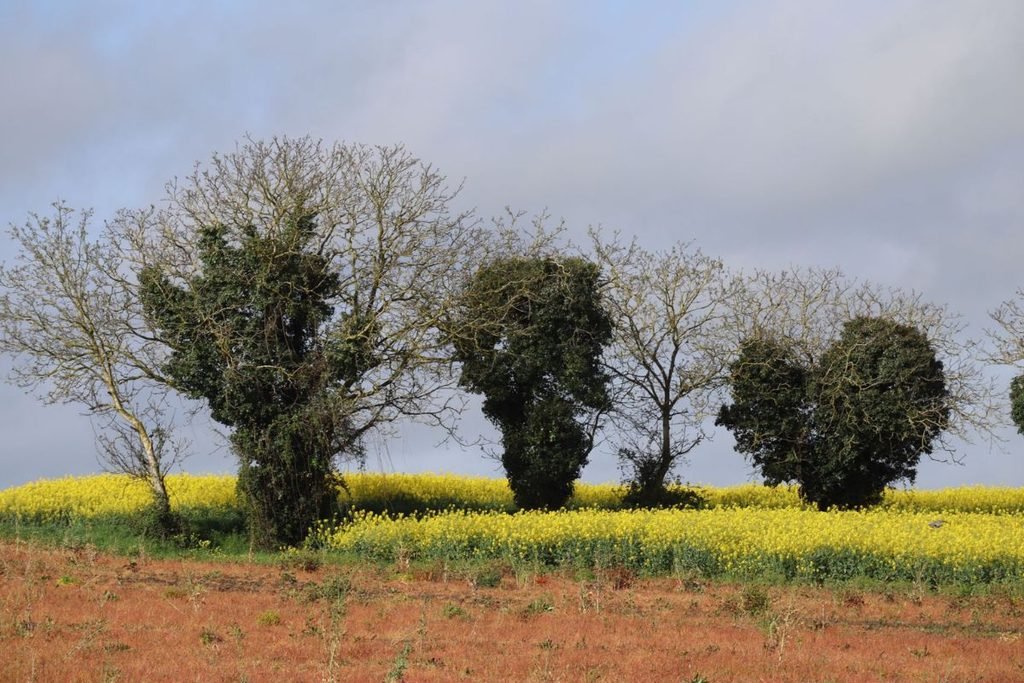
Mont Saint-Michel can be visited throughout the year, with each season offering a different experience. Spring and autumn generally provide a good balance of manageable visitor numbers and comfortable sightseeing conditions, while summer brings longer daylight hours and warmer temperatures.
The best time to visit depends on whether you prefer warmer weather, quieter streets or the opportunity to see Mont Saint-Michel surrounded by water during exceptionally high tides.
Visiting Mont Saint-Michel in Spring
Spring, from March to May, can be an excellent time to explore Mont Saint-Michel and the surrounding region. Temperatures gradually become milder, although northern France can still experience cool winds, cloudy skies and occasional rain.
April is particularly appealing for travellers who enjoy walking and sightseeing without the intense summer heat. However, the weather can change quickly, so it’s worth preparing for a mixture of conditions.
Our Experience: We visited Mont Saint-Michel and Dinan in April 2024. The skies were often heavily overcast, and although rain threatened throughout our stay, most showers were short-lived.
The temperatures were still quite cool, so we dressed warmly while exploring. Fortunately, the breaks in the weather gave us plenty of opportunities to venture out, walk around the historic towns and enjoy the surrounding countryside.
Visiting During Summer and Autumn
The warmer months bring different advantages, although visitor numbers and accommodation demand can vary considerably.
- Summer (June–August): Warmer weather, longer daylight hours and plenty of opportunities for sightseeing. However, this is generally the busiest period, particularly during school holidays.
- Autumn (September–November): Cooler temperatures and potentially fewer visitors outside holiday periods. Rain and shorter daylight hours become more common as the season progresses.
- Winter (December–February): Often the quietest time for exploring the village, although cold temperatures, strong winds and shorter days can make outdoor sightseeing less comfortable.
How to Avoid the Busiest Visiting Times
Mont Saint-Michel is one of France’s most popular attractions, so planning your arrival can make a considerable difference to your experience.
A few ways to manage the crowds include:
- Arrive early: Explore the village before the main daytime visitor numbers build.
- Consider a late afternoon visit: Visitor numbers may decrease as day-trippers begin leaving.
- Avoid peak holiday periods: Summer weekends and public holidays can be particularly busy.
- Allow enough time: Plan at least half a day to explore the village, ramparts and abbey without rushing.
- Check abbey opening hours: Seasonal schedules and special events may affect visiting times.
Travel Tip: Whatever time of year you visit, bring a warm layer and a waterproof jacket. The exposed coastal setting can feel considerably cooler than inland towns, especially when the wind picks up.
Practical Tips for Visiting Mont Saint-Michel and Dinan
A little preparation can make exploring Mont Saint-Michel and Dinan easier, particularly as both destinations involve considerable walking.
- Wear Comfortable Shoes: Expect cobbled streets, uneven surfaces and steep pathways.
- Book Abbey Tickets in Advance: Online tickets can simplify your visit, especially during busy periods.
- Be Prepared for Stairs: Reaching the abbey involves numerous steps, and some areas may be difficult for visitors with limited mobility.
- Carry Water and Snacks: Useful when spending several hours exploring historic towns.
- Allow for Changing Weather: A waterproof jacket and warm layers are worth carrying, particularly during spring and autumn.
Our Tip: If you’re visiting both Mont Saint-Michel and Dinan, we’d recommend exploring them on separate days if your itinerary allows. This worked well for us and meant we could enjoy each destination without constantly watching the clock.
Final Thoughts on Mont Saint-Michel and Normandy
Mont Saint-Michel was one of the most breathtaking sights of our journey through France. No matter which angle we viewed it from, the island was extraordinary, and exploring its medieval pathways and magnificent abbey made the experience even more memorable.
We were equally impressed by Dinan in neighbouring Brittany, a beautiful medieval town that we might never have discovered without a friend’s recommendation.
Our three nights in the region gave us a wonderful opportunity to explore both destinations, and we’re so pleased we included them in our French road trip. Mont Saint-Michel is somewhere we’d happily recommend, and Dinan is certainly worth adding to the itinerary.
“Some of the most memorable journeys begin with a recommendation and end with a place you’ll never forget.”
🌍 Travel Planning Resources
These are the tools we personally use and trust when planning our travels from finding a place to stay to booking activities, transport and insurance. Let your “Tohu” guide you “Trust the Journey” and follow what feels right for you.
- ✈️Flights – Compare great deals with Trip.com then Kiwi.com for flexible, affordable options.
- 🚐 Campervans – Compare rental deals with Motorhome Republic across Aotearoa and beyond.
- 🛏️ Stays – Compare hotels on Trip.com and TripAdvisor or Booking.com.
- 🚐 Rental Cars – Compare prices and book through Airport Rentals by Motorhome Republic for trusted brands and easy airport pickup.
- 🎟️ Activities – Browse tours and experiences on Viator, Get Your Guide, or TripAdvisor
- 🚆12Go Asia – Compare and book trains, buses, and ferries across Asia in one place with 12Go.
- 🛡️ Travel Insurance – Get flexible short-term coverage with Insubuy for your next holiday.
- 💳 Travel Money – Send, spend and manage money internationally with Wise, with easy currency conversion and a handy option for travellers.
- 🔒 Protect Your Privacy with a VPN – We recommend Surfshark VPN for secure and private browsing while travelling. It’s fast, affordable and works worldwide, perfect for public Wi-Fi at airports, cafes and hotels.
- 📱 Travel eSIM – Stay connected with Airalo
- 💼 Lounge Access – Treat yourself with Priority Pass for UK or US
- 🎶 Events & Concerts – Book tickets worldwide through Ticketmaster.
🧭 Note: Some booking links can be a bit shy when you’re using a VPN. If one doesn’t open, try pausing your VPN or switching to a different server location or secure Wi-Fi network to get things flowing again.