
Italy is a country that can feel completely different from one region to the next. Historic cities, medieval hill towns, dramatic coastlines, mountain landscapes and small villages are all part of the Italian experience. Some of the most memorable places are found well beyond the major tourist centres.
Whether travelling by train, hiring a car or combining the two, planning a journey through Italy gives you the freedom to explore at your own pace. There is so much to discover along the way.
What Is It Like to Travel Through Italy?

Travelling through Italy gave us the chance to experience far more than its famous cities and major attractions. We travelled by train at the beginning of our journey before returning later with a car. This completely changed the way we explored Italy.
Instead of moving quickly between major destinations, we often based ourselves in smaller towns and villages for several days. From there, we enjoyed day trips into the surrounding countryside, coastal areas and historic towns.
Having that flexibility also took us away from the main highways. We discovered parts of Italy we might otherwise have missed.
Table of Contents
- What Is It Like to Travel Through Italy?
- Our Journey Through Italy
- Starting Our Journey in Rome
- Exploring Cinque Terre
- Turin to Pisa: Taking the Back Roads
- Exploring Tuscany
- Tuscany to the Amalfi Coast
- Exploring Calabria and a Day Trip to Sicily
- Breaking the Journey in Montegiordano
- Falling in Love With Puglia
- Discover Venice
- Adventures in the Dolomites
- Where to Stay in Italy
- Eating and Shopping in Italy
- Best Time to Visit Italy
- Driving in Italy
- Travelling Italy by Train
- Things to Know Before Travelling Italy
- Would We Return to Italy?
Our Journey Through Italy
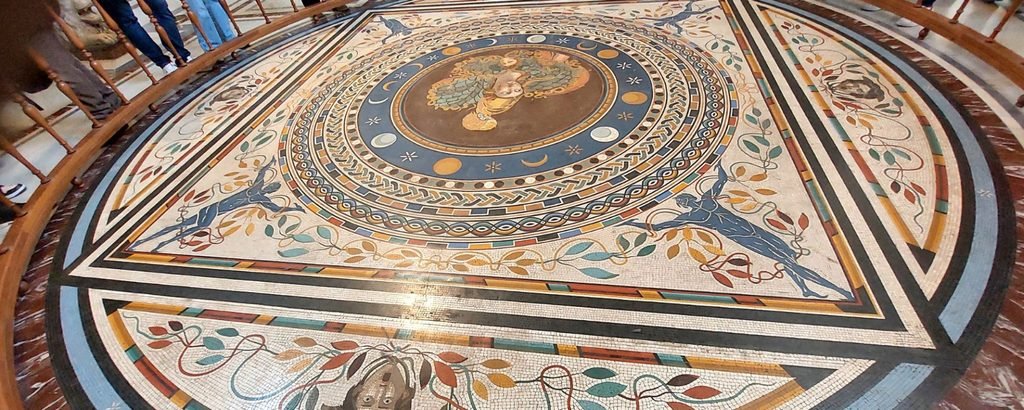
Our journey through Italy was part of a much larger three-month road trip through Europe. Italy became one of the countries we explored most extensively.
We began by travelling independently by train before returning later in our Leased Car. This allowed us to continue our European road trip and explore Italy at our own pace, travelling from north to south and back again.
Our journey took us through:
- Rome and Cinque Terre by train
- Turin, Pisa and Tuscany
- Monte Cassino, Salerno and the Amalfi Coast
- Calabria and a day trip to Sicily
- Montegiordano and Puglia
- Ancona, where we caught the ferry to Croatia
- Venice and the Dolomites when we returned to Italy three weeks later
Having a car for much of the journey allowed us to base ourselves in smaller towns and villages. We could take the slower back roads and explore well beyond Italy’s major tourist destinations.
This combination of famous cities, small villages, spectacular coastlines, historic towns and mountain landscapes made our journey through Italy so memorable.
What Italians Consider a Small Town
One thing we quickly learned while travelling through Italy was that the definition of a small town differs from what we’re used to in Aotearoa – New Zealand.
Back home, a small town is often somewhere you can drive through in the blink of an eye.
In Italy, however, we discovered something quite different. A place described as a small town could easily be the equivalent of a large town or even a small city back home!
It became something we had to adjust our expectations around, particularly when driving into unfamiliar places. Small doesn’t necessarily mean quiet, easy to navigate or easy to park in!
Explore Roma
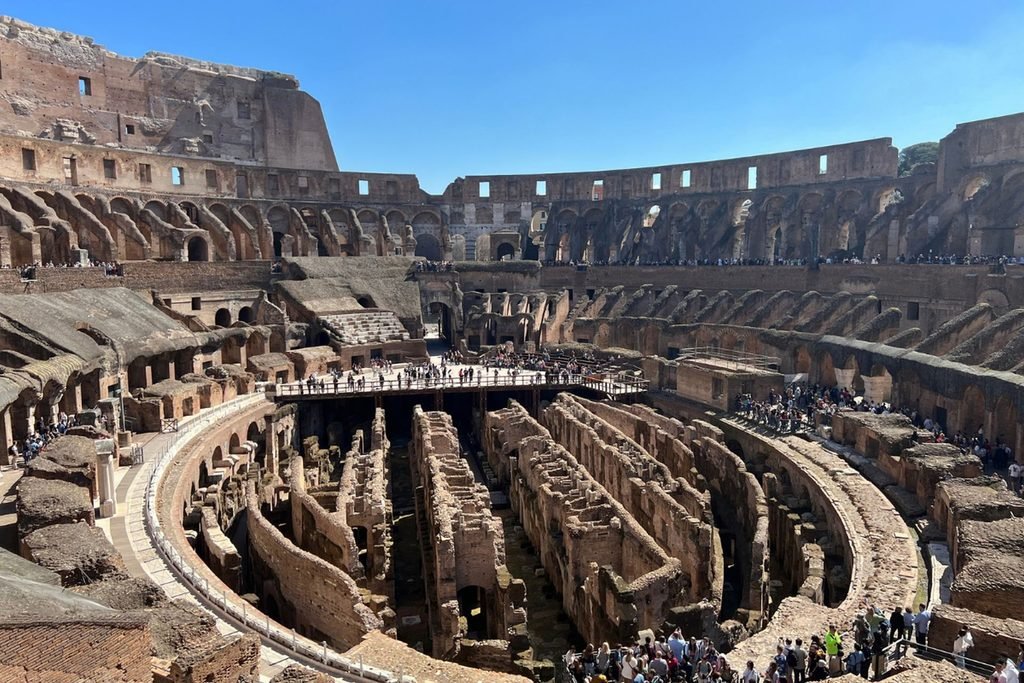
Our journey began in Rome, where we spent our first few days exploring the city’s extraordinary history. We also started getting used to everyday life in Italy.
We stayed in the Testaccio area, which made getting around Rome by bus, tram and train easy.
It was a funky little neighbourhood in its own right, with a great selection of restaurants, bakeries and markets. Staying here gave us a taste of local life away from the busiest tourist areas.
We packed plenty into our time here, including:
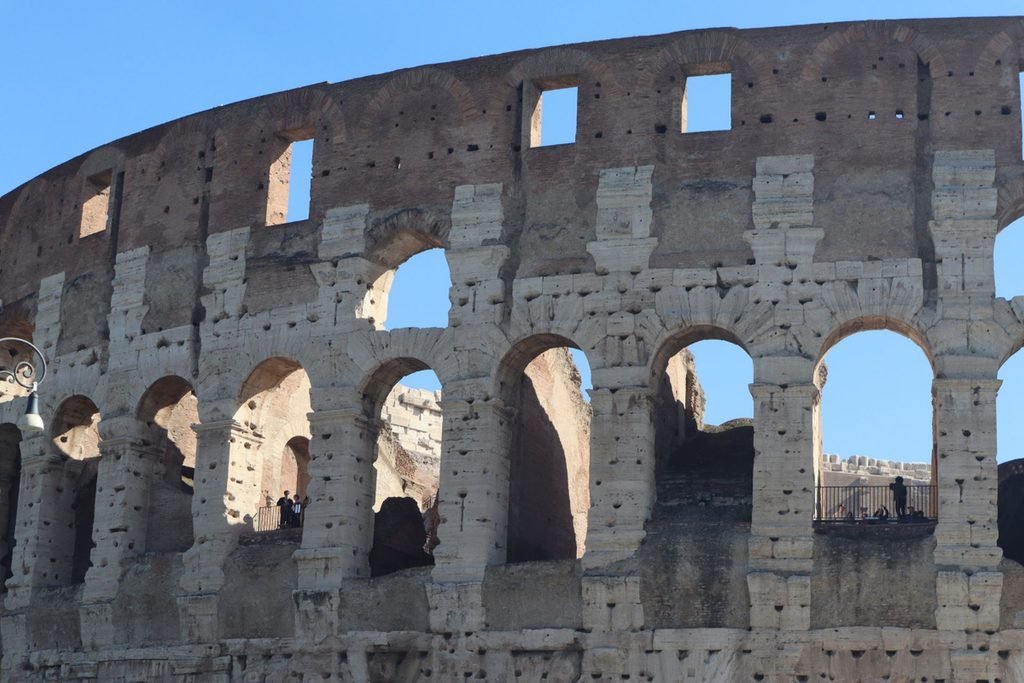
- Colosseum, Roman Forum and Palatine Hill
- Trevi Fountain and the Pantheon
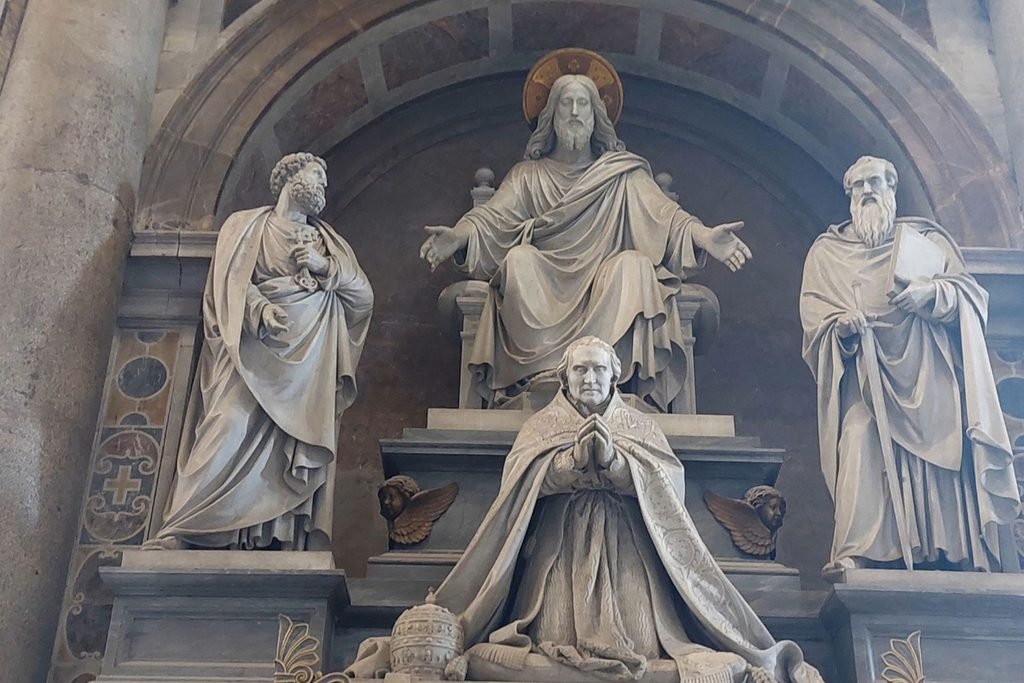
- Vatican City, St Peter’s Basilica and the Sistine Chapel
These are some of Rome’s busiest tourist attractions, but sometimes you simply have to be a tourist. Places like the Colosseum, Vatican City and Trevi Fountain are famous for a reason, and for us they were far too incredible to come all this way and skip simply because they were busy.
Rome was an incredible introduction to Italy.
Explore more of Roma: Read our full Rome Travel Guide for things to do, places to visit and more from our time exploring the city.
Exploring Cinque Terre

From Rome, we travelled north by train to Cinque Terre. We spent a week based in the beautiful village of Vernazza. With no need for a car, we explored the five villages by train and on foot:
- Monterosso al Mare
- Vernazza
- Corniglia
- Manarola
- Riomaggiore
Having a full week gave us time to slow down and explore rather than trying to squeeze all five villages into a single day. Vernazza was a wonderful base, with its little harbour, narrow streets and easy train connections.
One of our highlights was hiking part of the Cinque Terre Coastal Trail, with its steep climbs and incredible views across the Ligurian Sea. Some sections were closed during our visit, but there were still plenty of opportunities to explore on foot.
Cinque Terre was completely different from the Rome we had just left and became one of our favourite stops during this part of the journey.
Explore more of Cinque Terre: Read our full Cinque Terre Travel Guide for things to do, hiking tips, the five villages and practical advice for planning your visit.
Turin to Pisa: Taking the Back Roads

After leaving Cinque Terre, our journey took us through France and Spain before eventually bringing us back into Italy near Turin.
We spent one night in an Airbnb outside the city before beginning the road-trip stage of our Italian adventure.
From here, we started regularly choosing no-toll roads, something that would shape much of our journey through Italy.
It wasn’t the fastest way to travel, but the back roads took us through beautiful countryside, small villages and towns. Our coffee and food stops were often alongside locals rather than crowds of tourists. The journey between destinations became part of the experience.
Our next major stop was Pisa, somewhere we had always wanted to visit. Growing up hearing about the famous Leaning Tower made finally seeing it in person rather special.
It was incredibly busy, but standing in front of such an iconic landmark was still pretty impressive.
We found reasonably priced parking near the centre and spent a few hours exploring Pisa. Afterwards, we continued to a quieter seaside town for the night before heading towards Tuscany.
Good to know: Choosing the slower no-toll routes added time to our drives. However, they also took us through parts of Italy we would never have seen from the motorway.
Exploring Tuscany
Before settling into our base for the week, we stopped at Cascate del Mulino, Tuscany’s famous natural hot springs.
After days on the road, soaking in the warm water was a wonderful way to relax. Surrounded by the Tuscan countryside, it was a memorable start to our time in the region.
We then headed to the small village of Spina, which became our base for exploring Tuscany. Our accommodation here was an experience in itself. We stayed in what had originally been the guards’ quarters at the entrance to the old walled village, the first room as you entered through the historic gateway. It was one of those places where the accommodation became just as memorable as the destinations we were visiting.
Using Spina as our base gave us the freedom to head off in a different direction each day. During our week in Tuscany we visited:
- Florence: One of Tuscany’s most famous cities and an easy choice for a full day of exploring.
- Siena: A beautiful historic city that gave us another completely different side of Tuscany.
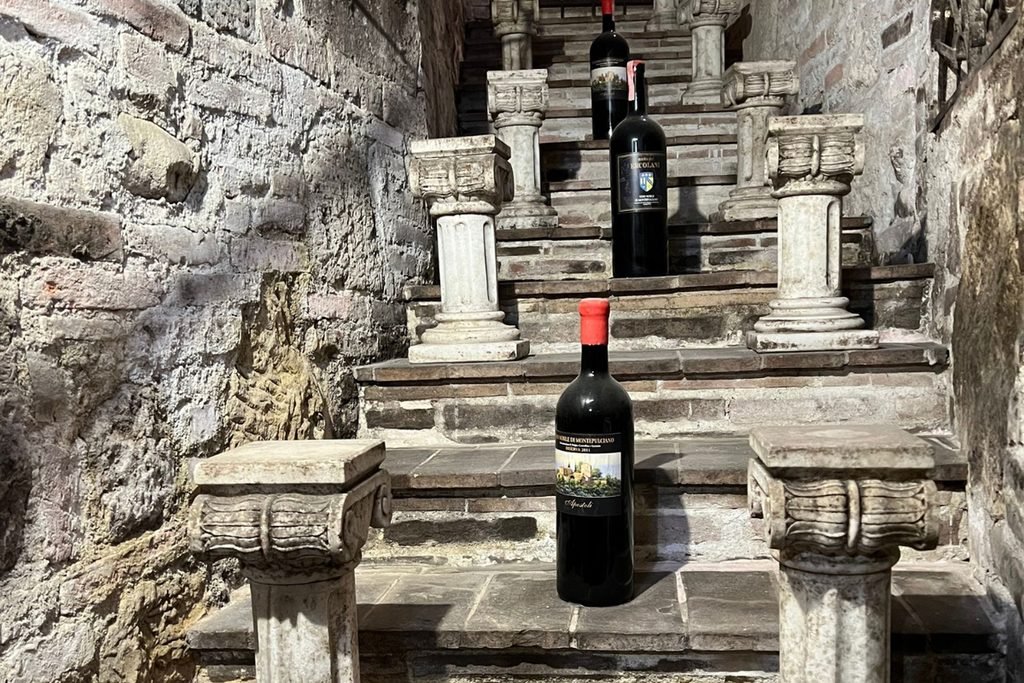
- Montepulciano: One of the region’s wonderful hill towns, surrounded by classic Tuscan countryside.
- Castiglione del Lago: A lovely lakeside town overlooking Lake Trasimeno.
- Smaller villages and countryside: Some of our favourite moments came simply from driving between destinations and seeing where the road took us.
What we loved most about Tuscany was that the region itself was as much an attraction as any individual town. Driving through the countryside, passing old stone villages and stopping whenever something caught our attention was exactly how we liked to travel. Having a car gave us the freedom to explore Tuscany at our own pace.
Tuscany is somewhere we would highly recommend spending more than a couple of days, particularly if you enjoy slower travel.
Rather than visiting Florence and moving on, we chose a smaller village as our base. This allowed us to explore different parts of the region while having somewhere peaceful to return to each evening.
It is also one of the parts of Italy we would happily return to.
Explore more of Tuscany: Read our full Tuscany Travel Guide for places to visit, things to do and more from our week road-tripping through the region.
Tuscany to the Amalfi Coast
Leaving Tuscany, we began making our way south towards Salerno, which would become our base for exploring the Amalfi Coast, Sorrento and Naples. Before reaching the coast, however, there was one important stop we wanted to make.
Paying Our Respects at Monte Cassino
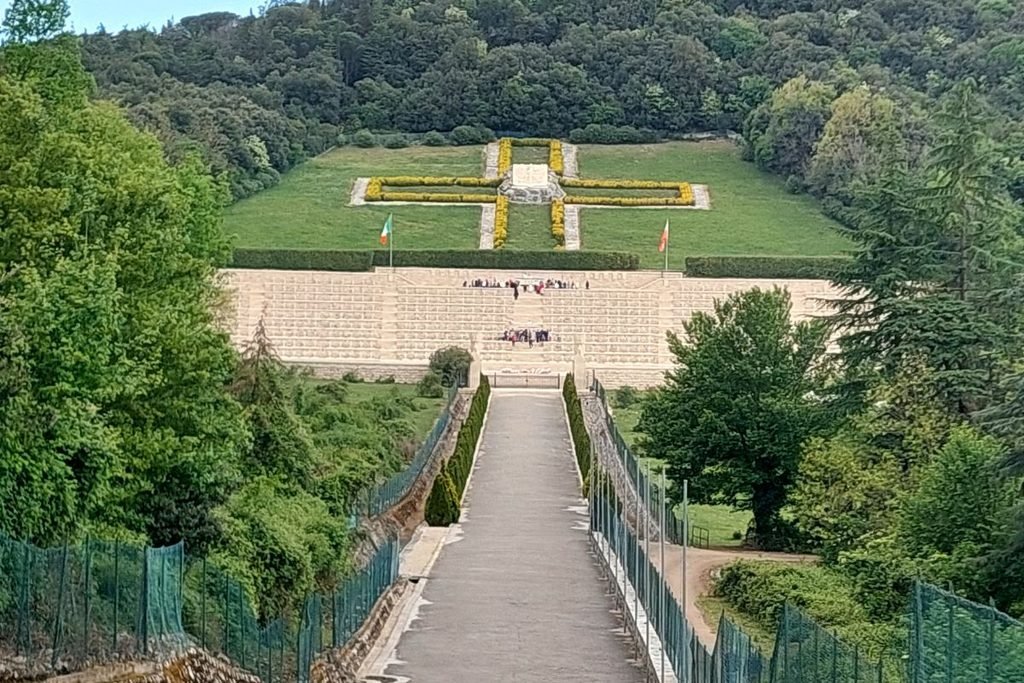
We stopped at Monte Cassino to pay our respects to the New Zealand soldiers who fought here during the Second World War. Among them were the men of the 28th (Māori) Battalion.
Standing so far from Aotearoa – New Zealand was incredibly moving. We remembered the young Māori and other New Zealand soldiers who fought and died here.
This wasn’t simply another historic stop on our road trip. It was a meaningful visit, and we were very glad we had taken the time to pay our respects.
Exploring From Salerno
We based ourselves in Salerno, which worked really well for exploring this part of Italy. It meant we could enjoy several day trips without continually changing accommodation.
Some of our most memorable experiences included:
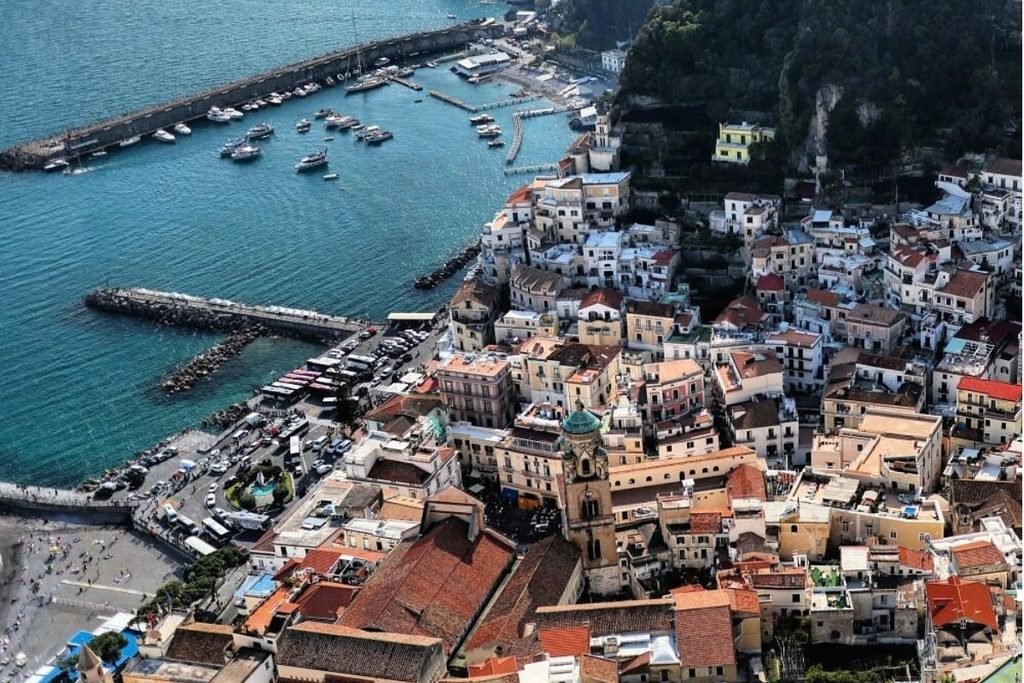
- Amalfi Coast: An incredibly beautiful coastline and one rather scary drive! We also took a boat trip along the coast and explored the town of Amalfi. We finished with a delicious meal and limoncello ice cream.
- Sorrento: Busy and full of atmosphere, with beautiful coastal views. The sunset made staying into the evening worthwhile.
- Naples: With only one day to explore, we used a hop-on hop-off bus to see more of this large, bustling city. It gave us a chance to experience its very different neighbourhoods.
The Amalfi Coast was every bit as spectacular as we had hoped, but staying in Salerno gave us the freedom to experience much more of the surrounding region as well.
Explore more of the Amalfi Coast: Read our full Amalfi Coast Travel Guide for things to do, places to visit and more from our time exploring Salerno, the Amalfi Coast, Sorrento and Naples.
Exploring Calabria and a Day Trip to Sicily
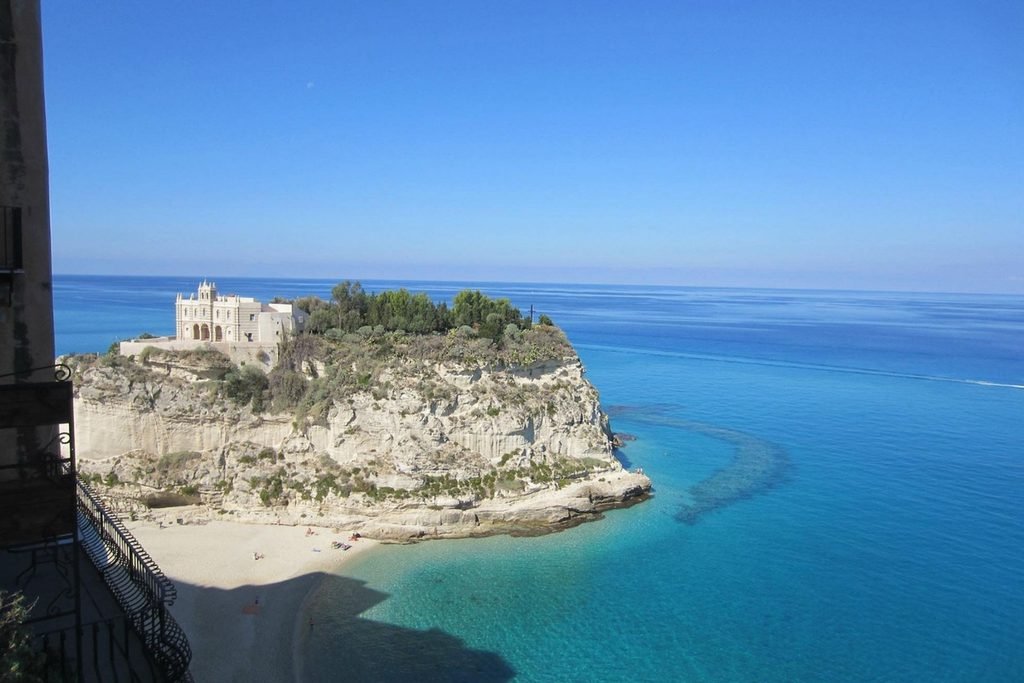
Leaving the Amalfi Coast behind, we continued south into Calabria, where the roads became quieter and the landscape changed again. Coastal towns, mountains, beaches and small villages made this another memorable part of our Italian road trip.
On our way south, we stopped in Pizzo for its famous gelato before continuing to Tropea for lunch.
Perched high above the Tyrrhenian Sea, Tropea was one of the most stunning towns we visited in southern Italy. The brilliant blue water and incredible views from the cliffs were unforgettable.
We based ourselves just outside Melito di Porto Salvo, giving us several days to explore the surrounding region.
Some of our highlights included:
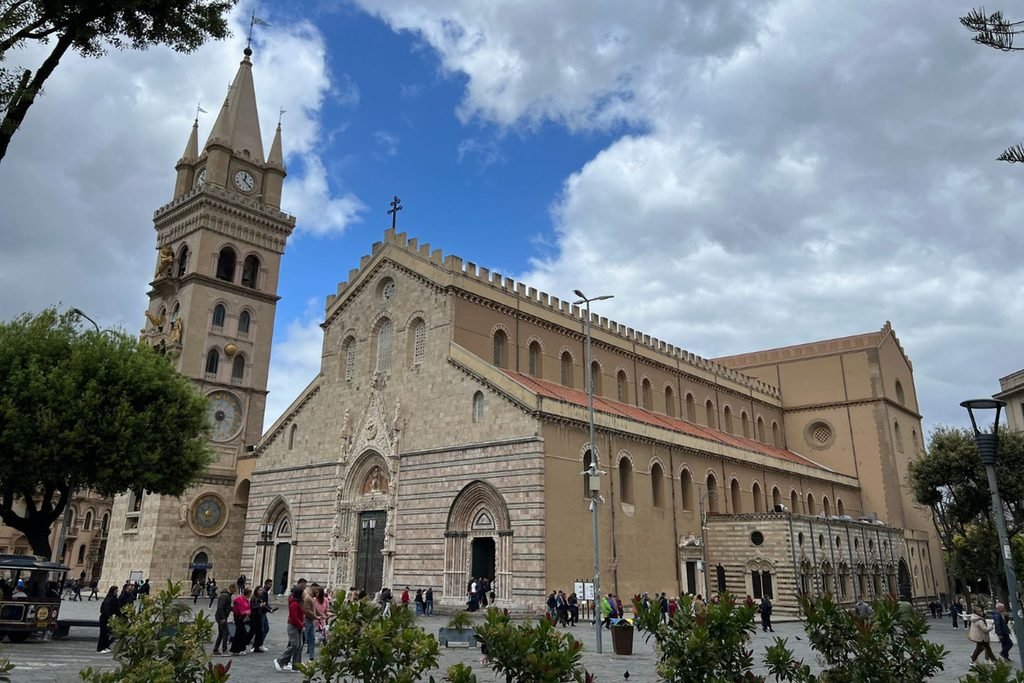
- Messina, Sicily: We took the train to Reggio Calabria and caught the ferry across to Messina for the day. The famous astronomical clock didn’t quite live up to our expectations. However, one of the best meals of our entire journey certainly did.
- Aspromonte National Park: We headed into the mountains for one of the shorter walking trails. It gave us a completely different view of Calabria.
- Palizzi Marina: We enjoyed a long walk along an almost empty beach. The rocky shoreline seemed to sparkle with colour against the clear water.
- The unexpected: Our GPS regularly took us through tiny villages and along roads that had us wondering if we’d gone completely wrong. Somehow, we always came out the other side.
Another thing that stood out was the sheer number of road tunnels through Calabria’s mountainous landscape. Some lasted only seconds while others continued for a kilometre or more. We had encountered impressive tunnels elsewhere in Italy, including between Sorrento and Salerno. However, nowhere did we notice them as much as we did here.
Travelling during April and May also meant quieter beaches and cooler temperatures. It gave us another glimpse of southern Italy before the busy summer season arrived.
Explore more of Calabria: Read our full Calabria Southern Region Travel Guide for places to visit, things to do and more from our road trip through Calabria, including Tropea, Aspromonte National Park and our day trip to Sicily.
Breaking the Journey in Montegiordano & Rocca Imperiale
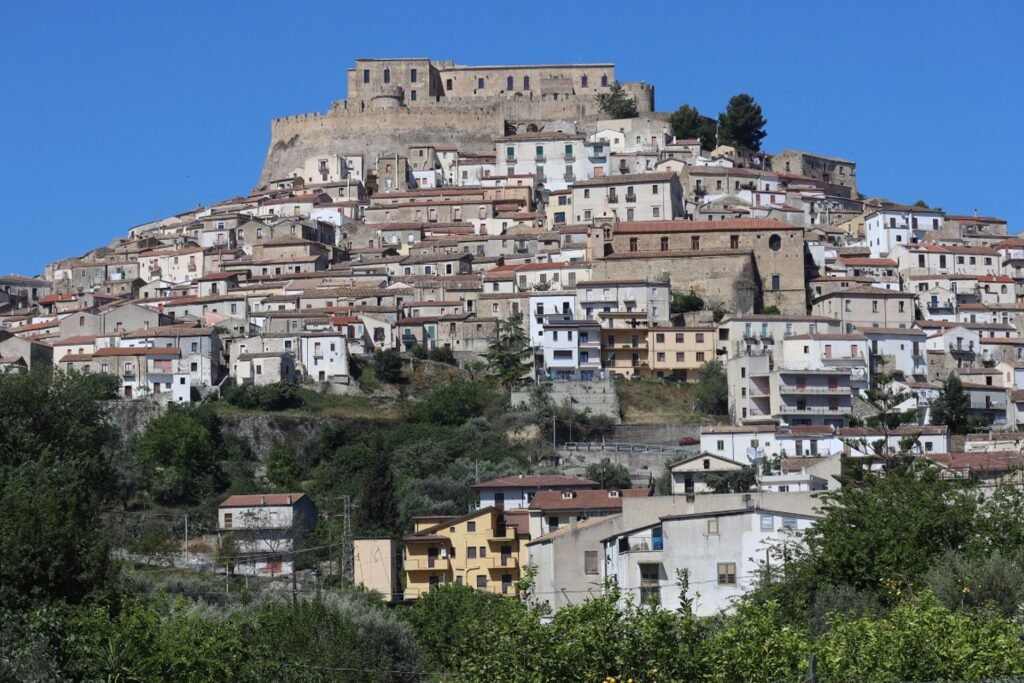
From southern Calabria, we were heading towards Puglia, but decided to break up the drive with two nights in Montegiordano.
Our Airbnb was another memorable find. It was a huge castle-like home full of character and became our base for exploring the surrounding area.
We spent a day wandering through nearby Rocca Imperiale and also explored the seaside town of Villaggio Baia Bella.
Matera had originally been on our list, but we’d already visited so many beautiful historic towns and villages. We decided to leave it for another visit.One thing this road trip taught us was that you don’t have to visit somewhere simply because it’s famous. Sometimes the unexpected places you discover along the way are just as memorable.
Our two nights in Montegiordano gave us another taste of the quieter side of southern Italy before we continued around the coast towards Puglia.
Falling in Love With Puglia
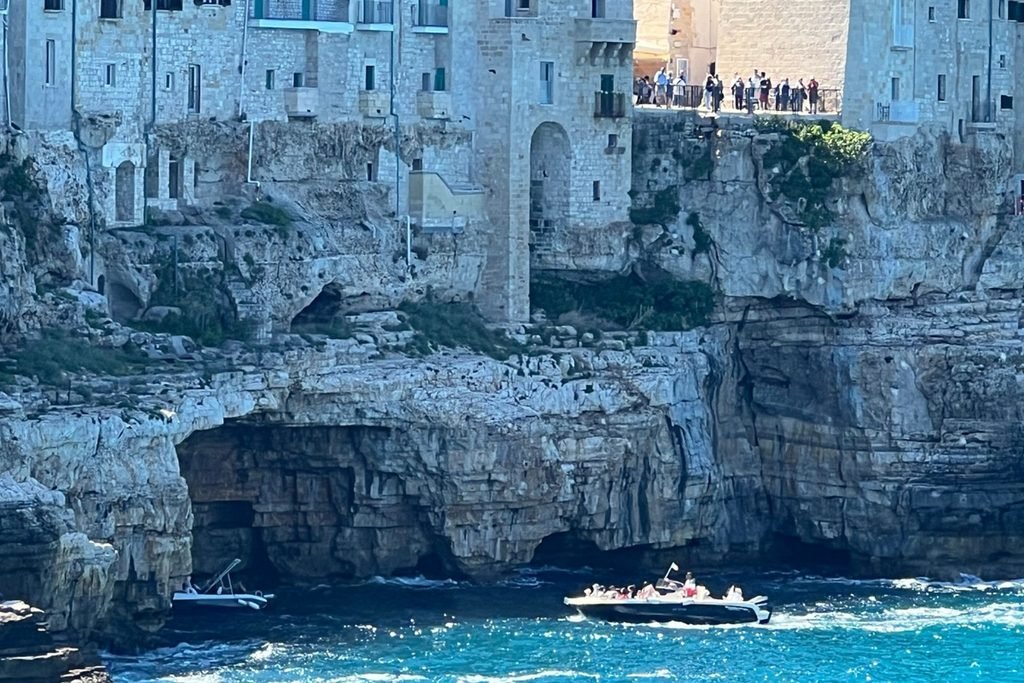
Continuing around the heel of Italy brought us into Puglia, one of our favourite regions of the entire road trip. With its beautiful coastline, whitewashed hill towns, traditional trulli and smaller villages, we could easily have spent much longer here.
Our first base was Marina di Pescoluse, where we found one of our favourite accommodation stays in Italy. It was a traditional trullo surrounded by native bush and overlooking the sea.
Travelling outside the main season meant we paid around half the usual price. For five days, this became our base for exploring southern Puglia.
We later moved further north to Casamassima, putting us within easy reach of another group of towns we wanted to explore. Some of our Puglia highlights included:
- Gallipoli: A stunning historic old town surrounded by the sea, where we enjoyed a beautiful meal overlooking the water.
- Santa Maria di Leuca: Right near the tip of Italy’s heel, where we wandered the coastline, went for a swim and enjoyed another Italian gelato.
- Ostuni: A striking whitewashed hill town where getting lost among the narrow lanes was half the fun. It also gave us one of our most memorable meals in Italy.
- Alberobello: Famous for its extraordinary collection of trulli and even more fascinating after we had spent five days actually living in one.
- Polignano a Mare: A town I had wanted to visit for years after seeing photographs of its famous cave restaurant. We found the restaurant, admired it from a distance and chose a much more affordable place overlooking the sea instead.
What we loved about Puglia was the combination of well-known towns and smaller places we discovered simply by taking the back roads.
By this stage, choosing the no-toll option had become part of the adventure. Some days, we simply picked a direction and explored.
Our time in Puglia ended unexpectedly when our ferry from Bari to Croatia was cancelled. We were redirected to Ancona, around 480 kilometres away.
This time, there was no leisurely drive along the back roads. We hit the toll roads, drove straight through and paid around NZ$99 in tolls. Most importantly, we made the ferry!
From Ancona, we sailed to Split and spent three weeks exploring Croatia. We eventually returned to Italy to visit Venice and the Dolomites.
Explore more of Puglia: Read our full Southern and Central Puglia Travel Guide for places to visit, coastal towns, trulli, day trips and more from our road trip through the heel of Italy.
Discover Venice
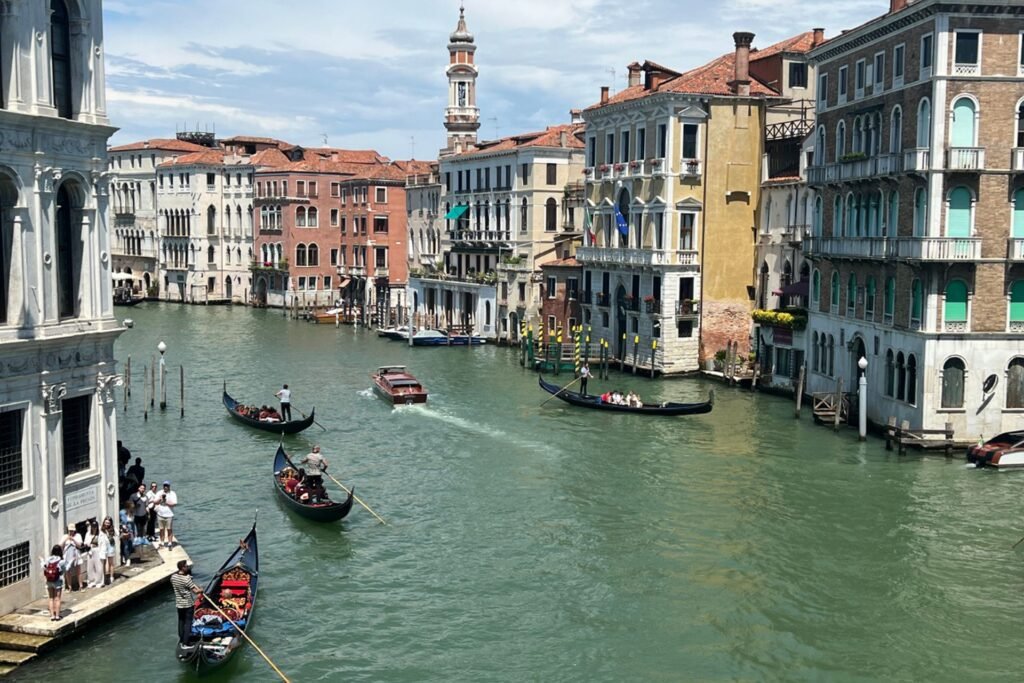
After three weeks exploring Croatia, we crossed back into Italy and spent three days exploring Venice. Rather than staying in Venice itself, we chose accommodation on the mainland and caught the train in each day. This gave us the freedom to explore the city on foot and by water.
Venice was busy, but every bit as beautiful as we had imagined. Canals wound between historic buildings, gondolas slipped through the waterways and water taxis buzzed back and forth. Cafés, restaurants and little shops seemed to appear around every corner.
Some of the places we explored included:
- Piazza San Marco
- Rialto Bridge
- Doge’s Palace
- Basilica di Santa Maria della Salute
- Basilica di Santa Maria Gloriosa dei Frari
We also took a gondola ride through the canals, and our gondolier even sang as we travelled through the smaller waterways. Tourist experience or not, this was Venice, and sometimes you simply have to be a tourist.
One of our most memorable moments happened in Piazza San Marco during a particularly high tide. The square began to flood, while restaurant staff simply pulled on gumboots and wet-weather trousers and carried on working. We finished the evening with a beautiful meal and an Aperol Spritz overlooking a canal, which felt like the perfect way to end the day.
At the time of our visit, Venice was also trialling its new day-visitor access fee. The system has continued to change since then, so check the current requirements before you visit rather than relying on our experience.
Good to know: Staying on the mainland worked really well for us. We left our car there and used the train to reach Venice, then explored entirely on foot and by water.
Explore more of Venice: Read our full Venice Travel Guide for things to do, getting around, where we stayed and more from our three days exploring the city.
Adventures in the Dolomites
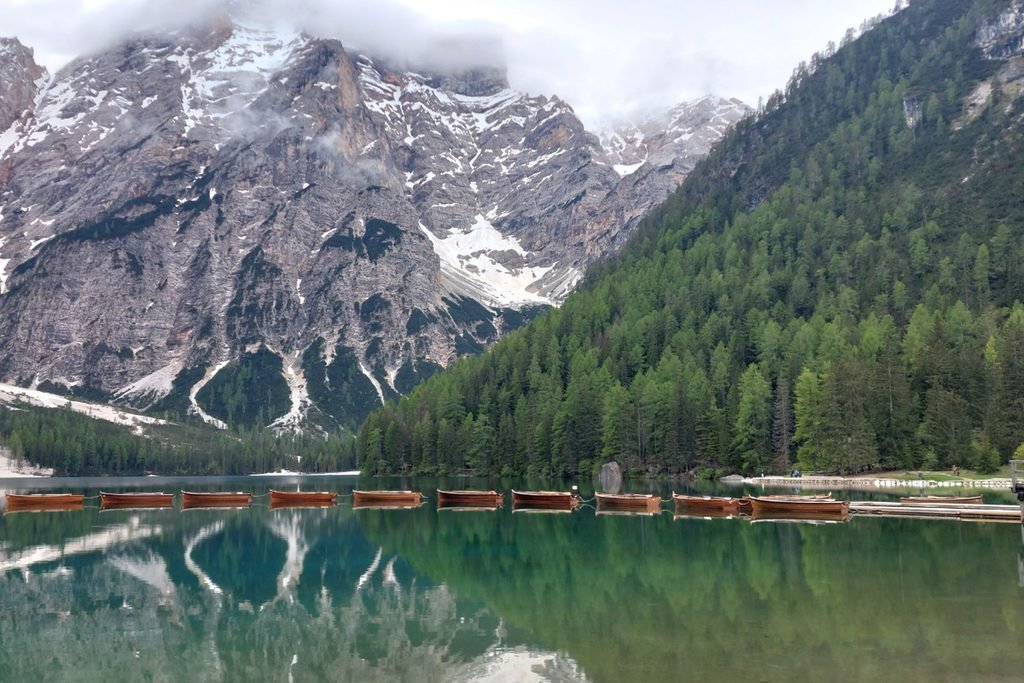
Our final stop in Italy was six days in the Dolomites, somewhere we had been particularly excited about because hiking is a passion of ours. We based ourselves in San Martino, near Santa Maddalena in the province of Bolzano, surrounded by some of the most spectacular mountain scenery of our entire journey.
Our days were spent outdoors. We hired bikes in Monguelfo and cycled towards Lago di Landro and the Tre Cime di Lavaredo viewpoint, hiked above Santa Maddalena, took the gondola from Ortisei to hike around Seceda, walked around beautiful Lago di Braies and returned to explore Cortina d’Ampezzo.
We were travelling outside the main summer season, so several of the higher walks we had planned were still closed because of snow. It didn’t matter. There was so much else to explore, and the Dolomites became one of those places we knew we wanted to return to before we had even left.
From here, we said goodbye to Italy and travelled through Austria towards Switzerland, bringing an incredible journey through the country to an end.
Explore more of the Dolomites: Read our full Dolomites Travel Guide for hikes, cycling, alpine lakes and everything we discovered during our six days in the mountains.
Where to Stay in Italy
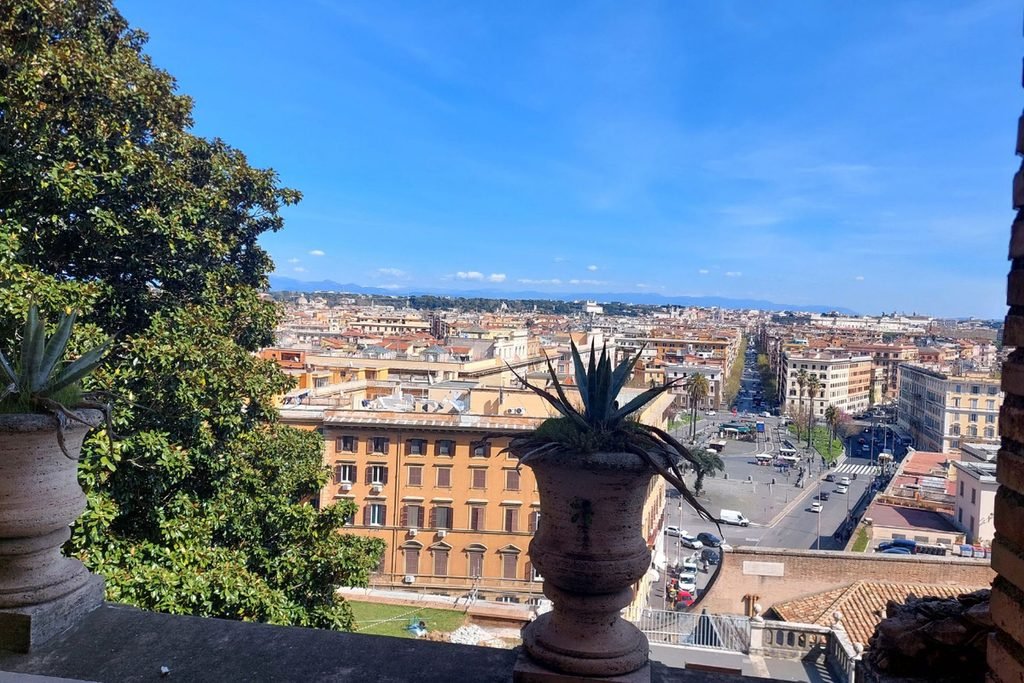
One of the things that worked particularly well for us was choosing accommodation based on what we wanted to explore rather than automatically staying in the main tourist centres.
We used a mixture of Airbnb and Booking.com, usually comparing both and choosing whichever offered the best value for the location we needed. Because we had a car for much of our journey, staying in smaller towns and villages often gave us more choice and allowed us to experience a quieter side of Italy.
A few things that worked particularly well for us:
- Look beyond the main tourist centres: Some of our favourite stays were in places we may never have considered otherwise, including the old guards’ quarters at the entrance to the walled village of Spina in Tuscany, a castle-like home in Montegiordano and a traditional trullo overlooking the sea near Marina di Pescoluse.
- Choose a good base: Staying in one place for several nights and taking day trips meant we weren’t constantly packing up and moving on.
- Look for cooking facilities: For longer stays, having a kitchen was invaluable. We could shop at local supermarkets and markets and cook with fresh pasta, pesto, cheeses, meats and other local ingredients.
- Consider public transport: If you’re travelling without a car, look for accommodation with easy access to trains, buses or trams. In Rome and Venice, we stayed outside the main tourist areas and used public transport to travel in each day.
- Compare your options: We regularly checked both Airbnb and Booking.com rather than automatically using one platform, then chose what worked best for our location and budget.
Our tip: Don’t automatically search for accommodation in the most famous town or right in the tourist centre. Italy has an excellent public transport network, particularly its trains, so staying a little further out can often give you more accommodation choices while still making it easy to get where you want to go.
Search and compare places to stay in Italy with Booking.com and find a base that works for your itinerary.
Eating and Shopping in Italy

Food is naturally a big part of travelling through Italy, and while we enjoyed some incredible restaurant meals, eating out wasn’t something we did for every meal. We were travelling through Europe for three months, so having accommodation with cooking facilities whenever possible made a big difference.
Italian supermarkets quickly became part of the experience. Fresh pasta, pesto, cheeses, cured meats, breads and local produce made it incredibly easy to put together a simple meal, and wandering through the supermarket shelves was sometimes almost as enjoyable as choosing a restaurant.
A few things we discovered along the way:
- Try the local speciality: Whether it was tartufo in Pizzo, seafood along the coast or yet another gelato, we loved trying the foods each region was known for.
- Make use of local bakeries: They became an easy place to grab something for breakfast or lunch, usually accompanied by an espresso.
- Shop and cook for yourself: If you have a kitchen, Italian supermarkets make it incredibly easy to put together a delicious meal using local ingredients.
- Don’t assume everything will be open: In some of the smaller towns we visited, shops and businesses closed for several hours during the afternoon.
- Sundays can be quiet: We often found supermarkets and shops closed or operating reduced hours, so we learned to plan ahead.
Those quieter Sundays became something we really enjoyed. We often saw families out together, sharing long lunches or simply spending time with each other, and it gave us another glimpse into everyday Italian life beyond the major tourist attractions.
Don’t Leave Italy Without Trying the Tiramisù
Food became part of the fun of exploring Italy, but one particular dessert turned into a mission of its own. Toni decided she was going to find the best tiramisù in Italy.
Every town had a place that claimed to serve the best, so of course we felt obliged to try them 😂. Each new contender came with a video review and a score uploaded to our family Facebook group, and before long the family were tuning in to see how the latest tiramisù rated.
We never really needed an official winner. The search itself became one of our favourite little memories in Italy.
Best Time to Visit Italy
There really isn’t one perfect time to visit Italy. The best time will depend on where you want to go and what you want to do, particularly in a country that stretches from the beaches of southern Italy to the mountains of the Dolomites.
We travelled through Italy mainly during April and May, and for us it was a great time to be there. The weather was generally comfortable for sightseeing and road-tripping, while many of the coastal areas were still relatively quiet before the main summer crowds arrived.
There were definitely a few trade-offs:
- April and May: We found spring ideal for exploring cities, towns and southern Italy without the heat of summer. Beaches were much quieter, although the water could still be cool.
- The Dolomites: Arriving before the main summer season meant several of the higher hiking trails were still closed because of snow. There was still plenty we could do, but serious hikers may prefer to visit later in the season.
- Summer: Warmer weather makes this an obvious time for the coast and beaches, but you can also expect busier destinations and greater demand for accommodation.
- Travelling outside peak season: This worked particularly well for us. We found some fantastic accommodation at prices well below the main-season rates, including our trullo overlooking the sea in Puglia.
For us, spring was a great compromise between weather, crowds and flexibility. We could comfortably explore cities, walk for hours, road-trip through the countryside and enjoy southern Italy before the busiest part of the year began.
Our tip: Think about the experiences that matter most to you before choosing your dates. A trip focused on beaches may need different timing from one built around hiking in the Dolomites or exploring Italy’s historic cities.
Driving in Italy

Having a car completely changed the way we experienced Italy. It gave us the freedom to stay in smaller towns, explore the countryside and change our plans whenever somewhere interesting appeared along the way. For our three-month journey through Europe, we chose to lease a car rather than hire one, which worked incredibly well for the way we wanted to travel.
Planning a longer European road trip? Check out our guide to Leasing a Car in Europe, where we share how the process worked, what it cost and what we learned from driving around 12,000 kilometres through Europe.
We quickly learned that driving in Italy doesn’t always have to be about getting from A to B as quickly as possible. Some of our favourite days were the ones where the journey itself became part of the adventure.
A few things we learned along the way:
- Toll roads can be worth it: We usually avoided toll roads when we had time to explore. However, sometimes the motorway is exactly what you need. When our ferry from Bari was cancelled, we suddenly had to drive around 480 km to Ancona to catch another one. We paid approximately NZ$99 in tolls that day, but we made our ferry. It was money well spent.
- The back roads are worth taking: We regularly selected the no-toll option on our GPS. It took longer, but led us through countryside, villages and small towns we would otherwise never have seen.
- Expect plenty of tunnels: We couldn’t believe how many tunnels we drove through in Italy, particularly in Calabria and along mountainous coastal routes. Some lasted only seconds, while others seemed to go on forever.
- Some coastal roads can get very tight: This was particularly noticeable around the Amalfi Coast. Narrow roads, sharp corners and oncoming traffic made for some interesting driving. If you’re hiring or leasing a vehicle, check your insurance conditions before tackling roads like these. Some routes may have restrictions or exclusions.
- Parking takes a little planning: When visiting larger cities and popular tourist areas, we usually researched parking beforehand. It was much easier than arriving and hoping for the best.
- Your GPS may surprise you: Ours occasionally sent us through tiny villages and along roads that had us seriously questioning its judgement. Somehow, we always seemed to come out the other side.
- Allow more time than you think: A slower route can become even slower when you stop for coffee, lunch or photographs. Sometimes, you’ll simply spot somewhere interesting and decide to explore.
Travelling Italy by Train
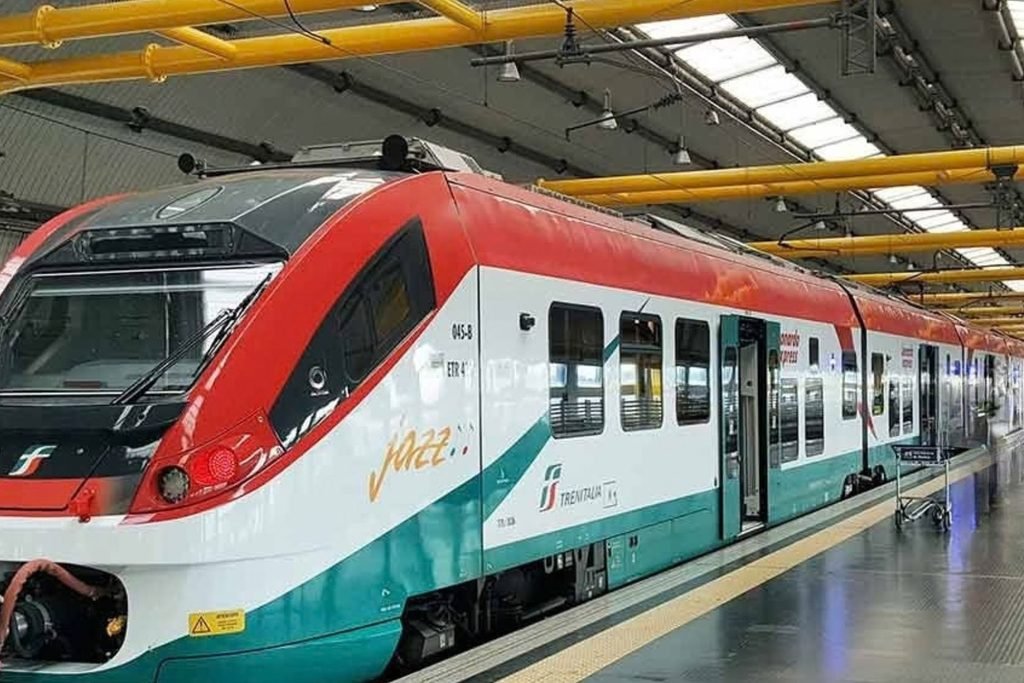
While having a car gave us enormous freedom on this journey, you certainly don’t need one to explore Italy. On my first trip to the country, I travelled entirely by train and found it an excellent way to get around. We used trains again on this journey before collecting our leased car in France.
For many of Italy’s major destinations, travelling by train can actually be easier than driving. You arrive without having to think about parking, navigating busy city streets or what to do with the car once you get there.
A few times trains worked particularly well for us:
- Rome: Buses, trams and trains made it easy to get around from our base in Testaccio.
- Rome to Cinque Terre: We travelled north by train and had no need for a car during our week there.
- Cinque Terre: The train made travelling between the five villages incredibly easy.
- Venice: We left our car at our mainland accommodation and caught the train into Venice each day.
- Reggio Calabria to Messina: We travelled by train to Reggio Calabria before catching the ferry across to Sicily for the day.
If your itinerary is centred around Rome, Florence, Venice and other well-connected destinations, travelling by train can be a great option.
A car becomes much more useful if, like us, you want to base yourself in smaller towns. It also gives you the freedom to explore the countryside and places that are harder to reach by public transport.
Depending on your itinerary, combining trains with a car for part of your journey can give you the best of both worlds.
One lesson I learned from travelling Italy entirely by train was to think carefully about where you book your accommodation. Staying close to a railway station or an easy public transport connection makes a huge difference when travelling with luggage.
A hotel or apartment might look like a short walk from the station on a map. However, that walk can feel very different when you’re dragging suitcases over cobblestones in the heat or rain.
You can always catch a taxi, but relying on one every time you arrive or leave soon adds to your travel costs.
Planning to explore Italy by train? Check out our guide to Travelling Around Italy by Car and Train, where we share practical advice on booking tickets, navigating railway stations, comparing travel costs and choosing the best way to explore Italy.
Things to Know Before Travelling Italy
After spending so much time travelling through Italy, there were plenty of little things we learned along the way. Nothing particularly complicated, but knowing a few of them beforehand can make travelling around the country a little easier.
- Don’t try to see everything: Italy is packed with incredible places, and it can be tempting to keep adding destinations. We eventually skipped Matera simply because we had already seen so much. There will always be another reason to come back.
- Give yourself time: Some of our favourite places weren’t the famous ones we had planned months beforehand. They were the small towns, beaches and villages we discovered while travelling between them.
- Expect different opening hours: In some smaller towns, shops and businesses closed for several hours during the afternoon, and Sundays could be particularly quiet. We learned to plan supermarket shopping and errands around this rather than assuming everything would be open.
- Comfortable shoes are essential: Italian cities and historic towns are made for exploring on foot, but cobblestones, hills and uneven streets can make for some long days on your feet.
- Don’t avoid somewhere just because it’s touristy: We love getting away from the crowds, but sometimes you simply have to be a tourist. The Colosseum, Vatican City, Venice and Pisa are famous for a reason, and we’re glad we experienced them for ourselves.
- Leave room for the unexpected: A cancelled ferry sent us on a 480 km dash across Italy, our GPS took us down roads we probably wouldn’t have chosen ourselves, and some of our favourite meals happened in places we hadn’t planned to visit at all. Not everything will go according to plan, and sometimes that’s part of the adventure.
Perhaps the biggest thing Italy taught us was not to rush it. You don’t need to tick off every famous city or attraction to have an incredible journey. Choose the places that interest you, give yourself enough time to explore them and leave a little room for Italy to surprise you.
Would We Return to Italy?

In a heartbeat! Even after travelling through so much of the country, there are still places we missed and places we would love to see again. Some regions deserve much longer than we were able to give them.
What we loved most about Italy wasn’t any one famous attraction. It was the incredible variety.
One day we could be walking through an ancient city, the next driving through the Tuscan countryside. We could be swimming off the coast of southern Italy or hiking beneath the mountains of the Dolomites.
Some of our favourite memories also came from the simplest moments. Stopping for coffee in a small town, finding an incredible local meal or wandering through a village we hadn’t planned to visit. Sometimes, we simply followed a road to see where it went.
Italy reminded us that you don’t have to see everything in one journey. In fact, sometimes it’s better not to try.
Travel slowly when you can. Visit the famous places you’ve always dreamed of seeing, but leave room in your plans for unexpected discoveries.
After thousands of kilometres, countless towns and villages, trains, ferries, back roads, mountains and beaches, we had experienced so much. Add more gelato than we could possibly count, and you’d think we’d had our fill.
Yet somehow, Italy still left us wanting more.
“Travel slowly enough to notice the places you never planned to find.”
🌍 Travel Planning Resources
These are the tools we personally use and trust when planning our travels from finding a place to stay to booking activities, transport and insurance. Let your “Tohu” guide you “Trust the Journey” and follow what feels right for you.
- ✈️Flights – Compare great deals with Trip.com then Kiwi.com for flexible, affordable options.
- 🚐 Campervans – Compare rental deals with Motorhome Republic across Aotearoa and beyond.
- 🛏️ Stays – Compare hotels on Trip.com and TripAdvisor or Booking.com.
- 🚐 Rental Cars – Compare prices and book through Airport Rentals by Motorhome Republic for trusted brands and easy airport pickup.
- 🎟️ Activities – Browse tours and experiences on Viator, Get Your Guide, or TripAdvisor
- 🚆12Go Asia – Compare and book trains, buses, and ferries across Asia in one place with 12Go.
- 🛡️ Travel Insurance – Get flexible short-term coverage with Insubuy for your next holiday.
- 💳 Travel Money – Send, spend and manage money internationally with Wise, with easy currency conversion and a handy option for travellers.
- 🔒 Protect Your Privacy with a VPN – We recommend Surfshark VPN for secure and private browsing while travelling. It’s fast, affordable and works worldwide, perfect for public Wi-Fi at airports, cafes and hotels.
- 📱 Travel eSIM – Stay connected with Airalo
- 💼 Lounge Access – Treat yourself with Priority Pass for UK or US
- 🎶 Events & Concerts – Book tickets worldwide through Ticketmaster.
🧭 Note: Some booking links can be a bit shy when you’re using a VPN. If one doesn’t open, try pausing your VPN or switching to a different server location or secure Wi-Fi network to get things flowing again.